Key takeaways
- The Komondor is a generally hardy breed, with an average lifespan of 10 to 12 years when fed, exercised, and screened correctly.
- Bloat (gastric dilatation-volvulus) is the most urgent giant-breed emergency and carries roughly a 15 percent mortality rate even with surgery.
- Hip dysplasia is the most common orthopedic concern, but responsible OFA hip screening in breeding dogs keeps the breed's rate low.
- The corded coat traps moisture against the skin, so drying cords fully after washing is the single best defense against hot spots and infection.
- A fixed schedule of annual exams, eye checks, and body-condition scoring catches most problems while they are still cheap and treatable.
The Komondor is a hardy livestock guardian that typically lives 10 to 12 years, and most of its serious health problems are either preventable or highly treatable when caught early. The conditions that matter most are hip dysplasia, bloat, skin infection under the cords, and a handful of inherited eye issues. Each one has a clear prevention path, and none of them should scare a prepared owner away from the breed.
This guide walks through the major Komondor health problems one by one, explains what causes them, and gives you the practical steps that keep a guardian dog sound for its whole life. The focus is on what you can actually do: feeding, screening, grooming, and a steady veterinary routine.
How serious is hip dysplasia in Komondors?
Hip dysplasia is the breed's most common orthopedic concern, but it is far from universal. Across evaluated Komondors in the Orthopedic Foundation for Animals database, only a minority are graded dysplastic, which places the breed well below many popular large breeds. The hip joint simply does not form a tight ball-and-socket fit, which over years leads to looseness, arthritis, and pain.
Prevention starts before a puppy is born. Reputable breeders X-ray their breeding stock and submit the films for an OFA hip grade, breeding only sound dogs. If you are still choosing a litter, ask to see those results. Our own guide to what breeders screen for explains how to read the paperwork.
Once your dog is home, the biggest lever is growth control. Giant-breed puppies that grow too fast on over-rich food put extra load on forming joints. Keep a puppy lean, avoid forced running on hard surfaces before the growth plates close, and feed a diet formulated for large-breed growth. Lifelong weight management does more for aging hips than any supplement.
Why is bloat such a danger in giant breeds?
Bloat, known medically as gastric dilatation-volvulus, is the single most urgent emergency a Komondor owner can face. The stomach fills with gas and then twists on itself, cutting off blood flow. It kills quickly. Even when a dog reaches surgery in time, the mortality rate is approximately 15 percent (American College of Veterinary Surgeons, 2026). Deep-chested breeds like the Komondor sit squarely in the high-risk group.
The warning signs are specific and worth memorizing. A dog with bloat shows a swelling or hard abdomen, tries to vomit but brings up nothing, drools heavily, and paces in obvious distress. This is not a wait-and-see situation. It is a drive-to-the-emergency-vet situation, measured in minutes.
You can lower the risk with a few habits. Feed two or three smaller meals a day rather than one large one, and avoid heavy exercise for an hour before and after eating. Slow-feeder bowls help dogs that gulp. Many owners of giant breeds also discuss a preventive gastropexy, a surgery that tacks the stomach in place, with their vet, often done at the same time as spay or neuter.
What skin problems hide under the cords?
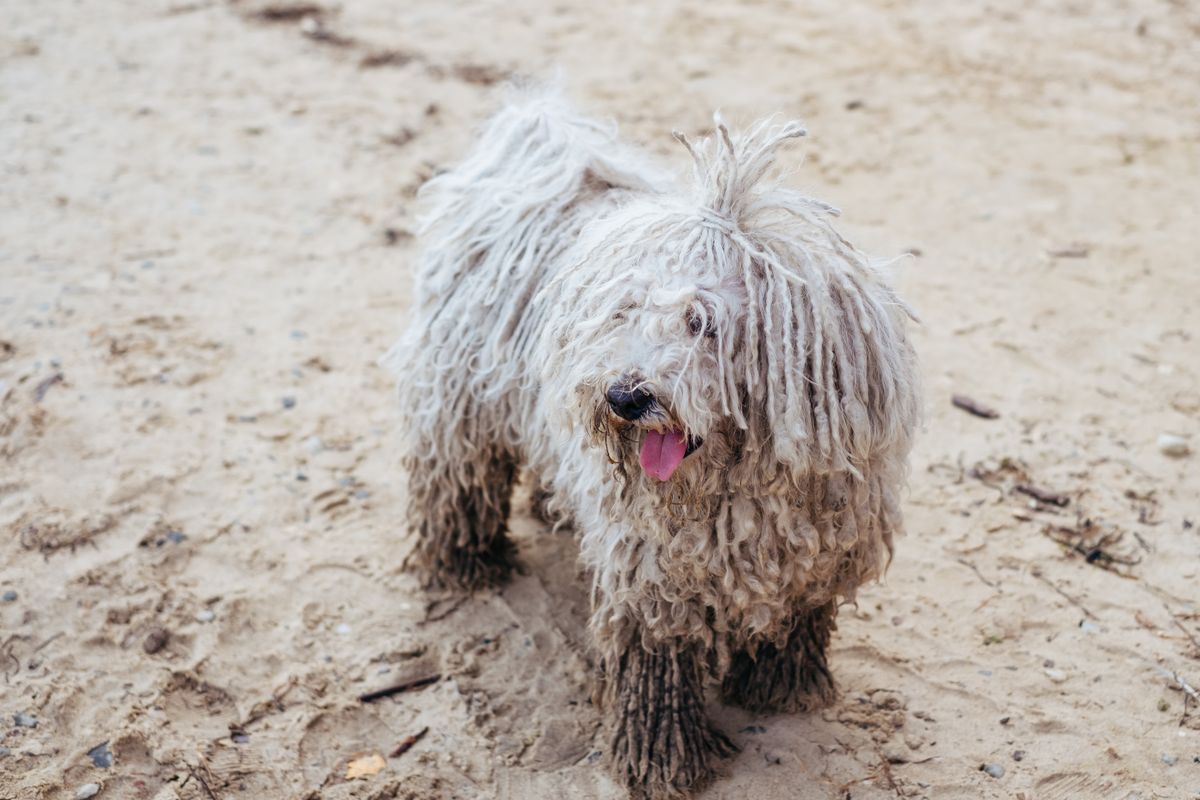
The famous corded coat is the Komondor's glory and also its most overlooked health risk. The cords are dense and absorbent, so they trap moisture against the skin after a bath, a swim, or wet weather. Skin that stays damp becomes a breeding ground for yeast and bacteria, which leads to hot spots, odor, and infection that can hide out of sight until it is advanced.
The fix is mostly mechanical: drying. After any wash the cords must be squeezed out and dried all the way to the skin, which can take a full day with a stand dryer. Never leave a Komondor to air-dry in a tight coat. Check the skin at the base of the cords regularly for redness, scabs, or a sour smell.
Routine coat maintenance prevents most trouble before it starts. Careful grooming covers separating cords, bathing, and thorough drying technique. Keeping cords clean and the skin ventilated is far easier than treating an infection after the fact.
Which eye conditions should Komondor owners watch?
Komondors can inherit a few eye conditions, with eyelid defects being the ones owners notice most. Entropion, where the eyelid rolls inward and the lashes rub the surface of the eye, causes tearing, squinting, and irritation. Its opposite, ectropion, leaves the lower lid sagging and exposed to debris. Both can usually be corrected with minor surgery, and both show up early in life.
Watching for symptoms costs nothing. Persistent tearing, a dog that paws at its face, redness, or cloudiness all warrant a vet visit. Because the heavy facial cords can hide the eyes, part the coat and look at the eyes directly during grooming. A dog that keeps one eye partly closed is telling you something.
Prevention again runs through breeding. Responsible breeders have breeding dogs examined by a veterinary ophthalmologist, and clear results reduce the odds of passing eyelid and other hereditary eye defects to puppies. This is one more reason health-tested parents are worth seeking out.
What vet schedule prevents Komondor health problems?
A fixed veterinary routine is what ties all of this prevention together, and it is simpler than it sounds. A Komondor's average lifespan is 10 to 12 years (PetMD, 2026), and a steady schedule of check-ups is the most reliable way to reach the upper end of that range. The point is to catch problems while they are small.
A practical schedule looks like this:
- Puppy (first year): vaccination series, growth and weight monitoring, early joint and eye checks, and a plan for spay, neuter, or gastropexy.
- Adult (annual): a full physical exam, dental assessment, body-condition scoring, and parasite prevention review.
- Senior (from about 7 years, often twice yearly): bloodwork, joint and arthritis assessment, and closer eye monitoring.
Between visits, your own observations matter just as much. Weigh your dog, run your hands over the joints and skin, and note any change in appetite, gait, or energy. A fit dog carries less strain on its hips, which is why pairing routine care with the right exercise for a guardian breed pays off for a lifetime.
The Komondors we breed come from health-screened lines because prevention truly starts generations before a puppy arrives. If you are weighing the breed, make your next step a simple one: ask any breeder you talk to for the hip and eye results on both parents, and treat clear documentation as non-negotiable.
Frequently asked questions
What is the most common health problem in Komondors?
Hip dysplasia is the most frequently discussed orthopedic issue, though responsible breeders screen for it. The most dangerous acute problem is bloat, a sudden stomach emergency common to deep-chested giant breeds.
How long do Komondors live?
The average Komondor lifespan is 10 to 12 years. Good nutrition, controlled growth as a puppy, joint care, and prompt treatment of bloat and skin infections all help a dog reach the upper end of that range.
Is bloat really that dangerous in Komondors?
Yes. Gastric dilatation-volvulus is a true emergency. Even with surgery the mortality rate is roughly 15 percent, so any Komondor with a swollen abdomen, unproductive retching, or restlessness needs an emergency vet immediately.
Do the cords on a Komondor cause skin problems?
The cords themselves are not harmful, but they hold moisture against the skin. Cords that stay damp after a bath or swim can lead to hot spots, yeast, and bacterial infection, so thorough drying is essential.
Can Komondor health problems be prevented through breeding?
Many can be reduced. Screening breeding dogs for hip and eye conditions lowers the odds that puppies inherit them, which is why health-tested parents matter so much when choosing a breeder.