
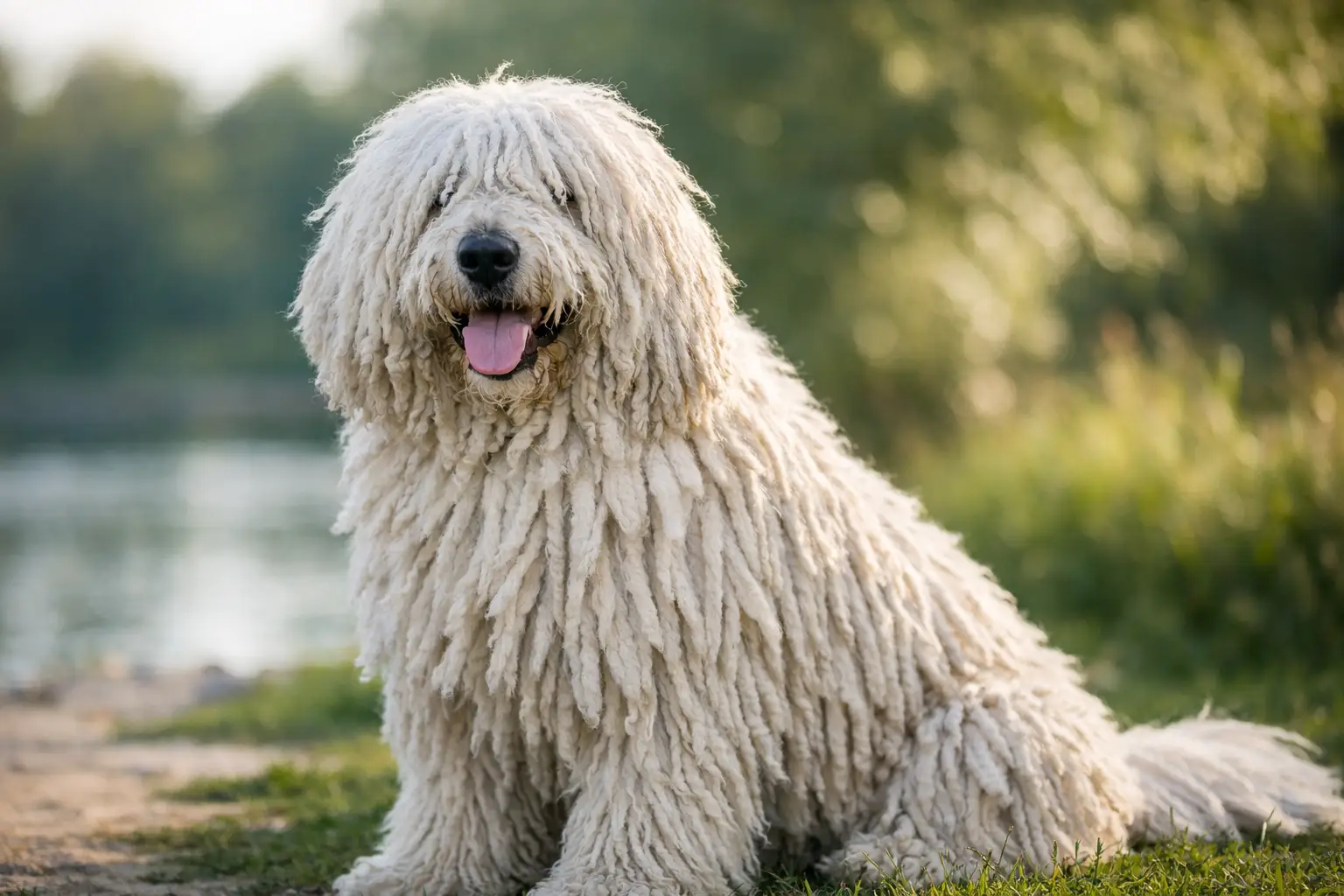
A Komondor will tell you who he is long before you ever need to ask. He watches first. He studies people, movement, and changes in routine. He does not offer the easy, instant sociability many buyers expect from popular family breeds. So when people ask what is a Komondor temperament like, the honest answer is this: calm, serious, deeply loyal, highly protective, and never casual about his responsibilities.
That combination is exactly what makes the breed so special – and why it must be understood correctly before bringing one home.
What is a Komondor temperament like in daily life?
The Komondor is a true guardian breed, developed to think independently and protect without needing constant direction from a person. That history still lives very clearly in the modern dog. A well-bred Komondor is not frantic, unstable, or needlessly aggressive. He should be self-possessed, observant, and confident enough that he does not overreact to every small event.
At home, this often means he is quieter than people expect. Many Komondors are affectionate with their own family, but they usually show it in a reserved way. They want to be near their people. They keep track of where everyone is. They notice who belongs and who does not. They are not typically clingy dogs, but they form very deep bonds.
This is not a breed that treats every stranger like a friend. That is not a flaw. It is part of correct breed character. A sound Komondor should be discerning, not indiscriminately social. He does not need to welcome every visitor with enthusiasm. He does need to remain stable, manageable, and clear-headed.
A guardian first, a companion second
One of the biggest mistakes people make is evaluating the Komondor by companion-breed standards. If someone wants a dog that readily greets guests, enjoys busy public outings, and naturally accepts constant novelty, this breed may not be the right fit. The Komondor was preserved as a working guardian, and his temperament reflects that purpose.
That purpose creates a dog with strong judgment. In practice, this means the Komondor often decides for himself whether something is normal, suspicious, or unacceptable. For experienced owners, that intelligence is one of the breed’s finest qualities. For inexperienced owners who expect automatic obedience and universal friendliness, it can be difficult.
A good Komondor should not be nervous. He should not be chaotic. He should not be impossible to control. But he should absolutely have a protective nature, territorial awareness, and a serious attitude toward his home and family.
The Komondor and family bonding
With his own people, the Komondor is often tender in a way outsiders rarely see. He can be gentle with children in his family and deeply devoted to the people he accepts as his own. That said, devotion does not erase the breed’s size, power, or natural guarding instinct. Supervision, training, and structure still matter.
Families who do best with this breed tend to appreciate quiet confidence. They do not need a dog that performs affection for everyone. They value loyalty, steadiness, and presence. A Komondor often becomes part protector, part shadow, and part decision-maker within the household.
This can be deeply rewarding, but it comes with responsibility. A Komondor is not a dog to leave emotionally unformed and hope for the best. He needs guidance from the beginning so that his natural guarding instinct develops into stable adult behavior rather than suspicion without direction.
How a Komondor behaves with strangers
Strangers are where temperament questions become most important. A correct Komondor is naturally reserved and protective. He may stand back and assess. He may position himself between his family and a newcomer. He may remain watchful even after being introduced.
This does not mean every Komondor should behave the same way in every setting. Bloodline quality, early socialization, training, environment, and owner handling all matter. Some are more socially tolerant than others. Some are more intense guardians by nature. But in general, this is not a breed that exists to charm the public.
For that reason, responsible breeding matters enormously. Temperament should be inherited as carefully as structure, coat, and health. A Komondor with unstable nerves is not correct. A Komondor with no meaningful protective instinct is also not correct. The goal is balance – strong guardian character with a sound mind.
What is a Komondor temperament like with other dogs and animals?
It depends greatly on upbringing, sex, maturity, and setting. Many Komondors can live well with other animals, especially if raised with them from an early age. Their traditional livestock guardian background often gives them the ability to distinguish what belongs under their protection.
Still, people should not assume that every Komondor will effortlessly accept every dog. Same-sex tension can occur, particularly in mature dogs. Territorial behavior can also be strong. A large guardian breed should always be managed with realism, not wishful thinking.
With livestock, a properly bred and properly developed Komondor may show excellent natural instinct. With household pets, success often depends on early introduction and thoughtful supervision. The breed is intelligent, but intelligence does not replace management.
Independence is part of the temperament
Many first-time guardian owners are surprised by how independently a Komondor thinks. He is capable of learning very well, but he is not built to obey in the eager, repetitive style of breeds developed for close handler direction. He wants to understand the point of what you are asking. He also notices whether you are worthy of leading him.
That means training should be calm, firm, and consistent. Heavy-handed methods are a mistake. So is permissiveness. The Komondor responds best when boundaries are clear and fair, and when the owner leads with confidence rather than emotion.
Independence is often misread as stubbornness. Sometimes it is stubbornness. More often, it is judgment. This breed was shaped to act when needed, even without waiting for instruction. That trait is valuable, but it belongs in experienced hands.
Early socialization matters, but so does realism
People often hear that socialization solves everything. With a Komondor, socialization is essential, but it does not erase breed character. You can and should expose a young Komondor to varied people, sounds, places, surfaces, and normal routines. You should build confidence and teach him how to remain composed.
What you should not do is try to turn him into a dog with no protective instinct at all. That would mean working against the essence of the breed. Proper socialization helps the Komondor distinguish ordinary life from genuine concern. It does not remove his guardian nature. It refines it.
This distinction matters for buyers. If someone wants the look of the Komondor but not the mind behind it, disappointment usually follows. The right owner respects both.
Why breeding quality shapes temperament
Temperament is not created by training alone. It begins with breeding. For a rare heritage breed such as the Komondor, preserving correct temperament is one of the breeder’s most serious responsibilities. Strong nerves, clear protective instinct, stable judgment, and sound thresholds do not happen by accident.
That is why serious buyers should look beyond photos and promises. Pedigree depth, breeder standards, working understanding of the breed, and honest discussion about temperament all matter. In our view at Somogyi Betyar Kennel, preserving original Komondor character is part of preserving the breed itself.
A beautiful coat and impressive size mean little if the temperament is weak, unstable, or untrue to history.
Is the Komondor the right temperament for you?
For the right owner, the Komondor is unforgettable. He offers a level of loyalty and protective devotion that few breeds can match. He brings dignity, presence, and genuine guardian instinct. He does not love carelessly, and that is part of why his bond feels so profound.
But this is not the right breed for everyone. If you want easygoing sociability, frequent dog-park life, or a dog that welcomes every guest without question, look elsewhere. If you value heritage, seriousness, discernment, and a dog that understands the duty of protection, the Komondor may be exactly what you have been searching for.
The best place to begin is with honesty – about the breed, about your experience, and about the kind of dog you truly want to live with for years to come.






1 Comment