
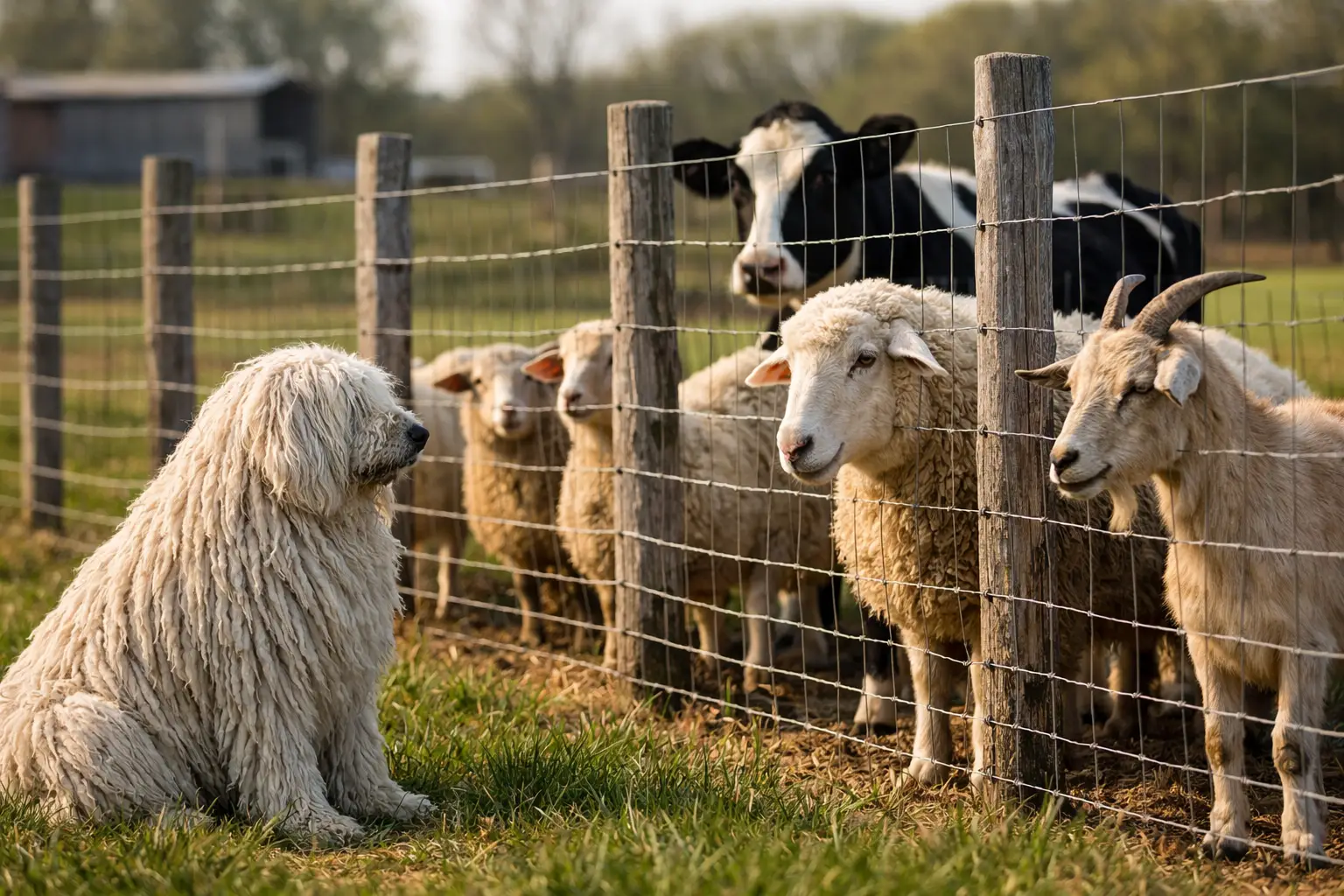
A Komondor’s first meeting with livestock should not look dramatic. The best introduction is quiet: a calm dog, secure fencing, healthy stock, and an owner who is prepared to observe rather than rush the process. Introducing Komondor to livestock is not a single event. It is the beginning of a working relationship shaped by genetics, maturity, consistent boundaries, and the individual animals in front of you.
The Komondor was developed in Hungary as a serious flock guardian, bred to live with animals and make independent decisions when danger approached. That heritage matters. It also creates a responsibility for the owner: a powerful, protective dog should be given thoughtful direction before being expected to work freely around sheep, goats, poultry, cattle, or other livestock.
Start With the Right Komondor
Livestock work begins long before the dog arrives at the farm. A Komondor with correct heritage, stable nerves, sound structure, and a well-balanced temperament has the best foundation for the role. Guardian instinct cannot be manufactured through training alone, and a pedigree is more than paperwork when it reflects generations selected for authentic breed character.
Still, no responsible breeder should promise that every puppy will mature into the same type of working dog. Some Komondors become intensely focused livestock guardians. Others are better suited to property protection alongside a family, with managed exposure to animals. The dog’s confidence, energy level, curiosity, age, and response to stock all matter.
Prospective owners should be honest about their expectations. A Komondor is not a herding dog that will gather animals on command, nor is it a dog that should be left to solve every problem without supervision. Its traditional task is to remain with its flock, recognize what belongs, and stand its ground against a threat. That independence is valuable, but it requires patient management.
Introducing Komondor to Livestock in Stages
The first goal is not friendship. It is calm acceptance. Your young Komondor should learn that livestock are part of the home territory, not objects to chase, play with, or challenge.
Begin with visual exposure through a strong fence or secure pen. Allow the dog to see and smell the animals from a distance where it can remain composed. Keep sessions short and uneventful. If the puppy becomes excited, stiff, fixated, or begins barking continuously, increase the distance and wait for calm behavior before trying again.
A leash or long line can be useful during early close encounters, but it should not become a source of constant tension. The purpose is safety and guidance, not restraint that causes frustration. Walk the dog near the enclosure, reward a relaxed attitude with calm praise, and move away before either the dog or livestock becomes overwhelmed.
Once the Komondor can observe quietly, supervised time inside a larger, secure area may be appropriate. Choose gentle, confident livestock for these first sessions whenever possible. Nervous animals that run wildly can trigger chase behavior in any young dog, even one from strong guardian lines. Likewise, a pushy ram, defensive doe, or protective cow can create a dangerous introduction and teach the puppy that livestock are adversaries.
Never place a puppy in a situation where it can be injured, trapped, or repeatedly frightened. Respect must go both ways. A livestock guardian needs confidence around animals, but confidence is not built by forcing exposure.
Teach Boundaries Before Granting Freedom
A young Komondor does not need a large pasture on the first day. It needs a clearly defined area and predictable routines. Start with a smaller pen, nursery pasture, or secure section of the property where you can observe behavior easily. This makes it possible to correct unwanted habits immediately and quietly.
Chasing is the behavior to take most seriously. A brief curious movement is different from a determined pursuit, but neither should be ignored. Interrupt the dog promptly, remove it from the situation, and return to a lower-pressure stage of training. Do not assume a puppy will simply outgrow repeated chasing. Every successful chase can become rewarding in itself.
Play-bowing, mouthing, pawing, and jumping on livestock also need attention. A large adult Komondor can unintentionally injure a lamb, kid, chicken, or newborn calf even without predatory intent. Calm coexistence is the standard. The dog should be able to lie down, patrol, or investigate its surroundings without constantly disturbing the animals.
Feeding arrangements deserve equal care. Feed the dog separately from livestock and protect its food from poultry or other animals that may approach the bowl. Resource guarding can develop when a dog feels pressured at meals, and a guardian should never have to defend its food from the very animals it is expected to protect.
Age and Maturity Change the Equation
Many owners understandably hope a Komondor puppy will begin guarding immediately. Puppies can bond early, but true judgment develops over time. Adolescence is often the most demanding stage. Between roughly six months and two years, a young dog may test boundaries, become more territorial, or show bursts of confidence that exceed its maturity.
This is not a failure of the breed. It is the period when close supervision is most valuable. Continue controlled exposure, keep fencing reliable, and avoid granting overnight freedom simply because the dog has had a few quiet days. A mature Komondor earns responsibility through consistent behavior over many months.
Adult dogs introduced to livestock can also succeed, but the process may take longer. An adult Komondor already has established habits and may need time to understand a new property, new species, and a new owner’s rules. Careful management is especially important if the dog has previously lived primarily as a house or estate guardian.
Match the Setup to the Livestock
Sheep and goats are often natural partners for the Komondor, but each group has its own challenges. Goats may be bold, playful, and inclined to test a young dog. Sheep may be more easily stressed by excessive movement. Poultry require extra caution because their quick, fluttering motion can be highly stimulating, particularly for an adolescent dog.
Cattle and horses should be approached with respect. A mature Komondor may live peacefully among them, yet a kick, stomp, or charging animal can cause serious injury. Introduce the dog where it has room to move away and never assume a large animal will tolerate canine curiosity.
Predator pressure also changes management. A Komondor that has only guarded behind a fence may react differently when coyotes, stray dogs, or unfamiliar people approach the property. Secure fencing, night checks, good gates, and human oversight remain essential. A livestock guardian supports sound farm management. It does not replace it.
Build Trust Without Dulling Guardian Instinct
The strongest working relationship is built on calm leadership, not harshness. Your Komondor should know that you control access to food, gates, visitors, and new animals, while still having room to develop its natural watchfulness. Excessive correction for every bark or alert can confuse a guardian breed whose job includes noticing change.
Instead, learn the difference between meaningful alerting and unnecessary agitation. A Komondor may bark when something unfamiliar moves near its territory, especially at night. That can be entirely appropriate. Persistent pacing, fence fighting, frantic barking, or fixation on the livestock themselves indicates that the setup needs adjustment.
Daily handling also matters. Even a farm-based Komondor should accept routine examination, grooming, veterinary care, and recall from a distance. Its distinctive corded coat requires committed care, particularly when it collects mud, burrs, and debris from pasture life. A well-socialized guardian is not less serious about protection. It is simply safer and easier to manage.
For owners seeking a Komondor from traditional Hungarian bloodlines, breeder guidance should continue after placement. The first months on a farm reveal a great deal about a young dog’s development, and timely advice can prevent a manageable issue from becoming a lasting habit.
A Komondor does not need to be rushed into proving itself. Give it secure boundaries, calm livestock, time to mature, and the confidence that comes from fair, consistent handling. In return, you may see one of the breed’s most remarkable qualities take shape: a devoted guardian that understands the animals, the land, and the family it has been entrusted to protect.