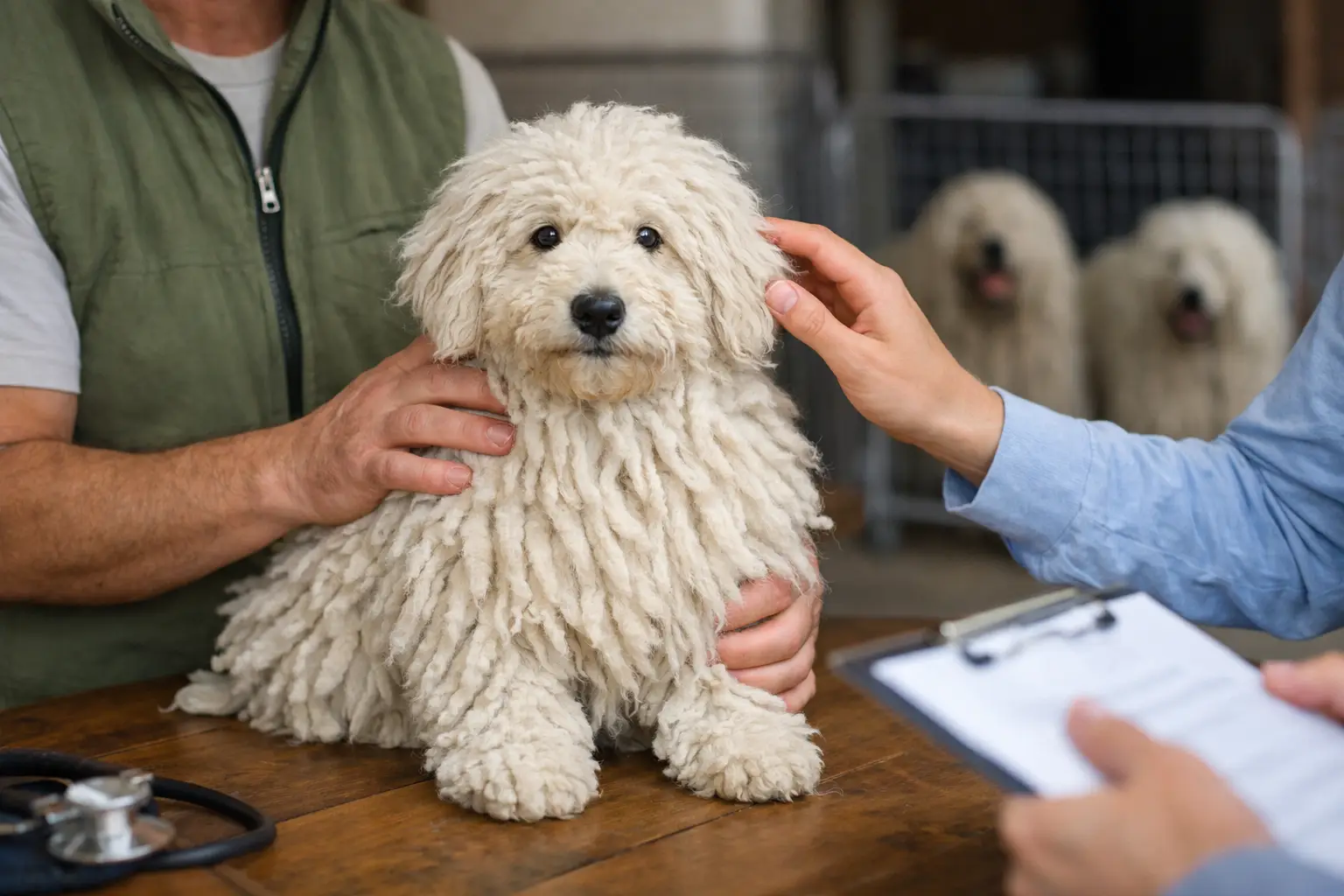
A Komondor puppy can look unforgettable at first glance, but the coat is the easy part. What matters far more is what stands behind that puppy – generations of health, correct structure, stable guardian temperament, and a breeder who understands the breed well enough to protect its future. If you are trying to learn how to choose a komondor breeder, you are not just shopping for a dog. You are choosing the source of your dog’s instincts, soundness, and long-term quality of life.
This is a breed that asks for seriousness from both breeder and owner. A Komondor is not a generic large white dog with cords. It is a historic Hungarian livestock guardian with strong judgment, natural protectiveness, and a distinct physical standard that should never be treated casually. That is why breeder selection matters so much more here than it might with a more common, easier breed.
How to choose a Komondor breeder starts with breeding purpose
The first question to ask is simple: why does this breeder produce Komondors at all? A responsible breeder should have a clear answer, and it should not begin with convenience, novelty, or volume. Good breeders are working to preserve the breed’s essential qualities – correct type, strong bone, balanced movement, sound nerves, proper coat, and authentic guardian character.
That purpose shapes every decision. A preservation-minded breeder does not pair dogs just because both are available or marketable. They study pedigrees, strengths, weaknesses, and compatibility. They think in generations, not in quick sales. If a breeder speaks only about puppies being cute, rare, or available now, you are likely not hearing from someone focused on the future of the Komondor.
For a serious buyer, this point matters because breeding goals predict outcomes. When a breeder values heritage bloodlines, temperament, and health, you have a much better chance of receiving a Komondor that matures into what the breed should be.
Look for proof of pedigree quality, not claims
In a rare breed, pedigree is not decoration. It is a record of ancestry, breeder choices, and often a clue to consistency. A reputable Komondor breeder should be able to explain where their bloodlines come from, why those lines matter, and what they contribute in terms of structure, coat, temperament, and working character.
Champion titles alone are not everything, but they are not meaningless either. In a breed with a defined standard, show results can help confirm that breeding dogs have been evaluated for correct type and construction. The key is balance. A breeder should not rely only on ribbons, and they should not dismiss them entirely. A truly knowledgeable breeder can speak about the dogs behind the pedigree as individuals, not just names on paper.
If you are buying internationally, documentation becomes even more important. Registration papers, export pedigree records, vaccination documents, and ownership transfer details should be handled carefully and transparently. A breeder who works with international homes should be prepared for this and comfortable explaining the process.
Health testing should be specific and deliberate
When people discuss purebred dogs, health can become vague very quickly. It should not be. Ask what health testing is done on the sire and dam, how the breeder evaluates breeding candidates, and whether they track health outcomes in previous litters.
A serious breeder will welcome these questions. They should also be honest about the fact that no living dog comes with absolute guarantees. Good breeding reduces risk; it does not erase biology. That honesty is a sign of integrity, not weakness.
It also helps to pay attention to how the breeder talks about health in relation to the whole dog. A Komondor should not only be free of obvious problems. It should be physically capable, substantial without being coarse, athletic enough to do its job, and mentally steady. Health, structure, and temperament are connected.
Temperament is not an extra in this breed
A poorly bred Komondor is not simply inconvenient. It can become unstable, excessively sharp, fearful, or difficult to manage. Because this is a natural guardian breed, temperament must be treated as a central breeding priority.
A good breeder should be able to describe the typical Komondor temperament with realism. This is not a breed for everyone, and trustworthy breeders say that plainly. Komondors are devoted, intelligent, protective, and often independent. They need proper socialization, experienced leadership, and homes that respect what they were bred to do.
Be cautious if a breeder tries to make the breed sound easy for every household. Overselling is a red flag. A responsible breeder will want to know about your property, experience with guardian breeds, family situation, fencing, and goals. They are not being difficult. They are making sure the puppy goes where it can succeed.
How to choose a komondor breeder by looking at the dogs themselves
Photos can be useful, but they are never enough. Study the adult dogs the breeder has produced and kept. Ask to see sires, dams, or related dogs when possible. Look beyond fluff and coat volume. A proper Komondor should show strength, balance, substance, and breed character.
The coat matters, of course. This breed is known for its distinctive corded coat, and maintaining correct coat quality is part of preserving breed type. But coat alone should never distract from weak structure, poor movement, or unstable temperament. In the best breeding programs, all of these qualities are considered together.
Consistency matters too. One nice dog can happen. A strong breeder produces recognizable quality across litters and generations. That kind of consistency usually comes from discipline, not luck.
The breeder should remain involved after the sale
One of the clearest signs of a reputable breeder is what happens after the puppy leaves. Komondor owners often need guidance on coat development, socialization, feeding, training boundaries, maturity, and guardian behavior. A breeder who cares about the breed will expect to stay in contact and help.
This support is especially valuable for international buyers. Transport planning, timing, import requirements, crate preparation, and document handling require experience. A breeder with a strong international track record should be able to explain each step clearly and keep communication steady throughout the process.
Long-term support also tells you something deeper. It means the breeder feels responsible for the dogs they produce. That sense of responsibility is exactly what you want in a rare heritage breed.
Reputation matters, but it should be the right kind
Testimonials, owner references, repeat buyers, and visible results all matter. They show whether the breeder’s promises hold up over time. If previous owners speak highly not only of their dogs, but of the breeder’s honesty, communication, and continued help, that is meaningful.
Still, reputation should be evaluated carefully. A polished presentation is not the same as breeder substance. Look for depth, not just marketing. Are there signs of real knowledge? Do the dogs appear consistent? Does the breeder speak with conviction about preservation, not just availability?
In a breed as rare and culturally significant as the Komondor, reputation should grow from stewardship. That is far more valuable than popularity.
Price should never be your first filter
Every buyer has a budget, and that is understandable. But if low price is the main reason to choose one breeder over another, the long-term cost can be high. Poor breeding decisions can lead to health issues, unstable temperament, weak structure, and heartbreak that no initial savings can justify.
A well-bred Komondor from carefully selected lines reflects years of investment in breeding stock, health screening, raising practices, pedigree preservation, and breeder expertise. That does not mean the highest price always equals the best breeder. It means price should be understood in context.
The better question is whether the breeder offers value in the form of quality, transparency, and support.
The right breeder will ask as many questions as you do
Many buyers expect to interview the breeder, and they should. But the best breeders are also evaluating the buyer. They want to know where the dog will live, what role it will have, whether the home is prepared for a serious guardian, and how committed the owner is for the long term.
That mutual selection process is healthy. It protects the puppy, the buyer, and the breed itself. At Somogyi Betyár Kennel, that principle is central because a Komondor deserves more than a quick transaction. It deserves placement with people who understand its nature and value what this breed represents.
If you leave a conversation feeling pressured, rushed, or vaguely reassured without real answers, keep looking. The right breeder will make you feel informed, respected, and challenged in the right ways.
A great Komondor begins long before birth, in the standards the breeder refuses to compromise. Choose the person who protects the breed as carefully as you plan to protect your future dog.



3 Comments