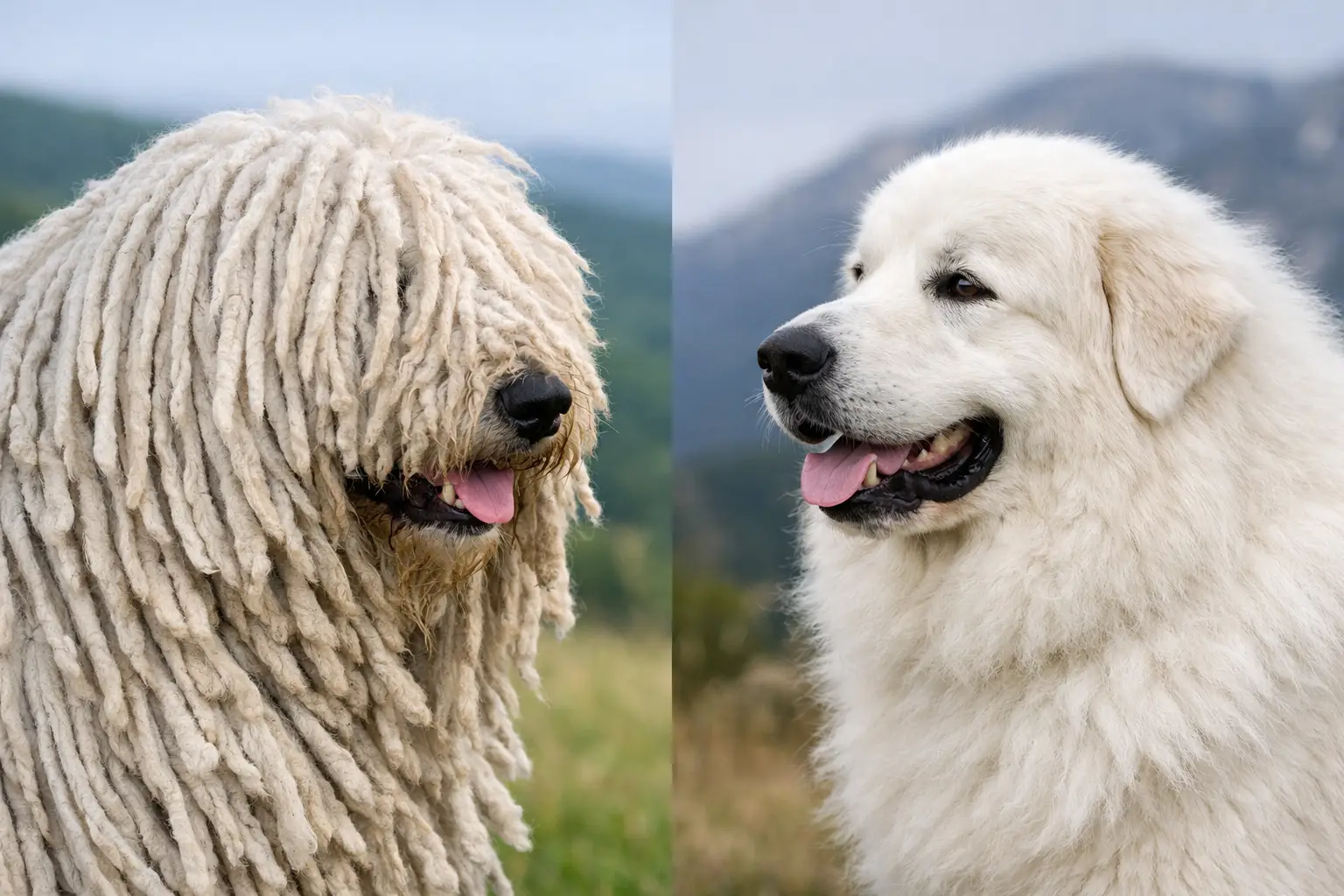
If you are weighing a komondor vs great pyrenees decision, you are not choosing between two ordinary large white dogs. You are choosing between two historic guardian breeds with different instincts, different coat demands, and very different ways of living with their people. On the surface they may seem similar, but in daily life the differences matter a great deal.
For serious owners, breeders, and livestock homes, this comparison should go beyond size charts and grooming notes. A guardian breed must fit your property, your experience level, and your expectations. The wrong match can frustrate the owner and the dog. The right one can give you years of steady protection, loyalty, and breed-specific excellence.
Komondor vs Great Pyrenees at a glance
Both breeds were developed to guard livestock, think independently, and make decisions without constant human direction. Both are imposing, protective, and capable of deep devotion to their family. That is where the easy comparison ends.
The Komondor is more specialized, more distinctive in appearance, and often more intense as a natural guardian. The Great Pyrenees is usually more familiar to the average American dog owner and can be somewhat more adaptable in mixed roles, though it still remains a serious guardian breed, not a casual pet for every home.
If your main priority is preserving a traditional guardian with unmistakable breed character, the Komondor stands apart. If you want a widely recognized livestock guardian with a softer public image and often slightly easier social acceptance, the Great Pyrenees may seem more approachable. It depends on what kind of dog you truly want to live with.
Temperament and guarding style
The Komondor mindset
A correct Komondor is calm, observant, self-possessed, and highly protective. This is not a breed that exists to please strangers. The Komondor was developed to assess, respond, and stand its ground. That creates tremendous value in the right hands, but it also means the breed requires respect, structure, and experienced ownership.
A well-bred Komondor should be stable, not chaotic. Strong guarding instinct should never be confused with weak nerves or poor temperament. This distinction is extremely important. In preservation breeding, sound temperament matters as much as coat, structure, and pedigree.
The Great Pyrenees approach
The Great Pyrenees is also independent and protective, but many individuals present with a somewhat more open and broadly tolerant demeanor. They are often affectionate with family and can be gentle, especially with children and stock. That said, they still bark, patrol, and make their own decisions. Owners who expect obedience like a retriever are usually surprised.
In practical terms, the Great Pyrenees is often perceived as the softer guardian. Sometimes that is true. Sometimes it is simply a matter of presentation. A good Pyrenees can be very serious when needed.
Appearance and breed identity
This is one area where the difference is impossible to miss. The Komondor is one of the most recognizable breeds in the world, with its corded white coat forming naturally over time. A correct adult Komondor has an unmistakable silhouette and presence. The coat is not decoration. It is part of the breed’s historic function and identity.
The Great Pyrenees has a long, abundant double coat that gives a majestic and classic mountain guardian look. It is beautiful, but more conventional to the average eye. There is less risk of people misunderstanding what they are seeing, which can matter in suburban or public-facing environments.
For buyers who value authentic heritage and rare breed preservation, the Komondor offers something extraordinary. It is not simply unusual. It is a living expression of a historic Hungarian working breed that deserves to be bred correctly and understood on its own terms.
Coat care in a real household
Komondor coat care
People often assume a corded coat must be impossible to maintain. The truth is more specific than that. A Komondor coat requires knowledge and consistency, not cosmetic trimming and routine brushing. The cords must be separated properly as the dog matures, kept clean, and dried thoroughly. Owners who understand the coat usually find a rhythm that works well. Owners who expect low effort because the dog does not need brushing are making a mistake.
The coat is highly distinctive, but it comes with responsibility. This is not a breed for someone who wants a wash-and-go giant dog.
Great Pyrenees coat care
The Great Pyrenees requires more familiar grooming. Brushing is essential, shedding is substantial, and seasonal coat blow can be intense. Mats can develop behind the ears, in the feathering, and around friction points. For many pet owners, this style of grooming feels easier because it is more familiar.
So which is easier? It depends on the owner. A person committed to proper Komondor coat development may prefer cords over endless loose shedding. A person who wants a more standard coat routine may prefer the Pyrenees.
Trainability and independence
Neither breed is eager to obey for the sake of obeying. Both were made to think for themselves. That independence is a feature, not a flaw, but only if the owner appreciates what it means.
The Komondor tends to be more reserved and more serious in its responses. Training should be firm, fair, and intelligent. Heavy-handed handling is a poor choice. So is weak leadership. Early socialization is essential, but it must be done thoughtfully, with the goal of producing a stable adult rather than a socially indiscriminate dog.
The Great Pyrenees can also be stubborn and selective in obedience work. Many owners find them charming until they realize that charm comes with a very independent operating system. If your idea of a perfect dog is highly biddable and constantly engaged with commands, neither breed is the right fit.
Family life and property fit
In a family setting, both breeds can be devoted and trustworthy when bred and raised properly. But proper placement matters.
A Komondor is best suited to owners who want a true guardian and understand that the dog’s protective instinct is central to the breed. This dog needs room, purpose, and boundaries. It can thrive with families, but not with casual ownership or inconsistent handling.
The Great Pyrenees often fits more easily into varied homes, especially rural and semi-rural environments. It may adapt better to families who want a livestock guardian or estate dog with a somewhat broader comfort zone. Still, fencing, supervision, and realistic expectations are necessary. A bored guardian breed will create its own job.
Apartment or suburban life
For most people, neither breed is ideal for apartment living. The Great Pyrenees is well known for barking, especially at night. The Komondor is typically quieter in a meaningless sense, but when it decides something matters, it means it. Both need space and a setting that respects guardian behavior.
Health, structure, and breeder quality
One of the biggest mistakes buyers make is comparing breeds without comparing breeder standards. Temperament, structure, soundness, and longevity are shaped by breeding decisions. A well-bred Komondor from health-tested, pedigree-backed lines is not the same as an average dog produced without preservation goals. The same is true for the Great Pyrenees.
For a rare breed like the Komondor, breeder quality matters even more. Preservation breeding protects correct structure, stable temperament, traditional working ability, and proper coat. Buyers who care about the future of the breed should care deeply about where their puppy comes from.
At Somogyi Betyár Kennel, that commitment is not marketing language. It is the foundation of responsible Komondor breeding.
Which breed is right for you?
If you want a more familiar guardian breed, can manage heavy shedding, and prefer a dog that may be somewhat easier for the public to understand, the Great Pyrenees may be the better choice.
If you want a rare and historic guardian with unmatched breed identity, powerful protective instinct, and deep connection to traditional working purpose, the Komondor is in a class of its own. But that choice should be made with clear eyes. This breed deserves owners who value authenticity, proper socialization, correct coat care, and breeder guidance for the long term.
A final answer in the komondor vs great pyrenees conversation comes down to this: are you looking for a large white dog, or are you looking for a specific guardian heritage with all the responsibility that comes with it? The right owner knows the difference, and the right dog will reward that seriousness every day.