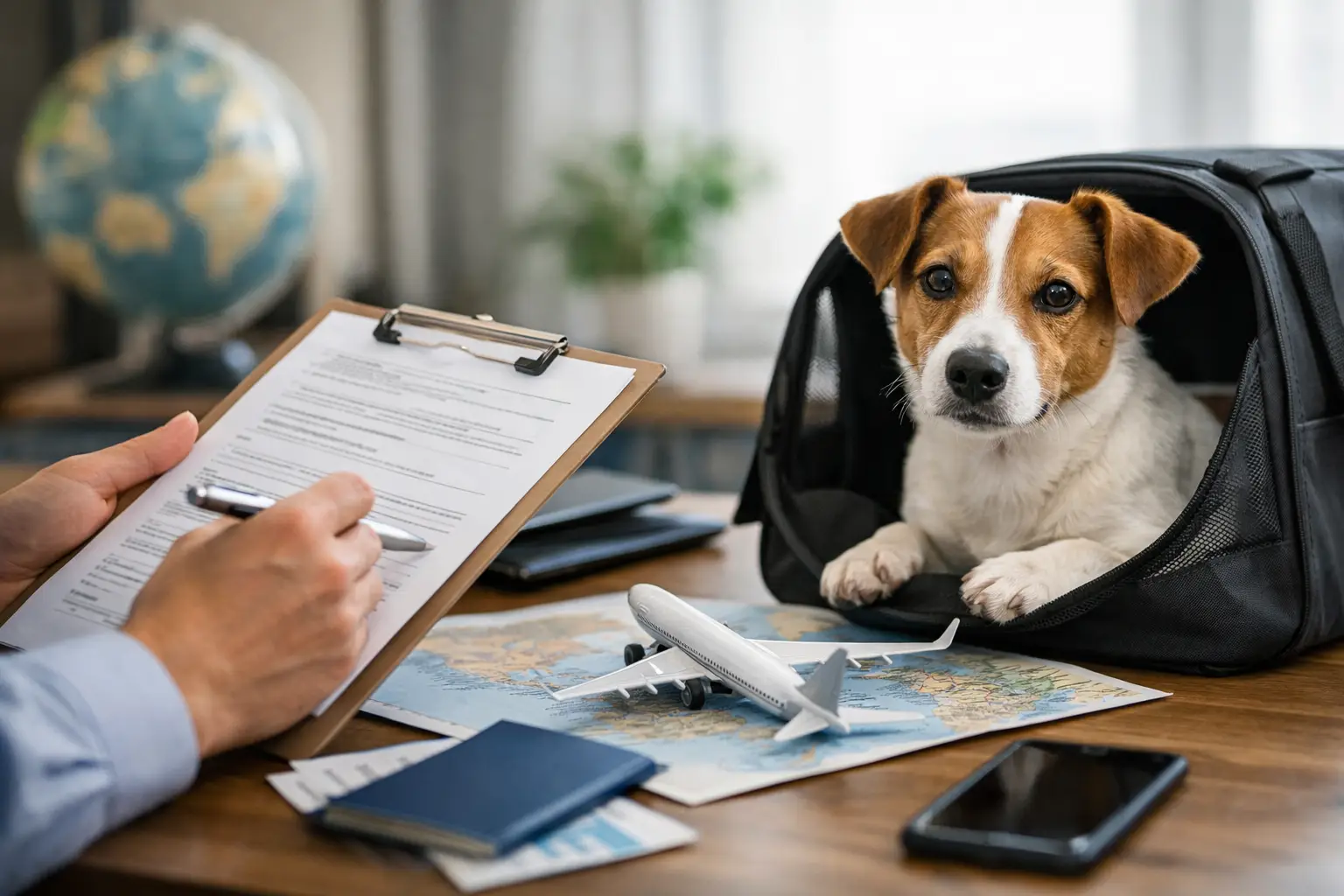
A beautiful dog can be reserved in minutes. Exporting that dog correctly takes planning, timing, and documents that must match one another exactly. If you are researching how dog export paperwork works, the most useful thing to understand is this: the paperwork is not a formality after the sale. It is part of the dog’s legal, veterinary, and pedigree identity, and one mistake can delay travel or create problems when your dog arrives.
For serious buyers importing a Komondor from Hungary or another country, the paperwork matters because it protects both the dog and the owner. It confirms health requirements, proves origin, supports breed authenticity, and allows the dog to travel under the rules of the destination country. Good breeders do not treat this as an afterthought. They prepare it with the same care they bring to breeding decisions, health testing, and placement.
How dog export paperwork works in real life
Many first-time international buyers imagine one certificate and one airline booking. In reality, export paperwork is a package of coordinated documents, and each one serves a different purpose. Some papers identify the dog, some confirm health status, some prove pedigree, and some exist only because the importing country requires them.
The exact set depends on where the dog is going, the age of the dog, whether it is traveling as a pet or under a different import category, and whether the destination country has disease-control rules that go beyond the standard veterinary check. A puppy sent to the United States may need a different timeline than a dog sent to another country with stricter entry rules. That is why experienced breeders always start with the destination first, not the flight first.
In practical terms, the process usually begins with permanent identification. The dog must be correctly microchipped if the destination country requires it, and that chip number must appear consistently on the veterinary and export documents. After that come vaccinations and waiting periods, if any apply. Then the dog is examined by an authorized veterinarian, supporting documents are prepared, and official certification is issued close to the departure date.
The core documents buyers should expect
The most important document in many exports is the veterinary health certificate. This is the paper that states the dog has been examined, appears healthy for travel, and meets the importing country’s stated requirements. Depending on the country, this certificate may need to be issued by an accredited veterinarian and then endorsed by an official government veterinary authority.
The rabies vaccination record is often central, but it is not the only health document that matters. Buyers sometimes focus on rabies because they have heard of it, yet the importing country may also care about the dog’s age at vaccination, the interval between vaccination and travel, parasite treatment, or other disease-specific declarations. A vaccine given too early, recorded incorrectly, or entered under the wrong microchip number can create major trouble.
Pedigree documentation is separate from health paperwork. If you are buying a purebred Komondor because bloodline, registration, and breed preservation matter to you, pedigree papers are essential. These documents prove the dog’s registered identity and ancestry. They do not replace export health papers, and export health papers do not replace pedigree records. Buyers should expect both categories to be handled properly.
There may also be a sales contract, transfer paperwork for kennel club registration, proof of ownership, and airline or cargo documentation. These do not all come from the same office, which is one reason the process can feel confusing to people importing a dog for the first time.
Why the microchip matters so much
The microchip is often the thread that ties the file together. If the dog’s chip number appears one way on the vaccination booklet, another way on the health certificate, and not at all on a pedigree application, questions can follow. Most export problems are not dramatic medical failures. They are administrative inconsistencies.
For that reason, careful breeders verify the chip before every major document is issued. It sounds simple, but this is one of the places where experienced export handling makes a visible difference.
Who prepares the paperwork
Buyers often ask whether the breeder, the veterinarian, or the government office handles everything. The answer is that each party has a role. The breeder organizes the dog’s identity records, pedigree-related documentation, and travel planning. The veterinarian examines the dog, confirms health status, and issues medical documents. Government veterinary authorities may endorse or certify the export paperwork when required by the destination country.
Airlines also have their own rules, but they are not the same as import law. This is an important distinction. A dog can be acceptable to the destination country and still be refused for a particular flight if the crate, route, timing, or weather conditions do not meet airline policy. Paperwork is one side of export. Safe transport is the other.
A breeder with real export experience coordinates these moving parts rather than handing the buyer a stack of forms and hoping for the best. At Somogyi Betyár Kennel, this hands-on approach matters because buyers are not simply purchasing a dog. They are trusting a breeder to protect a rare Hungarian guardian breed through every stage of placement, including the journey itself.
Timing is where many delays begin
If you want to understand how dog export paperwork works, pay attention to timing more than terminology. Some documents must be issued months before travel, while others are valid only for a short period before departure. That means the process has a natural order.
Vaccinations may need to be completed by a certain age or a certain number of days before travel. The final veterinary examination often must happen close to departure. Government endorsement, if required, must happen after the veterinarian signs but before the dog leaves. Book the flight too early, and you risk scheduling travel before the document window is valid. Book too late, and seasonal heat restrictions or cargo capacity may become a problem.
This is also why responsible breeders avoid making reckless promises about exact shipping dates too far in advance. With live-animal transport, certainty increases as the paperwork, veterinary timing, and airline conditions come into alignment.
Country rules can change
Import requirements are not fixed forever. Public health rules change. Airline policies change. Some countries introduce temporary restrictions or extra declarations with little warning. Buyers should understand that a careful breeder monitors current rules rather than relying on what worked for the last shipment six months ago.
That can be frustrating if you want a fast answer early in the process, but it is far better than learning at the airport that an old requirement sheet was outdated.
Common misunderstandings buyers should avoid
One common mistake is assuming that AKC-related registration questions, pedigree paperwork, and import health approval are all the same issue. They are not. You may be able to register a properly documented imported dog after arrival, but that does not mean the registration papers alone can get the dog through border control.
Another misunderstanding is thinking that any veterinarian can issue any export document. Some countries require official forms, specific wording, or endorsement steps that must be completed by authorized professionals. If the paperwork is prepared casually, the buyer may pay for corrections, rebooking, or quarantine-related complications.
There is also a tendency to underestimate translation, naming consistency, and identity details. The dog’s registered name, call name, sex, date of birth, microchip number, and owner information must align across the file. Even small discrepancies can slow processing.
What buyers should ask before reserving a dog
A serious buyer does not need to become an export clerk, but asking a few informed questions helps. Ask which documents will be provided, whether the breeder has shipped to your country before, what health and identification steps are already complete, and what parts of the process depend on the destination country’s current rules. Ask how flight timing is coordinated with veterinary certification.
The right breeder will answer calmly and specifically. Vague reassurances are not enough when importing a rare purebred dog. You want evidence of process, not just confidence.
For Komondor buyers, this matters even more because you are often not choosing a dog based on convenience. You are choosing a dog for heritage bloodlines, structure, temperament, working instinct, and correct breed character. That level of commitment deserves export handling that matches the value of the dog.
A well-bred dog should arrive with more than a crate tag and a promise. The paperwork should tell a coherent story: this is the right dog, properly identified, properly vaccinated, properly examined, and properly prepared for lawful entry. When that story is complete, the journey feels less uncertain – and the beginning of life with your dog feels exactly as it should.