
A Komondor puppy does not need to greet every stranger with enthusiasm. He needs to learn that the world is predictable, that his owner provides direction, and that calm observation is often the correct response. That distinction is at the heart of Komondor puppy socialization. Done well, it protects the breed’s traditional guardian character while helping a young dog become reliable in a modern home, on a farm, at the veterinarian, and around invited guests.
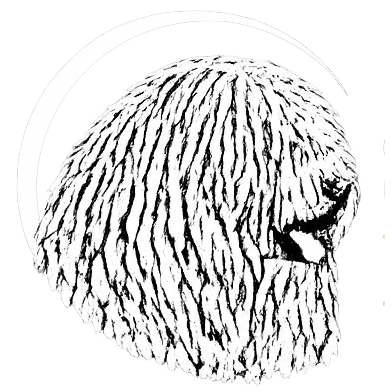
The Komondor was developed in Hungary to make independent decisions while guarding livestock. His impressive corded coat may attract attention, but the serious owner must understand what stands behind it: a loyal, intelligent, naturally watchful dog with a strong sense of territory. Socialization should never try to turn this heritage guardian into a carefree social butterfly. Its purpose is to build confidence, discernment, and trust in his people.
What Komondor Puppy Socialization Should Achieve
For many breeds, socialization is described as making the puppy friendly with everyone and everything. That is too simple for a Komondor. A well-socialized Komondor can remain reserved with unfamiliar people while still being stable, manageable, and safe. He can notice a delivery driver, another dog, a new sound, or a change in routine without immediately feeling compelled to challenge it.
The desired adult is neither fearful nor indiscriminately outgoing. He is confident, composed, and responsive to his owner’s judgment. When introduced properly, he learns that family friends, veterinary staff, grooming, travel crates, vehicles, and everyday household activity are normal parts of life. At the same time, he retains the awareness and seriousness that make the Komondor a true guardian breed.
Temperament begins with responsible breeding. Puppies from stable, health-tested, correctly selected parents have the strongest foundation, but genetics are not a substitute for thoughtful raising. Early experiences shape how a puppy uses the instincts he inherited.
The Breeder’s Foundation Matters
The first weeks of a puppy’s life are not an empty waiting period before he joins his family. They are a sensitive developmental stage. A conscientious breeder raises puppies in a clean, secure environment with appropriate contact, gentle handling, household sounds, changing surfaces, and carefully managed new experiences.
At Somogyi Betyár Kennel, preserving traditional Hungarian champion bloodlines means protecting more than correct coat, structure, and pedigree. It also means selecting for the sound, steady temperament that allows a Komondor to fulfill his role with confidence. A puppy should arrive in his new home prepared to learn, not overwhelmed by a world he has never encountered.
Calm Exposure Is Better Than Constant Stimulation
A young Komondor benefits from hearing a vacuum, a television, doors opening, pots in the kitchen, and normal family activity. He should experience different safe surfaces underfoot, short car rides, gentle examinations of paws and ears, and brief encounters with trustworthy people.
The goal is not a packed schedule of exciting events. Too much stimulation, especially without rest, can create an overtired and uncertain puppy. Quality matters more than quantity. A calm visitor who ignores the puppy until he chooses to approach can be more useful than a crowded gathering where multiple people reach for him at once.
Handling Builds Future Cooperation
Komondors require regular coat care throughout their lives, and the coat becomes a major commitment as cords form and mature. Begin handling early and kindly. Touch the feet, look in the ears, lift the lips briefly, and reward calm acceptance. Keep sessions short enough that the puppy succeeds.
This early work is not merely grooming preparation. It teaches the puppy that human guidance is safe. That lesson will matter at veterinary appointments, during travel, and whenever an adult Komondor needs care that cannot be negotiated with a treat alone.
The First Weeks at Home
When a Komondor puppy arrives, resist the urge to introduce him to every neighbor immediately. His first job is to settle into his new family, sleep well, learn the household rhythm, and begin to understand where he belongs. A secure attachment to his owners gives later socialization its value.
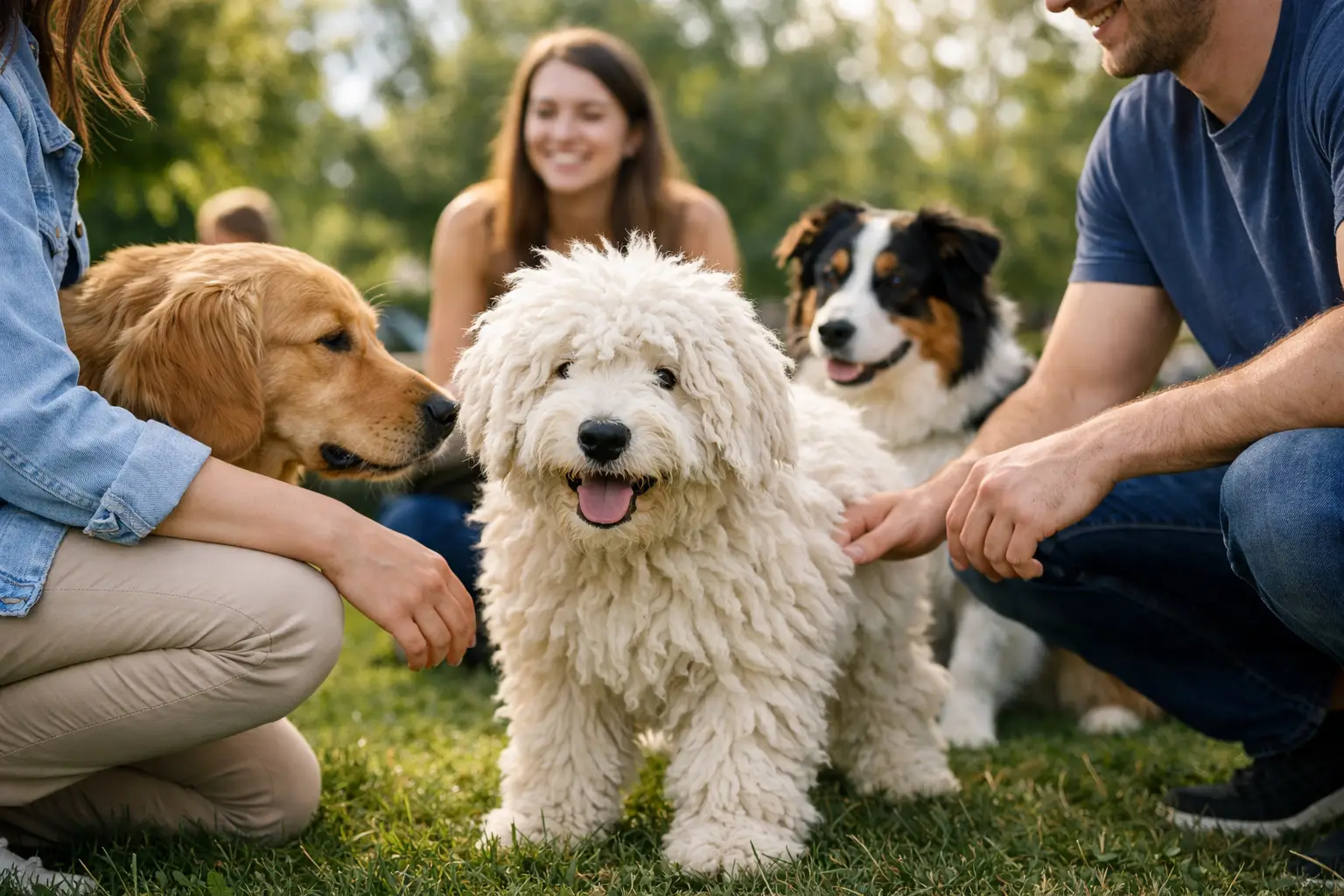
Introduce new people one or two at a time. Ask visitors to enter calmly and allow the puppy space. Do not encourage strangers to lean over him, stare directly into his face, or insist on petting him. A Komondor puppy may be curious one day and more reserved the next. Both responses can be normal. Watch his body language and let confidence grow at his pace.
Use daily life as training. A puppy can watch a bicycle pass from a comfortable distance, hear children playing beyond a fence, rest in a crate while the family eats dinner, and accompany an owner on a quiet drive. Pair novel experiences with calm praise, a few pieces of food, or simply the reassurance of your presence.
Consistency matters. If the household expects the adult dog to wait calmly at doors, rest on a designated bed, and accept guidance around guests, begin those routines from the first day. The Komondor is intelligent and observant. He notices which rules are real.
Socializing With People, Dogs, and Places
A puppy should meet a variety of people, but the quality of those meetings is crucial. Include calm adults of different ages and appearances, people wearing hats or carrying bags, and respectful older children who can follow instructions. Teach children that the puppy is not a toy and should never be cornered, chased, climbed on, or disturbed while eating or sleeping.
Carefully chosen dog interactions are valuable as well. Avoid uncontrolled dog parks, particularly for a young guardian breed. A bad encounter with an overbearing or rude dog can leave a lasting impression. Instead, arrange brief meetings with stable, vaccinated adult dogs that communicate appropriately and will not overwhelm the puppy.
New locations should be introduced gradually. A quiet sidewalk, a friend’s fenced yard, a pet-friendly store during a slow hour, or a veterinary clinic visit for treats can all be useful. If the puppy becomes tense, freezes, pulls away, refuses food, or cannot settle, increase distance and simplify the situation. Socialization is not measured by how close he can be pushed toward something. It is measured by whether he can recover and remain composed.
Do Not Confuse Protection With Fear
Some owners make a mistake when they praise every bark, growl, or suspicious reaction because they want a protective dog. The Komondor does not need encouragement to notice his environment. He needs leadership that tells him when his concern is unnecessary.
If a puppy barks at a visitor, do not punish him harshly or soothe him as though there is danger. Calmly acknowledge the situation, manage the distance, and show him through your behavior that the person has been accepted. A controlled introduction, a leash, and a clear place command are often more useful than repeated verbal correction.
Likewise, never force a fearful puppy into contact. Dragging him toward strangers or holding him still while people pet him may suppress visible behavior in the moment, but it does not create confidence. It can teach him that warnings are ignored. Give him room, provide a safe exit, and build positive associations through small successful steps.
Guardian Instinct Requires Clear Boundaries
As adolescence begins, many Komondors become more aware of boundaries, visitors, and unusual activity. This is a natural stage, not proof that socialization has failed. However, it is the time to become especially consistent about management and obedience.
Your dog should learn where he is expected to stay when guests arrive, how to come when called, how to walk on leash without pulling, and how to settle after excitement. These skills are not designed to diminish his spirit. They allow an owner to direct a powerful guardian responsibly.
The same principle applies to livestock and property. A Komondor intended for farm life needs patient, supervised introduction to the animals he will live with. He should not be left to sort out every situation alone because he belongs to a guardian breed. Early supervision teaches appropriate boundaries and gives the owner a clear picture of the dog’s developing behavior.
Keep Socialization Going Into Adulthood
Socialization is not complete after a puppy class or a few busy weekends. A mature Komondor benefits from continued, low-pressure exposure to ordinary life. Maintain grooming routines, take occasional car rides, invite respectful guests, and practice calm behavior in different environments.
There is a trade-off to consider. A Komondor living on a quiet rural property may need less frequent public exposure than one living in a suburban neighborhood with visitors, traffic, and nearby dogs. Yet every Komondor should be able to accept necessary handling, travel safely, and take direction from his owner. The setting may change, but the responsibility does not.
Choose professional help early if you see persistent fear, escalating reactivity, guarding behavior directed toward family members, or difficulty recovering after normal surprises. Work with a trainer who respects guardian breeds and understands that the goal is stable control, not forced sociability.
A correctly socialized Komondor grows into the dog this remarkable Hungarian breed was meant to be: devoted to his family, clear-headed in unfamiliar situations, and confident without being reckless. Give your puppy patient guidance now, and he will have the security to carry his heritage with dignity for the rest of his life.