A Komondor puppy should never be chosen because a photograph is striking or a price appears convenient. This is a powerful, independent Hungarian guardian with a coat, character, and purpose unlike any other breed. The top signs of a reputable Komondor breeder reveal whether the person behind the litter is protecting that legacy or simply producing puppies.
For serious owners, the right breeder is not merely a seller. They are a steward of bloodlines, a careful evaluator of temperament, and a lifelong source of honest guidance. That distinction matters profoundly with a breed whose natural protective instinct requires correct genetics, responsible early raising, and an owner prepared for the commitment.
Top Signs of a Reputable Komondor Breeder
They breed for the authentic Komondor, not a fashionable version
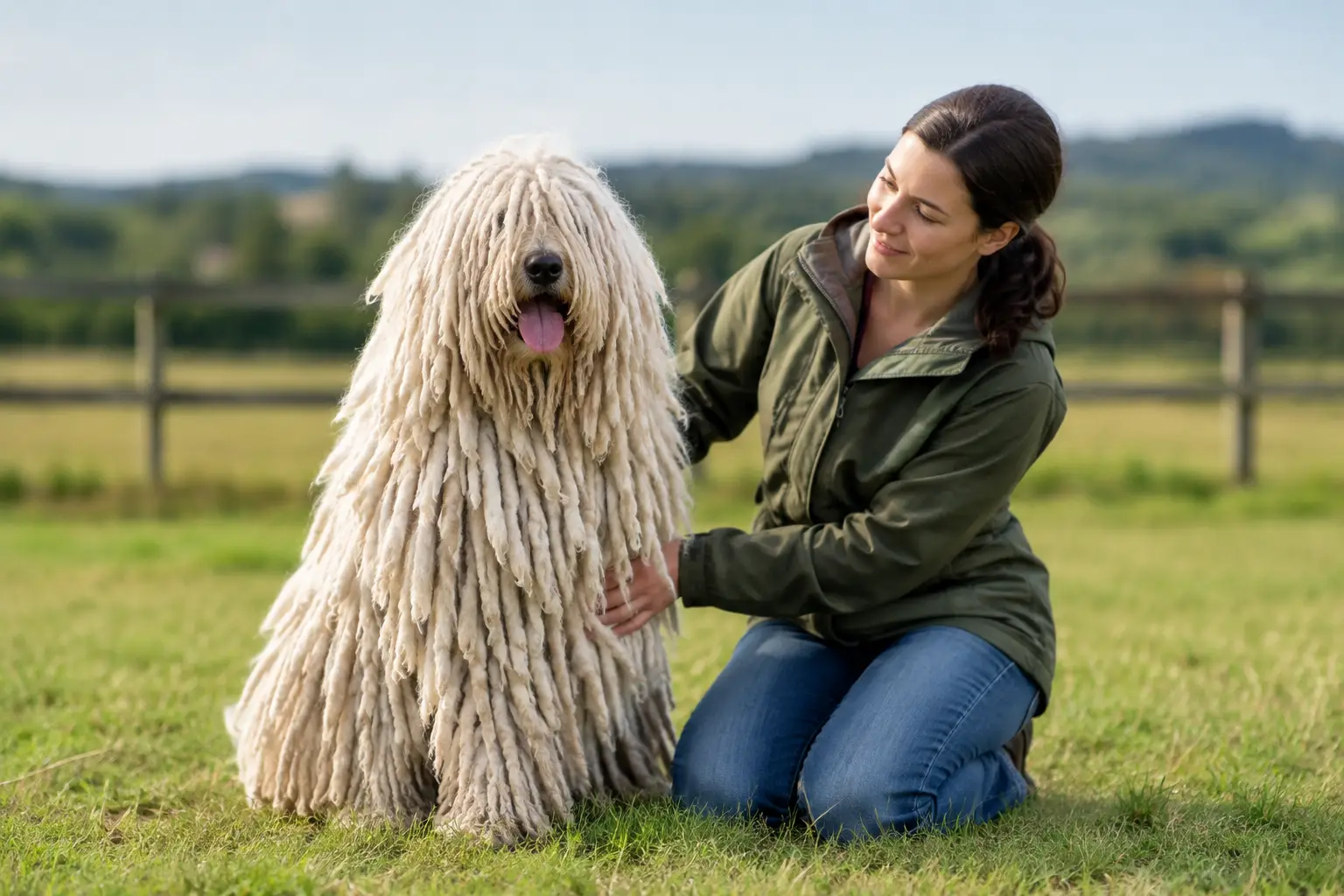
A reputable breeder can explain what a correct Komondor is meant to be. The breed was developed in Hungary to guard livestock independently, often making sound decisions without waiting for human direction. A proper Komondor should have strength, balance, courage, stable nerves, and a calm, watchful presence. It should not be needlessly sharp, fearful, unstable, or bred to be a novelty pet.
This is why structure matters as much as the famous corded white coat. A breeder dedicated to preservation evaluates body proportions, movement, bone, head type, coat texture, and the overall working character that gives the breed its identity. They can speak clearly about why a particular sire and dam were selected, rather than offering vague claims that both parents are “beautiful” or “friendly.”
The Komondor is not the right dog for every household. An ethical breeder says so openly. They will discuss boundaries, training, socialization, coat care, space, visitors, and the reality that a guardian breed needs thoughtful leadership. Be cautious if someone promises that every Komondor is effortless with every stranger, dog, or living situation.
They provide documented pedigree and explain the bloodline
A pedigree is more than a decorative certificate. It records the generations behind the puppy and gives buyers a meaningful view of lineage, titles, and breeding continuity. For a heritage breed such as the Komondor, documented pedigree is one of the strongest protections against careless breeding and false claims.
A serious breeder is proud to discuss the dogs behind a litter. They should be able to identify the registered parents, describe their qualities, and explain the breeding goal. In Hungary, where the Komondor has deep cultural and working roots, access to established champion bloodlines can be especially valuable when paired with selection for real breed character rather than titles alone.
Championships are not a substitute for health or temperament, but they can show that dogs have been evaluated against the breed standard. The most credible breeders put the full picture together: pedigree, conformation, temperament, health, and the ability to preserve the Komondor’s traditional type.
They use health testing as a breeding responsibility
No breeder can promise that a living animal will never face a health concern. What responsible breeders can do is reduce avoidable risk by health testing breeding dogs, studying family history, and refusing to treat health as an afterthought.
Ask what evaluations have been performed on the parents and what the breeder knows about health in the line. The answer should be direct, specific, and supported by documentation where appropriate. A breeder who becomes evasive when health is discussed, dismisses testing as unnecessary, or claims their dogs are healthy simply because they “look healthy” is asking buyers to accept uncertainty without evidence.
Health-minded breeding also means making difficult decisions. A breeder devoted to the future of the Komondor may choose not to breed a dog with an otherwise impressive appearance if the dog does not meet their standards for soundness or breeding suitability. That restraint is a mark of integrity, not a limitation.
Temperament Is Bred, Raised, and Matched Carefully
A Komondor’s natural reserve should not be confused with poor temperament. The breed is not expected to greet every person with the exuberance of a social companion breed. However, a well-bred Komondor should be confident, clear-headed, and capable of settling when properly introduced and managed.
Reputable breeders observe their puppies from the beginning. They notice confidence, recovery from new experiences, curiosity, sensitivity, energy level, and interactions with people and littermates. Those observations help them make responsible placements. The boldest puppy is not automatically best for every buyer, and the quietest puppy is not automatically the easiest.
A breeder should ask you questions, too. They may want to know about your property, family, other animals, dog experience, travel schedule, training plans, and reasons for wanting a Komondor. This is not an inconvenience. It is evidence that they care where each puppy goes.
Early socialization should be discussed with care rather than marketed as a magic solution. Puppies benefit from positive exposure to normal household life, handling, surfaces, sounds, and people. Yet socialization does not erase genetics, and forcing a guardian puppy into overwhelming situations can be counterproductive. A knowledgeable breeder prepares puppies thoughtfully and helps owners continue that work at an appropriate pace.
They are transparent about how puppies are raised
You should be able to learn where puppies are born and raised, how they are cared for, and how the breeder manages cleanliness, nutrition, veterinary attention, and early development. Photos and videos can be useful, but they should support transparency rather than replace it.
Look for consistency between what a breeder says and what they show. Are the adult dogs presented as valued members of a carefully managed breeding program? Does the breeder share information about their daily care and the puppies’ development? Are questions welcomed?
For international buyers, an in-person visit may not always be possible. In that case, clear communication becomes even more significant. A breeder experienced with overseas placements should be prepared to provide current updates, records, pedigree information, and a realistic explanation of travel timing. They should never create pressure by making vague assurances about export arrangements.
A Reputable Breeder Has a Clear, Responsible Placement Process
A carefully written agreement is another sign of professionalism. It should explain what is included with the puppy, the pedigree and registration documentation, health records, deposit expectations, transport arrangements if applicable, and each party’s responsibilities. There should be no surprises hidden behind hurried payment requests.
Responsible breeders also remain available after placement. A Komondor changes dramatically from puppyhood into adulthood, especially as its guardian instincts mature and its coat begins to cord. New owners may need help with grooming methods, training decisions, introductions to visitors, or normal developmental questions. Long-term guidance is part of responsible breeding because the breeder has a continuing interest in the dog’s welfare.
This support should be practical, not intrusive. Good breeders respect that owners must build their own relationship with their dog, while being ready to offer knowledgeable help when it is needed. They are also honest about what they do not know and do not make impossible guarantees.
Their reputation is built over time, not manufactured overnight
Testimonials, show results, owner references, and an established history can all offer useful context. Look beyond polished marketing language. Are past owners willing to describe their experience? Does the breeder have a recognizable commitment to the breed over years rather than a rotating collection of popular breeds?
A breeder focused exclusively on Komondors often develops a deeper understanding of the breed’s lines, coat development, temperament, and placement needs. Somogyi Betyár Kennel, for example, centers its work on preserving pedigree-backed Komondors from Hungarian champion lines while supporting owners well beyond the initial placement.
Still, reputation should never mean that you stop asking questions. Even a breeder with awards and strong references should welcome thoughtful inquiry. Trust grows through open answers, consistent records, and the feeling that the breeder cares as much about the right home as the buyer cares about finding the right dog.
Watch for Pressure, Vagueness, and Easy Promises
The warning signs are often simple. A seller who always has many puppies immediately available, cannot provide reliable parent information, avoids discussing health, or pushes for a fast payment deserves close scrutiny. So does anyone who markets a Komondor as a low-maintenance family dog without addressing the breed’s guarding nature and demanding coat.
Price alone is not proof of quality or dishonesty. Raising well-bred puppies responsibly involves health evaluations, quality food, veterinary care, careful housing, registration, grooming, socialization, and substantial time. The better question is what stands behind the price: documented breeding decisions, proper care, transparent paperwork, and lasting support.
Choosing a Komondor breeder is ultimately choosing the foundation of your future dog’s life. Take the time to ask difficult questions, read every document, and look for a breeder whose standards remain firm even when an easier sale would be possible. The right puppy is worth waiting for, especially when that puppy carries the strength, dignity, and enduring heritage of the true Hungarian Komondor.