

Key takeaways
- Verify hip, eye, and parentage testing in writing before paying any Komondor deposit, whether you buy locally or import.
- A corded white coat reflects sun but traps heat, so Texas owners need shade, constant water, and cooler-hour activity in summer.
- Dogs entering the US must be at least six months old, microchipped, and accompanied by a completed CDC Dog Import Form.
- Importing from a champion Hungarian kennel gives you documented pedigree and health clearances that many local listings cannot match.
- A clear written contract covering deposit, health guarantee, and transport protects both the buyer and the puppy.
If you are searching for Komondor puppies for sale in Texas, your first job is to confirm health testing and pedigree, not to find the lowest price. The breed is rare enough in the United States that strong options may come from an established kennel abroad as much as from a Texas backyard listing, and both routes need the same scrutiny.
This guide walks a ready-to-buy Texas family through the full decision: how to vet a health-tested litter, how a heavy corded coat copes with Texas summers, when importing from a champion Hungarian kennel beats a local listing, and how shipping, ground transport, deposits, and pickup actually work.
Finding health-tested Komondor puppies for Texas homes
The Komondor is a working livestock guardian with a big frame, and the health risks that matter most are the ones tied to large breeds. Before you commit, ask any seller for written proof of hip and elbow evaluation on both parents, an eye examination, and clear documentation of the puppy's lineage. A responsible breeder volunteers this paperwork. A seller who deflects or promises to "send it later" is telling you something.
Texas has only a handful of Komondor breeders at any given time because the breed is uncommon across the whole country. That scarcity pushes many buyers toward one of two paths: wait for a vetted local litter, or import from a kennel with a longer track record. Either way, the checklist is the same. Confirm the parents were health tested, meet or video-call the breeder, see the puppies with the dam, and read the contract before money changes hands. Our guide to choosing a reputable Komondor breeder breaks down the exact questions to ask.
Heat management for a heavy corded coat in a warm climate
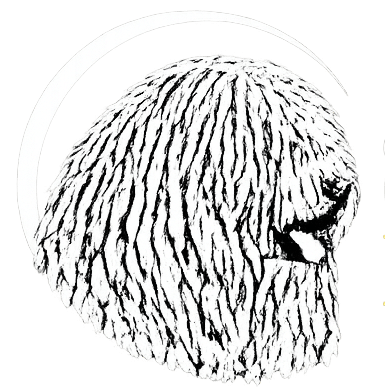
A Komondor's white cords are a double-edged tool in Texas. The pale coat reflects a good deal of sunlight, and the cords create insulating air pockets that buffer the dog against outside temperature. They also trap heat against the body once the dog gets warm, which is why a Komondor cannot be treated like a short-coated ranch dog in July.
Texas summers are demanding. Average July highs run in the mid-90s across Dallas, Austin, and San Antonio, and sit near the low-90s in Houston. For a dog carrying a heavy corded coat, that range calls for a simple routine:
- Walk and train in the early morning and after sundown, not at midday.
- Keep fresh water available at all times, indoors and out.
- Give the dog access to shade and air conditioning during peak heat.
- Watch for heavy panting, drooling, or lethargy, which signal heat stress.
- Keep the cords clean and fully dried after bathing so moisture does not sit against the skin.
The coat should never be shaved to "cool the dog down." Shaving removes the insulation that protects against both heat and sunburn, and it destroys the corded structure that takes years to form. Manage the environment instead of the coat.
Importing from a champion Hungarian kennel vs local listings
The Komondor is a Hungarian national breed, and Hungary remains the center of its gene pool and its working-dog culture. A champion Hungarian kennel like Mykomondors can offer export pedigrees, completed health clearances, and a breeding program judged in European show rings. That depth is hard to match in a country where the breed is scarce and casual litters appear and vanish.
Local Texas listings have obvious appeal: you can drive to meet the puppy, and there is no customs process. The risk is that a thin local market makes it easier for unprepared or careless breeders to operate, because demand outstrips supply. When you compare options, weigh documentation and testing over proximity. A health-tested imported puppy with a full pedigree can be a safer long-term investment than a nearby litter with no paperwork.
Price is not the deciding factor on its own. Factor in the cost of future veterinary care that solid health testing helps you avoid, and the value of a breeder who will answer questions for the life of the dog. A health-tested imported puppy with a documented pedigree often proves to be the sounder choice over the dog's lifetime.
Shipping and ground transport options into Texas
Bringing a puppy into the US from Hungary follows federal rules that changed recently, so current information matters. As of 2026, the CDC requires that any dog entering the United States be at least six months old, carry a microchip that a universal scanner can read, appear healthy on arrival, and arrive with a completed CDC Dog Import Form submitted before entry. For a dog coming from a low-risk country such as Hungary, that form is the core document.
The six-month age rule shapes the whole timeline. A Hungarian puppy will be older than the eight-to-twelve-week window buyers often picture, which actually suits a long-distance move: an older puppy travels more steadily and arrives better socialized. A reputable kennel manages the microchip, vaccination records, and crate acclimation well before the flight.
For the flight itself, puppies travel as checked cargo or accompanied by a professional courier on routes that serve major Texas airports of entry. Work with an established pet relocation service rather than booking a dog onto a passenger reservation yourself, because the paperwork and welfare requirements are specific.
Ground transport for the last leg into Texas
Once the dog clears customs at a US port of entry, the last leg is ground transport. Texas is large, and your nearest international airport may still be hours from home, so most imported puppies finish the trip by road. Two models are common:
- Breeder-coordinated transport, where the kennel arranges a vetted courier from the airport to your door.
- Independent licensed pet transporters, who run shared routes and can add a Texas stop to an existing schedule.
Confirm in advance who meets the dog at the airport, who signs for it, and how long the ground leg takes, so a tired puppy is not left waiting. A good breeder treats the handoff as part of the sale, not as your problem to solve alone.
Deposit, contract, and pickup logistics explained
A deposit reserves a specific puppy or a place in a specific litter. Before you send one, get a written contract that names the litter, states the total price, and spells out what the deposit covers and whether any part of it is refundable. Vague deposits with no paper trail are a warning sign.
Read the health guarantee closely. It should state what conditions are covered, for how long, and what the breeder will do if a serious genetic problem appears. It should also require you to have the puppy examined by your own veterinarian within a set number of days after pickup, which protects both sides.
Pickup logistics depend on your route. For a local Texas litter, you collect the puppy in person once it is old enough to leave the dam. For an import, "pickup" usually means receiving the dog from a courier at your home or meeting the ground transporter at an agreed point. Either way, line up supplies and a quiet space in advance, since the first days set the tone. Our checklist for a Komondor puppy's first week home covers what to have ready before the dog arrives.
The next concrete step is simple: write down your non-negotiables for health testing and paperwork, then ask any breeder you contact, in Texas or in Hungary, to answer them in writing before you discuss a deposit. If you want to start that conversation about a documented, health-tested litter, reach out to Mykomondors directly with your questions and timeline.
Frequently asked questions
Can I buy a Komondor puppy in Texas or do I have to import one?
Both are possible. Texas has a small number of breeders, but the Komondor is rare in the US, so many serious buyers import from established Hungarian kennels to secure documented pedigrees and health testing.
How do Komondors handle Texas summer heat?
They can live comfortably in Texas with planning. Provide shade, fresh water at all times, air conditioning, and exercise during the cooler morning and evening hours to avoid heat stress.
What paperwork does a puppy need to enter the US from Hungary?
As of 2026, a dog must be at least six months old, have a readable microchip, appear healthy on arrival, and have a completed CDC Dog Import Form submitted before entry.
Should I pay a deposit before meeting the breeder?
Only pay a deposit tied to a written contract that names the specific litter or puppy and spells out health guarantees, refund terms, and transport responsibilities.
How does ground transport into Texas work for an imported puppy?
After the dog clears a US airport of entry, a licensed pet transport service or the breeder's partner can drive the puppy to your Texas address, often as part of a shared route.