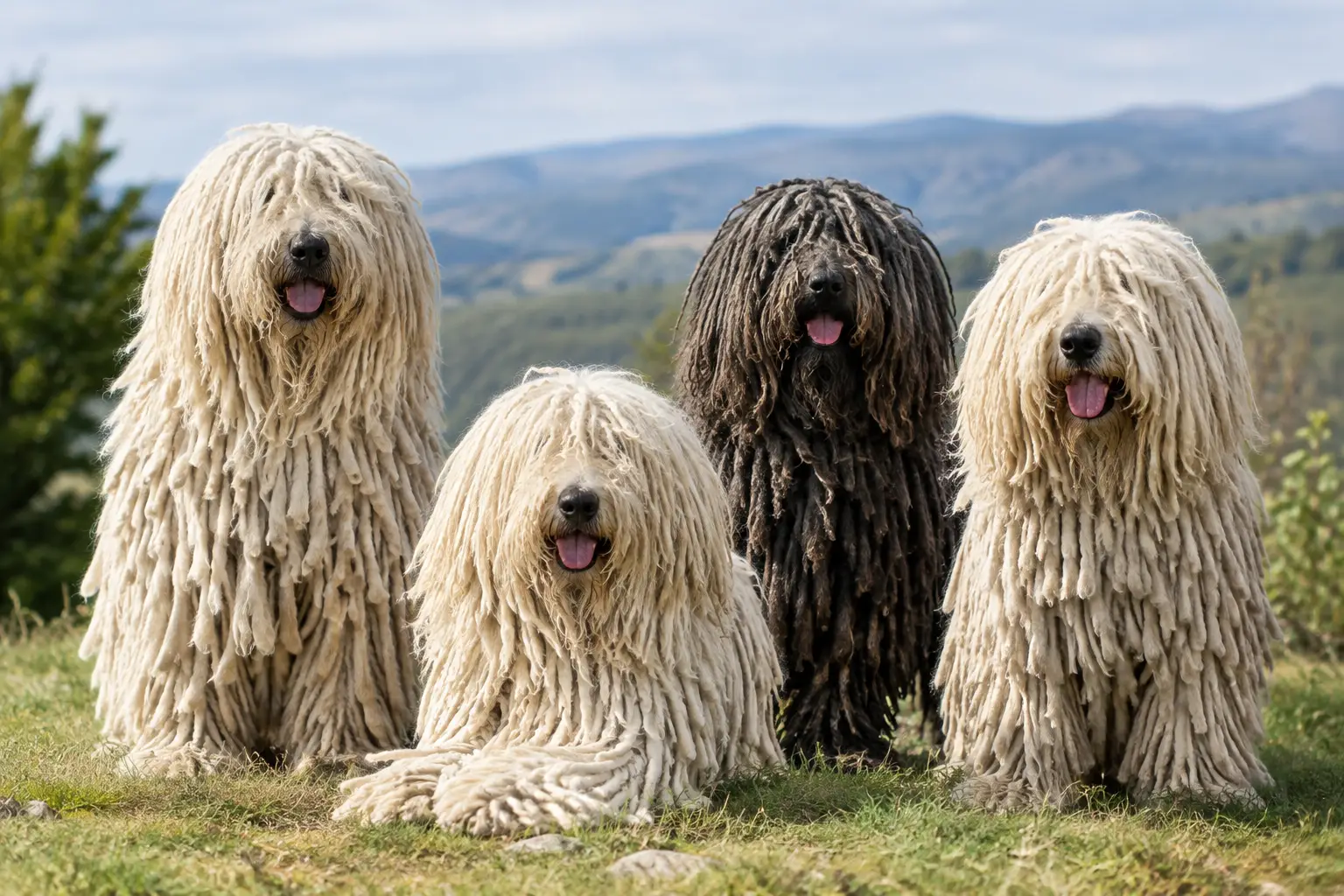
A Komondor’s unmistakable white cords and steady guardian character did not appear by accident. They are the result of generations of purposeful selection. Yet Komondor genetic diversity trends remind every serious breeder and future owner that preserving a breed means more than reproducing a recognizable appearance. It means protecting the breadth of heritage that supports sound health, stable temperament, working ability, and a viable future for this rare Hungarian breed.
For buyers, genetic diversity can sound like a subject reserved for scientists and breeding committees. In reality, it belongs in the conversation whenever someone is choosing a breeder, reviewing a pedigree, or considering whether a puppy comes from a program built for the long term. A beautiful pedigree matters, but the wisdom behind how those pedigrees are combined matters just as much.
Why Komondor Genetic Diversity Trends Deserve Attention
The Komondor is a numerically small breed compared with many popular companion breeds. A limited population creates a natural challenge: there are fewer unrelated dogs available for responsible breeding, especially when a breeder is also committed to correct Hungarian type, reliable guarding instinct, structure, coat, and temperament.
This does not mean a carefully bred Komondor is inherently unhealthy, nor does it mean every related pedigree is poor breeding. Responsible linebreeding has historically been used to reinforce valuable and predictable traits. The concern arises when the same ancestors, and especially the same highly successful sires, appear too repeatedly across the population. Over time, a breed can lose genetic options even while individual litters look excellent on paper.
Genetic diversity is best understood as a reserve of possibilities. It gives breeders more room to make thoughtful choices as health information develops, as working qualities are evaluated, and as the next generation is planned. Once diversity is lost, it is difficult to recover within a closed purebred population.
The Forces That Shape Diversity in a Rare Breed
Several familiar breeding patterns can narrow a breed’s genetic base. The most significant is the popular-sire effect. When one winning, impressive, or heavily promoted male produces a large number of offspring, his influence can extend far beyond his own generation. His best qualities may become common, but so can recessive risks or less desirable traits that were not yet visible.
Another factor is pedigree concentration. Two dogs do not need to be closely related in the first few generations to share many of the same ancestors farther back. A pedigree may contain famous, respected dogs repeatedly, creating a genetic picture that is more concentrated than it first appears.
Geography also matters. Komondors have been exported from Hungary to many countries, which is a positive development for the breed when handled with care. However, importing a dog does not automatically add meaningful diversity if its relatives are already strongly represented in the destination country. True breeding value requires looking beyond a dog’s location and considering its full pedigree, health record, temperament, and contribution to the wider population.
Pedigrees Tell a Story, but Not the Whole Story
A documented pedigree remains essential. It confirms identity, traces ancestry, and helps breeders recognize repeated lines. For a heritage breed such as the Komondor, a pedigree is also part of cultural stewardship. It connects a puppy to the Hungarian dogs and breeding decisions that shaped the breed’s traditional character.
Still, pedigree analysis has limits. The coefficient of inbreeding, often called COI, estimates the likelihood that a puppy receives matching gene copies from common ancestors. It can be useful, particularly when calculated across many generations. But one number cannot determine whether a breeding is responsible.
A lower COI is not automatically better if it is achieved by ignoring temperament, conformation, health knowledge, or breed character. Likewise, a higher number does not prove that a particular dog will have a health problem. The most responsible approach considers COI alongside the depth of the pedigree, the prevalence of ancestors, available health information, longevity in the family, and the breeder’s honest knowledge of the dogs behind the names.
Genetic testing can add another valuable layer. Depending on the test and the condition being evaluated, DNA results may help breeders avoid producing puppies at risk for specific inherited diseases. Broader genomic tools may also offer insight into population diversity. These tools are meaningful when interpreted carefully, but they do not replace skilled evaluation of the whole dog.
Preserving Type Without Breeding Too Narrowly
A serious Komondor breeder should never treat diversity as an excuse to compromise the breed. The goal is not to create a generic large white dog with a corded coat. A correct Komondor should remain powerful, balanced, alert, self-possessed, and naturally protective without unnecessary sharpness. Its coat, movement, proportions, and reserved dignity are all part of its identity.
The better question is how to preserve that identity while avoiding unnecessary repetition. This requires patience. It may mean choosing a less fashionable male with strong breed qualities and a valuable pedigree rather than following the most obvious show-ring trend. It may mean keeping detailed notes on adult temperament, orthopedic soundness, coat development, fertility, longevity, and the performance of previous offspring.
There are trade-offs in every breeding decision. A pairing that broadens a pedigree may produce more variation in a litter, which demands especially careful evaluation. A tightly established line may offer predictability but can reduce flexibility later. No responsible breeder promises perfect outcomes. What distinguishes a serious program is the willingness to assess results honestly and make the next decision with the breed’s future in mind.
What Responsible Breeding Looks Like Over Time
Genetic stewardship is not a single test or a marketing phrase. It is a long-term discipline. It begins with selecting breeding dogs that are worthy representatives of the Komondor in health, character, and structure. It continues through full pedigree study, appropriate health screening, and restraint in how often any one dog is used.
It also depends on follow-through after puppies leave. Ethical breeders remain interested in how their dogs mature. They listen when owners share veterinary information, temperament observations, working aptitude, or concerns. A puppy placed with a committed family, farm, exhibitor, or guardian-dog owner becomes part of the knowledge needed to guide future litters.
At Somogyi Betyár Kennel, preservation is not limited to maintaining champion Hungarian bloodlines. It means respecting the responsibility that comes with them: selecting with care, documenting lineage, and raising Komondors whose future owners can recognize the depth of purpose behind the pedigree.
Questions a Future Komondor Owner Should Ask
A prospective owner does not need to become a population geneticist before bringing home a puppy. But thoughtful questions reveal whether a breeder has a serious program. Ask how the breeder evaluates health and temperament in breeding dogs, how they study pedigree relationships, and whether they follow their puppies as adults.
It is also reasonable to ask what the breeder is trying to preserve through a particular mating. A knowledgeable answer should go beyond color, size, or a famous name in the pedigree. The breeder should be able to discuss structure, traditional breed character, health considerations, coat quality, and why the pairing is expected to complement both dogs.
Be cautious of absolute claims. No breeder can guarantee that a puppy will never develop a health issue, and no DNA panel can certify an entire breeding program as risk-free. Trust is built through transparency, consistent standards, documented pedigrees, appropriate testing, and the willingness to discuss both strengths and limitations plainly.
Diversity Supports the Komondor’s Future
The strongest breeding decisions are rarely the quickest or most convenient. They require breeders to think beyond the next litter and owners to value substance over novelty. For a rare guardian breed, that patience helps protect what makes the Komondor extraordinary: its historic presence, discerning mind, formidable loyalty, and distinctly Hungarian heritage.
When you choose a Komondor, look for a breeder who can show not only where a puppy comes from, but also why its future has been considered with the same care.