Key takeaways
- Feed a large-breed puppy formula, not a standard puppy food, to control calories and limit calcium during fast growth.
- Giant-breed puppies absorb roughly 70% of dietary calcium passively before 6 months, so too much calcium can damage developing joints.
- Measured meals on a schedule prevent the overfeeding that drives rapid growth and skeletal disease.
- Komondors stay on puppy or large-breed food longer than small dogs because they keep growing well past a year.
- Introduce any new food gradually over 7 to 10 days to protect a sensitive puppy stomach.
Feed your Komondor puppy a complete large-breed puppy food in measured meals, and resist the urge to fill the bowl just because the dog is big. The single most important rule for komondor puppy feeding is to grow the dog slowly and steadily, because pushing a giant-breed puppy to grow fast is what damages joints for life.
Komondors are a giant working breed. Males typically stand over 27 inches at the shoulder and weigh more than 100 pounds, and they keep growing well past their first birthday. That long growth window is exactly why their diet needs more thought than a medium dog's. Get the first two years right and you give the dog the best shot at sound hips, strong joints, and a long working life.
Nutritional Needs of a Giant-Breed Puppy
A Komondor puppy is not just a big version of a small puppy. The goal is controlled growth, not maximum growth. Feeding a calorie-dense food that fuels the fastest possible growth is the classic mistake, because the skeleton cannot safely keep pace with that much tissue that quickly.
Calcium is the nutrient that matters most here. Young puppies cannot regulate how much calcium they take in. According to Today's Veterinary Nurse, until 6 months of age the small intestine passively absorbs 70% of total dietary calcium. In other words, whatever calcium is in the bowl largely ends up in the puppy, whether the body needs it or not. Too much calcium during this window is linked to developmental orthopedic disease, the group of joint and bone problems that giant breeds are prone to.
That same veterinary source puts the recommended range for dietary calcium in large-breed puppies at 0.8% to 1.2% on a dry matter basis. You do not need to calculate this yourself. A food labeled complete for large-breed growth is already formulated to stay in a safe range, which is the whole reason to buy one.
Beyond calcium, aim for:
- A food that avoids being overly calorie dense. The same source recommends a caloric density in the range of 3,200 to 4,100 kcal/kg and advises against very high-fat diets.
- Quality animal protein to support lean muscle without overfeeding calories.
- A balanced calcium-to-phosphorus ratio, which a reputable large-breed formula handles for you.
The simplest way to meet all of this is to choose a food that carries a complete and balanced statement for large-breed puppies rather than mixing and matching supplements.
Komondor Puppy Feeding: Portion Sizes and Schedule by Age
Portion size follows the feeding guide on your chosen food, adjusted to your individual puppy. Use the bag as a starting point, then watch the dog rather than the chart. You should be able to feel the ribs easily under a light layer of fat, and the puppy should have a visible waist from above. If you cannot feel ribs, cut back. If the puppy looks bony or ravenous, add a little.
A reliable schedule by age looks like this:
- 8 weeks to 4 months: three to four small meals a day. Frequent small meals suit a small stomach and keep energy steady.
- 4 to 6 months: three meals a day as the puppy grows and meals get larger.
- 6 months and older: two meals a day, which most Komondors stay on for life.
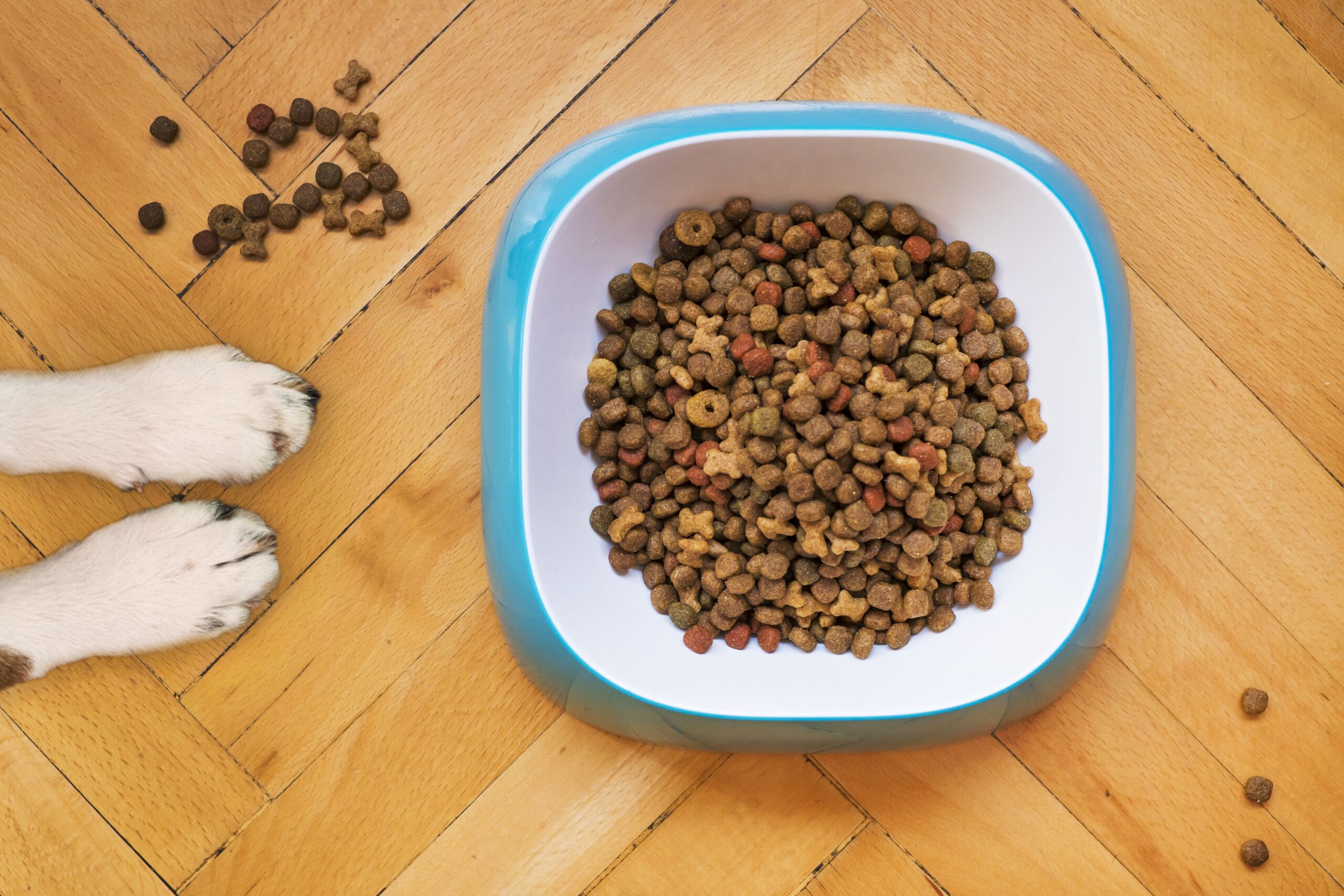
Measured meals beat free feeding for a giant breed. Leaving a full bowl out all day invites overeating, and overeating is what drives the rapid growth you are trying to avoid. Weigh or measure each portion and feed it at set times.
Avoiding Rapid Growth and Joint Problems
This is the heart of feeding a giant-breed puppy. A Komondor that grows too fast carries more weight than its forming joints can handle, and that mechanical stress, combined with excess calcium, sets the stage for hip dysplasia and other skeletal disease.
How you feed matters as much as what you feed. Today's Veterinary Nurse notes that meal-restricted feeding reduces the frequency of developmental orthopedic disease and early osteoarthritis in large- and giant-breed dogs compared to feeding freely, by preventing the maximal rate of growth. The takeaway is practical: keep the puppy lean and feed measured meals.
A few habits protect the joints:
- Keep your puppy on the lean side of normal throughout growth. A slightly lean giant-breed puppy is healthier than a plump one.
- Do not add extras that spike calories or calcium, including large amounts of table food, dairy, or bone supplements.
- Avoid forced, repetitive, high-impact exercise on hard surfaces while the growth plates are still open. Free play and short walks are better than long runs.
Komondors reach full adult size slowly, so this careful approach continues longer than it would for a small breed. Patience during the first two years pays off in soundness later. If you are still deciding between corded Hungarian breeds, our comparison of the Komondor and the Puli covers how their size and needs differ.
Supplements Worth Considering
For a healthy Komondor puppy on a complete large-breed food, the honest answer is that most supplements are unnecessary and some are harmful. A balanced diet already delivers the right nutrients in the right ratios, and adding to it can throw that balance off.
The supplement to be most careful with is calcium. Because a young puppy absorbs most of the calcium it eats, topping up a complete food with a calcium or bone supplement can push intake into the danger zone and contribute to the exact joint problems you want to prevent. Do not add calcium unless a veterinarian directs it for a specific medical reason.
A few supplements have a reasonable case, but only with your vet's input:
- Omega-3 fatty acids (fish oil) can support skin, coat, and joint health, which is worth discussing for a corded coat.
- Joint support such as glucosamine is sometimes recommended for at-risk giant breeds, though evidence in healthy puppies is limited.
Before adding anything, talk to your vet. The default position for a growing Komondor on a quality diet is to keep the plan simple and let the food do the work.
Transitioning Foods Safely
Puppies have sensitive stomachs, and a sudden food change invites loose stools and upset. Whether you are switching brands or moving from a puppy formula toward adult food, make the change gradual over 7 to 10 days.
A straightforward transition:
- Days 1 to 3: about 75% old food, 25% new food.
- Days 4 to 6: roughly half and half.
- Days 7 to 9: about 25% old food, 75% new food.
- Day 10: fully on the new food.
Watch the stool and appetite. If you see digestive upset, slow down and hold at the current ratio for a few extra days before moving on.
Timing the switch to adult food is its own decision. Because giant breeds keep growing past a year, many Komondors stay on a large-breed puppy or growth formula until roughly 18 to 24 months rather than switching at 12 months like a small dog. Let your puppy's growth, not the calendar alone, guide the change, and confirm the timing with your vet.
When you bring a Mykomondors puppy home, we send you home with the puppy's current diet and feeding notes so you can keep things consistent from day one and change food only when you are ready. New owners planning ahead can also read our guide to the Komondor puppy price in 2026 to budget for food and care alongside the purchase.
Your next step is simple: pick one complete large-breed puppy food, set a measured two-to-four meal schedule for your puppy's age, and book a growth check with your vet so you can adjust portions before any problem starts rather than after.
Frequently asked questions
How often should I feed a Komondor puppy?
Feed three to four small meals a day from 8 weeks to about 4 months, then drop to three meals, and settle at two meals a day by around 6 months. Keep meals measured rather than leaving food out.
Should a Komondor puppy eat large-breed puppy food?
Yes. A large-breed puppy formula caps calcium and calorie density so the puppy grows at a safe, steady rate instead of too fast, which protects the joints.
When can a Komondor switch to adult food?
Giant breeds keep growing well past a year, so many Komondors stay on puppy or large-breed food until roughly 18 to 24 months. Ask your vet to confirm based on your puppy's growth.
Do Komondor puppies need calcium supplements?
No. A complete large-breed puppy food already provides balanced calcium. Adding a calcium supplement on top can push levels too high and harm developing bones and joints.