
Key takeaways
- A Komondor can be a devoted family dog, but it suits experienced owners with space, time for corded-coat care and a plan for visitors.
- The breed is large (around 36-60 kg) and lives under 10 years, so families commit to a big, strong guardian for most of a decade (PDSA).
- Independent guarding instincts mean a Komondor decides for itself when to act, which calls for early socialization and firm, consistent handling.
- First-time dog owners are usually better served by an easier breed; the Komondor rewards people who already understand strong-willed guardians.
- If you want an easygoing, low-grooming dog that greets every guest warmly, the Komondor is not the right match.
A Komondor can be a wonderful family dog, but only for the right household. If you have space, time for an unusual coat and experience with strong-willed dogs, this loyal Hungarian guardian may fit beautifully. If you want an easygoing pet that welcomes every visitor, look elsewhere. This guide walks through what living with the breed actually asks of you so you can decide honestly.
The question "is a komondor a good family dog" has no single answer. It depends far more on the family than on the dog. Below, we cover temperament, daily commitment, guest handling and the clear signs the breed is wrong for you.
Is a Komondor a Good Family Dog by Temperament?
The Komondor is calm at home, fiercely devoted to its family and naturally wary of strangers. It was bred over centuries to guard livestock alone, so it thinks and acts independently. According to the UK veterinary charity PDSA, the breed is a large working dog that forms strong bonds with its household (PDSA).
That independence shapes everything. A Komondor does not wait for a command to decide something is a threat. It assesses the situation and reacts on its own judgment. For families, this means a dog that is gentle and watchful inside the home yet takes its protective role seriously.
Early, consistent socialization matters enormously. A puppy that meets many people, dogs and situations grows into a steadier adult. Without that groundwork, the guarding instinct can tip into suspicion. The breed is loyal rather than needy, happy to lie quietly nearby and observe the household it has claimed as its own.
At Mykomondors, we raise puppies in a busy home environment from the start, exposing them early to people and everyday noise so the guardian temperament settles in a balanced way.
How Much Space, Time and Grooming Does a Komondor Need?
A Komondor needs real space, daily attention and a serious grooming routine. The breed stands roughly 65-80 cm tall and weighs about 36-60 kg, and it needs around one hour of exercise a day (PDSA). A dog this large with a guarding background rarely thrives in a small apartment.
A securely fenced yard where the dog can patrol suits the breed far better. The exercise need is moderate for the size, but the mental side matters too: a bored guardian invents its own jobs, and you may not like the result.
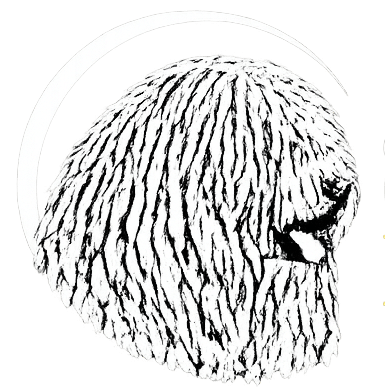
The coat is the biggest surprise for most new owners. The Komondor's white fur forms long cords that you cannot brush. Instead, the cords must be separated by hand as they form, kept clean, and dried thoroughly after any bath so they do not sour or mildew. Drying a fully corded adult can take many hours. This is a steady, hands-on commitment for the dog's whole life.
Feeding a growing giant breed correctly also takes planning. Our guide on what to feed a Komondor puppy for healthy growth covers how to support safe development without pushing growth too fast.
Grooming reality check
- Cords are separated by hand, never brushed.
- Baths are infrequent but drying is slow and essential.
- Dirt, debris and moisture trapped in cords cause skin problems if ignored.
Can a First-Time Owner Handle a Komondor?
Most first-time dog owners should choose an easier breed before a Komondor. The combination of large size, physical strength and independent decision-making makes the breed demanding to raise well. A dog that can reach around 60 kg and acts on its own judgment needs an owner who can set calm, consistent boundaries.
This is not about dominance or harsh training. It is about credibility. A Komondor respects an owner who is fair, predictable and clearly in charge of the household routine. Inconsistent rules confuse a guardian breed and can let unwanted protective behavior take root.
If you are weighing the Komondor against a related Hungarian breed, our comparison of the Komondor versus the Puli can help you judge which herder suits your experience level. The Puli is smaller and often more adaptable for a busy first-time household.
People who succeed with the breed usually share a few traits: they have handled strong dogs before, they enjoy training, and they are home enough to supervise a young guardian through its formative months.
How Does a Komondor Behave Around Guests?
A Komondor treats visitors with caution and watches them closely until it decides they belong. The breed's guarding heritage means it reads anyone arriving at your home as a potential concern first and a friend second. For families who host often, this needs active management.
Good habits make guest visits smooth. Introduce new people calmly, let the dog observe rather than crowd them, and reward settled behavior. A Komondor that has met many visitors as a puppy usually accepts guests who are welcomed by its owners. One that was kept isolated may stay tense around newcomers for life.
Think about your daily reality. Do children's friends run in and out? Do delivery drivers and tradespeople come to the door often? A guardian that must constantly assess strangers can find a high-traffic home stressful, and a stressed guardian is harder to manage. Clear routines and a secure space for the dog during big gatherings protect everyone.
Teaching children to respect the dog's space is part of this too. Kids should learn not to disturb the dog while it rests and to let adults manage introductions.
What Are the Signs a Komondor Is Not for You?
Some households simply are not a fit for this breed, and recognizing that early saves heartache. The Komondor lives under 10 years and asks for a large commitment across that whole life (PDSA). If the picture below sounds like your home, a different breed will make you both happier.
The breed is probably wrong for you if:
- You live in a small space with no secure yard.
- You want a dog that greets every stranger with instant friendliness.
- You cannot commit regular time to corded-coat care.
- You travel often or are rarely home during the day.
- This is your first dog and you want an easy, highly biddable companion.
- You expect a low-maintenance, hands-off pet.
None of these make you a bad owner. They just point toward a breed with different needs. Matching your lifestyle to the right dog is the kindest decision you can make.
If the commitment still appeals, budget for a well-bred puppy from a breeder who health-tests their dogs. Responsible breeding and proper health screening carry real costs, and a low price is often a warning sign rather than a bargain.
Making Your Decision
The honest test is simple: picture a normal week with a large, independent guardian that needs grooming, space and steady handling, then ask whether that excites you or exhausts you. Families who feel energized by that picture often build a deep bond with the breed. Those who feel drained have their answer too.
If you decide the Komondor fits your life, talk to a breeder who health-tests their dogs and raises puppies around people. Ask to meet the parents, discuss temperament and plan your socialization before the puppy comes home. At Mykomondors, we are glad to walk prospective owners through exactly what the first year involves so the match is right for the dog and for your family.
Frequently asked questions
Is a Komondor a good family dog?
Yes, for the right family. A Komondor is loyal and protective toward the people it lives with, but it needs space, grooming time, early socialization and an owner comfortable managing a large, independent guardian.
Are Komondors good with children?
A well-socialized Komondor is typically gentle and watchful with its own family's children. Supervise interactions because of the dog's size and guarding nature, and teach kids to respect the dog's space.
Do Komondors need a lot of grooming?
Yes. The corded coat cannot be brushed and instead needs the cords separated by hand, kept clean and dried thoroughly. Expect a steady, ongoing time commitment rather than quick weekly brushing.
Are Komondors good for first-time owners?
Usually not. Their size, strength and independent guarding instincts make them demanding. First-time owners often do better with a more biddable breed before taking on a livestock guardian like the Komondor.
How much space does a Komondor need?
A Komondor does best with a securely fenced yard and room to patrol. Apartments rarely suit a dog that can weigh up to around 60 kg and was bred to guard open pasture.