
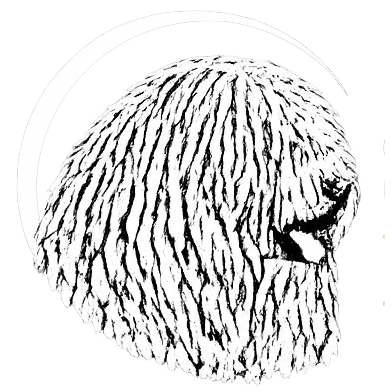


A Komondor international delivery case study is not simply about putting a puppy on a flight. For a family waiting in the United States, it is about receiving the right dog: a correctly bred Hungarian Komondor with documented pedigree, stable nerves, proper early care, and a travel plan that respects the puppy’s welfare from our kennel in Hungary to its new home.
The following representative case reflects the process behind many international placements. Individual airline rules, import requirements, weather conditions, and puppy readiness can change the details. The principle does not change: transport must serve the dog first, while giving the future owner clear information and responsible guidance at every stage.
The Right Puppy Came Before the Travel Plan
The prospective owners in this case were an American family looking for more than an impressive white guardian dog. They had researched the Komondor carefully and understood that this is a serious Hungarian working breed. They wanted a dog with authentic bloodlines, a substantial body, a sound temperament, and the natural protective character for which the breed has been valued for centuries.
Our first conversations focused on their daily life rather than on delivery. Did they have secure space? Were they prepared to socialize a guardian breed properly? Did they understand that the Komondor is independent, observant, and not a breed that responds well to harsh or repetitive training? Were they ready for coat care as the puppy matured into its characteristic cords?
These questions matter because an international buyer cannot meet every puppy in person before making a decision. Trust must be built through honest communication, pedigrees, photographs, videos, and a breeder’s ability to explain why a particular puppy fits a particular home. A puppy selected only by color, a photograph, or the hope of quick delivery is not being chosen with the care this breed deserves.
In this placement, the family’s priorities were balanced temperament, guardian instinct, and a dog that could live as a close family companion while remaining confident on their property. The selected puppy came from carefully considered Hungarian champion lines, with the breeding chosen to preserve correct type, health, structure, coat quality, and traditional Komondor character.
Preparing a Komondor Puppy for International Delivery
Once a puppy is reserved, the waiting period is not inactive. A young Komondor needs time to grow, develop confidence, and complete the veterinary and export steps required for safe travel. The earliest possible departure date is not always the best departure date. Responsible timing depends on age, health requirements, vaccine schedules, flight availability, and the regulations of the destination country.
During this stage, the puppy in our case continued normal kennel life. It interacted appropriately with people, experienced everyday sounds and handling, and remained with its litter and familiar environment during an important developmental period. Early experience does not erase the natural reserve of a mature Komondor, nor should it. It helps the puppy approach a new family and a new environment with a stronger foundation.
The owners received updates as the puppy grew. For international placements, this communication is especially valuable. Families see the puppy’s development, learn about the breed’s needs, and have time to prepare their home before arrival. It also gives us a chance to answer practical questions about feeding, crate preparation, veterinary care, training expectations, fencing, and the first days after travel.
Health Records and Pedigree Documentation
Paperwork is not an administrative afterthought. A pedigree is the record that connects a Komondor to its heritage. For buyers seeking a true Hungarian-bred dog, it provides meaningful evidence of lineage and supports confidence that the puppy comes from a purposeful breeding program rather than an unverified source.
The international file is prepared according to the destination requirements and may include veterinary records, vaccination documentation, identification information, export health certification, and pedigree-related documents. Requirements differ by country and can be updated by authorities, so every shipment must be checked against current rules rather than handled by assumption.
For the American family in this case, the goal was straightforward: they needed a puppy with documents organized clearly enough that arrival did not become a confusing or stressful experience. We reviewed what they should expect, what they needed to bring or retain, and why each document mattered.
Flight Planning Is a Welfare Decision
Air travel is often the greatest concern for an international buyer, and rightly so. A breeder should never treat it casually. The choice of route, airline, travel crate, season, and handover arrangements can affect a puppy’s comfort and safety.
The puppy’s crate was selected to meet airline specifications and to allow appropriate movement. It was introduced before travel rather than appearing for the first time on departure day. Familiarity with the crate can make a major difference for a young dog. The puppy should recognize it as a safe, ordinary place to rest, not as a sudden source of pressure.
Flight planning also required flexibility. A direct route may be preferable when available, but it depends on airport options, airline policies, weather, and destination logistics. Some times of year are less suitable for animal travel because of extreme temperatures. Delaying a trip can be disappointing for an excited family, but it is the correct choice when conditions are not appropriate.
On travel day, the puppy was checked, settled into its prepared crate, and transferred through the agreed process. The family had the flight information and knew what to expect after landing. Good delivery planning does not promise that air travel is effortless. It creates a controlled, well-prepared process with as few unnecessary variables as possible.
Arrival: The First 72 Hours Matter
The family met their Komondor puppy after its international journey with understandable excitement. Yet the best welcome is calm. A puppy has left familiar people, littermates, scents, and routines. Even a confident puppy needs quiet time to adjust.
We advised the owners to keep the first days simple: provide fresh water, offer the agreed food routine, allow frequent toilet breaks, and introduce the home gradually. Visitors, busy dog parks, long car trips, and constant handling can wait. The family’s role was not to force affection or confidence. It was to become a predictable, safe presence.
This is especially relevant for a Komondor. The breed forms deep attachments, but it also notices change and evaluates unfamiliar situations. A puppy may be affectionate one moment and observant the next. That is not a problem to correct. With patient socialization, clear boundaries, and respectful handling, the owner can help the dog grow into a stable adult guardian.
The owners also arranged a prompt appointment with their local veterinarian. This allowed them to establish care, review records, and create a long-term plan for preventive health. International delivery does not replace the responsibility of a local veterinary relationship. It begins a partnership between breeder, owner, and veterinarian centered on the dog’s lifelong well-being.
What Made This Placement Successful
The success of this case was not measured by how quickly the puppy arrived. It was measured by the decisions made before the flight. The family chose the breed with realistic expectations. The puppy was selected for suitability, not impulse. Documentation was prepared carefully, and travel was scheduled around welfare and regulations rather than convenience.
There is also an honest trade-off in buying a Komondor directly from Hungary. It requires patience, communication, and confidence in the breeder. A local puppy may seem easier to collect, but proximity alone does not prove pedigree quality, sound breeding decisions, or genuine connection to the breed’s original heritage. For owners who value Hungarian bloodlines and traditional Komondor type, international placement can offer direct access to the source of the breed.
Somogyi Betyár Kennel approaches each overseas placement with that responsibility in mind. A Komondor is not a commodity to be shipped without thought. It is a rare national treasure, a working guardian, and a future member of someone’s family.
For a serious owner, the most reassuring question is not, “How fast can my puppy be delivered?” It is, “How will this puppy be prepared for a safe start in my home?” That question leads to better decisions, a more confident arrival, and the beginning of the relationship a true Komondor deserves.