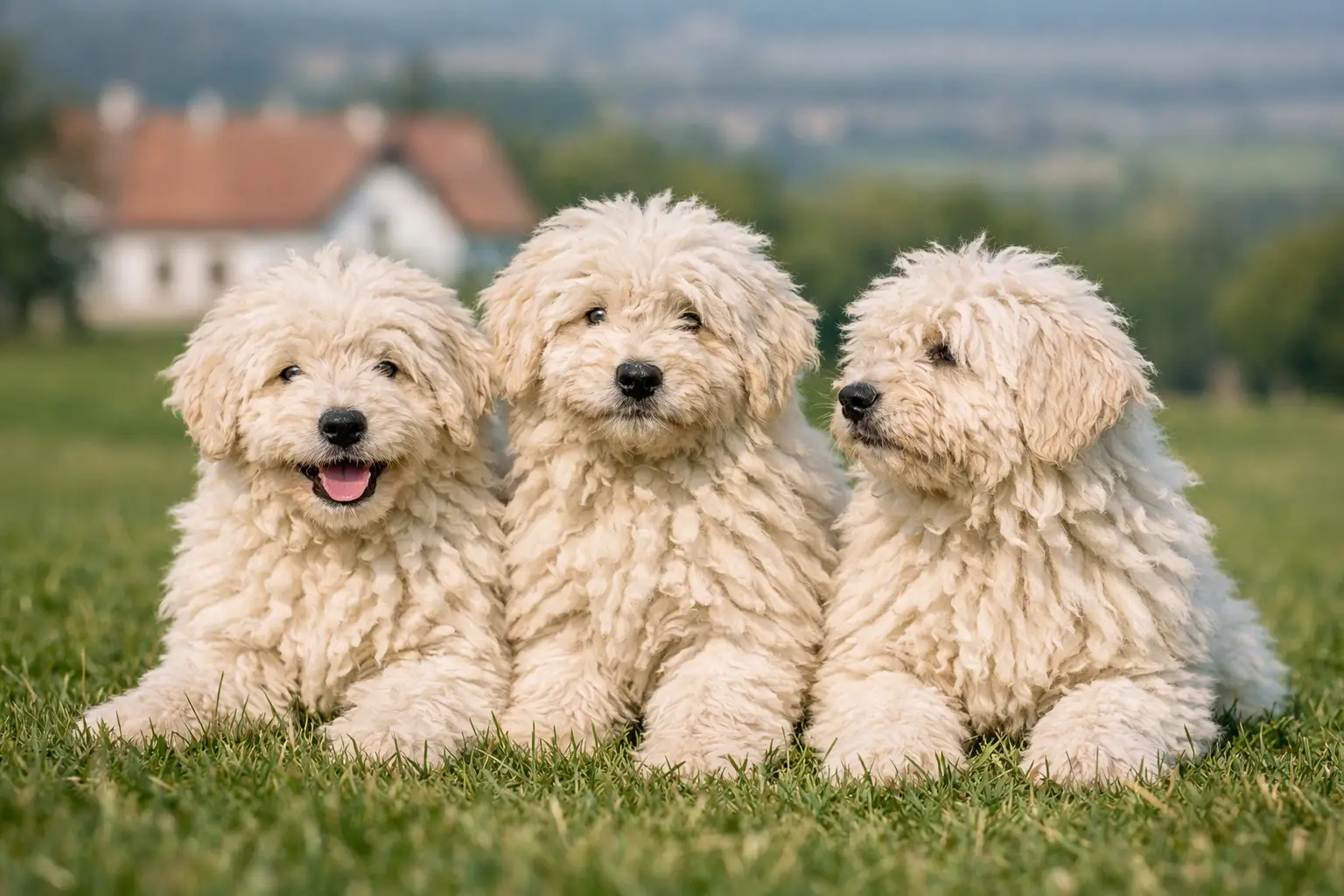
A Komondor puppy is not chosen for convenience. When people search for Komondor puppies for sale, they are often drawn first to the remarkable white cords and imposing presence. The decision, however, should begin much deeper: with heritage, temperament, structure, health, and the breeder’s commitment to preserving a true Hungarian guardian.
The Komondor was developed to think independently, protect its territory, and remain composed when something unfamiliar enters its world. Those qualities are part of its greatness, but they also demand an owner who understands the difference between a serious livestock guardian and an easygoing, generic companion dog. A well-bred Komondor can be deeply devoted to its family, affectionate in its own dignified way, and naturally watchful without being unstable or needlessly reactive.
What Komondor Puppies for Sale Should Represent
A responsibly bred puppy represents more than a beautiful pedigree on paper. It should reflect generations of deliberate decisions made to protect the breed’s original character. In a rare national breed such as the Komondor, every litter matters. Breeding only for a dramatic coat or a large frame can gradually weaken the qualities that made the breed valuable for centuries.
Correct Komondors have strength without clumsiness, substance without heaviness, and a calm, confident expression. Their movement should be functional, their body balanced, and their coat dense enough to develop the distinctive cords for which the breed is known. These visible traits matter, but sound temperament matters just as much. A Komondor should be observant and reserved with strangers, not nervous, chaotic, or aggressive without cause.
Champion Hungarian bloodlines offer prospective owners an important connection to the breed’s homeland and established type. A title alone does not guarantee a good puppy, but it can show that dogs in the pedigree have been evaluated against the breed standard. Combined with careful health screening, honest breeder assessment, and purposeful pairing, a documented lineage gives a buyer meaningful information rather than a sales story.
The Guardian Breed Question Every Buyer Must Answer
Before reserving a puppy, ask whether a Komondor suits your daily life. This is not a breed that needs constant entertainment, but it does need clear boundaries, early socialization, secure fencing, and owners who can lead calmly. The Komondor’s instinct is to assess rather than automatically welcome every new person or dog.
That makes the breed exceptional for the right home. Rural properties, livestock settings, spacious homes with committed owners, and families who value a discerning protector can be excellent matches. A Komondor may also live successfully in a suburban home, but only when the owner is prepared to manage visitors, provide appropriate training, and respect the dog’s guarding nature.
Families with children should consider both the individual puppy and the household routine. A properly raised Komondor can form a powerful bond with its own children, yet adults must still supervise interactions, teach children respectful behavior, and avoid expecting the dog to tolerate every unfamiliar child as though they belong to the family. This is a thoughtful breed, not a dog that should be pushed into endless social situations for appearances.
How a Responsible Breeder Raises the Standard
The most reassuring part of buying from a dedicated breeder is the ability to ask specific questions and receive specific answers. A serious breeder should be ready to discuss the parents’ pedigree, health background, structure, temperament, coat quality, and the reason a particular pairing was made. If every question is answered with vague claims that the puppies are simply “rare” or “beautiful,” the buyer should be cautious.
The early weeks of a puppy’s life shape its foundation. Clean, well-managed conditions, regular human handling, age-appropriate experiences, veterinary care, and careful observation all help a breeder understand each puppy’s developing personality. No ethical breeder can promise that a young puppy will become identical to an adult dog in every respect. They can, however, use knowledge of the bloodline and the litter to guide a puppy toward a suitable home.
At Somogyi Betyár Kennel, breeding is approached as stewardship of the original Komondor. The goal is not to produce as many puppies as possible, but to protect authentic Hungarian type, sound health, stable character, working ability, and the magnificent coat that distinguishes this breed around the world. That standard requires patience, selectivity, and a lasting responsibility to each dog placed.
Documentation Is Part of Trust
For an international buyer, paperwork is not a minor detail. A genuine pedigree establishes the dog’s registered ancestry and provides a record that can matter for breeding, showing, and simply understanding what stands behind the puppy. Health records, identification documents, vaccination information, and export documentation should be handled with the same care as the puppy itself.
Buyers should also understand what documentation does and does not mean. A pedigree confirms lineage, but it does not replace responsible ownership, training, nutrition, or routine veterinary care. Health testing and thoughtful selection reduce risks, yet no living animal comes with a guarantee of a life without medical challenges. Honest breeders speak clearly about these realities because lasting trust depends on transparency.
Choosing Komondor Puppies for Sale From Hungary
Buying a puppy from Hungary can feel like a large undertaking, particularly for families in the United States. It should not feel mysterious. An experienced breeder can explain the reservation process, the puppy’s development timeline, required travel age, veterinary preparations, pedigree arrangements, and safe transportation options before a buyer commits.
The advantage of working directly with a Hungarian breeder is access to the country where the Komondor’s history, breed culture, and traditional type remain deeply valued. For buyers seeking a serious guardian with documented champion heritage, this direct connection can be far more meaningful than choosing from a listing that offers little knowledge of the bloodline behind the puppy.
International placement also calls for patience. Puppies cannot responsibly leave at an arbitrary early age simply because a buyer is eager. Proper development, legal travel requirements, and health preparations take time. A breeder who prioritizes readiness over speed is protecting both the puppy and the future owner.
Prepare for the Coat Before It Cords
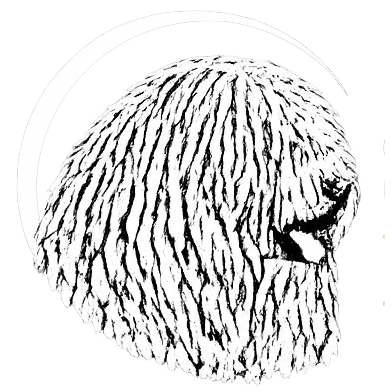
The Komondor coat is extraordinary, but it is not maintenance-free. As the puppy matures, the coat begins to form its signature cords. Owners need to learn how to separate developing cords by hand, keep the skin clean, monitor for debris, and allow the coat to dry thoroughly after bathing or wet weather. Neglect is not merely cosmetic. A poorly maintained coat can create discomfort and skin problems.
The trade-off is simple: the coat requires informed, regular care, but it is one of the breed’s most distinctive and historic features. A prospective owner should want that responsibility, not merely tolerate it. Breeder guidance in the first year is especially valuable because the coat changes significantly as the young dog grows.
Training should begin just as early. Focus on calm handling, recall, leash manners, respectful greetings, place training, and controlled exposure to the real situations the dog will encounter. Harsh methods are a poor fit for a breed bred to think for itself. Consistent rules, fair correction, and a confident owner create far better results than confrontation.
Questions Worth Asking Before a Reservation
A thoughtful conversation with the breeder should cover the parents’ temperaments, the puppy’s expected adult character, health testing, pedigree, coat care, and the breeder’s experience with export. It is also wise to ask what support is available after the puppy arrives. A breeder who knows the Komondor well should be invested in helping owners through the first challenges of adolescence, coat development, and guardian-breed maturity.
Be equally honest about your own home. Explain whether you have livestock, other dogs, young children, frequent visitors, travel plans, or a limited yard. The right breeder will not view those questions as obstacles to a sale. They are the information needed to make a responsible match.
A Komondor deserves an owner who sees beyond the cords and understands the ancient purpose beneath them. Choose with care, prepare with respect, and the puppy you bring home can grow into the calm, loyal, commanding guardian this remarkable Hungarian breed was meant to be.