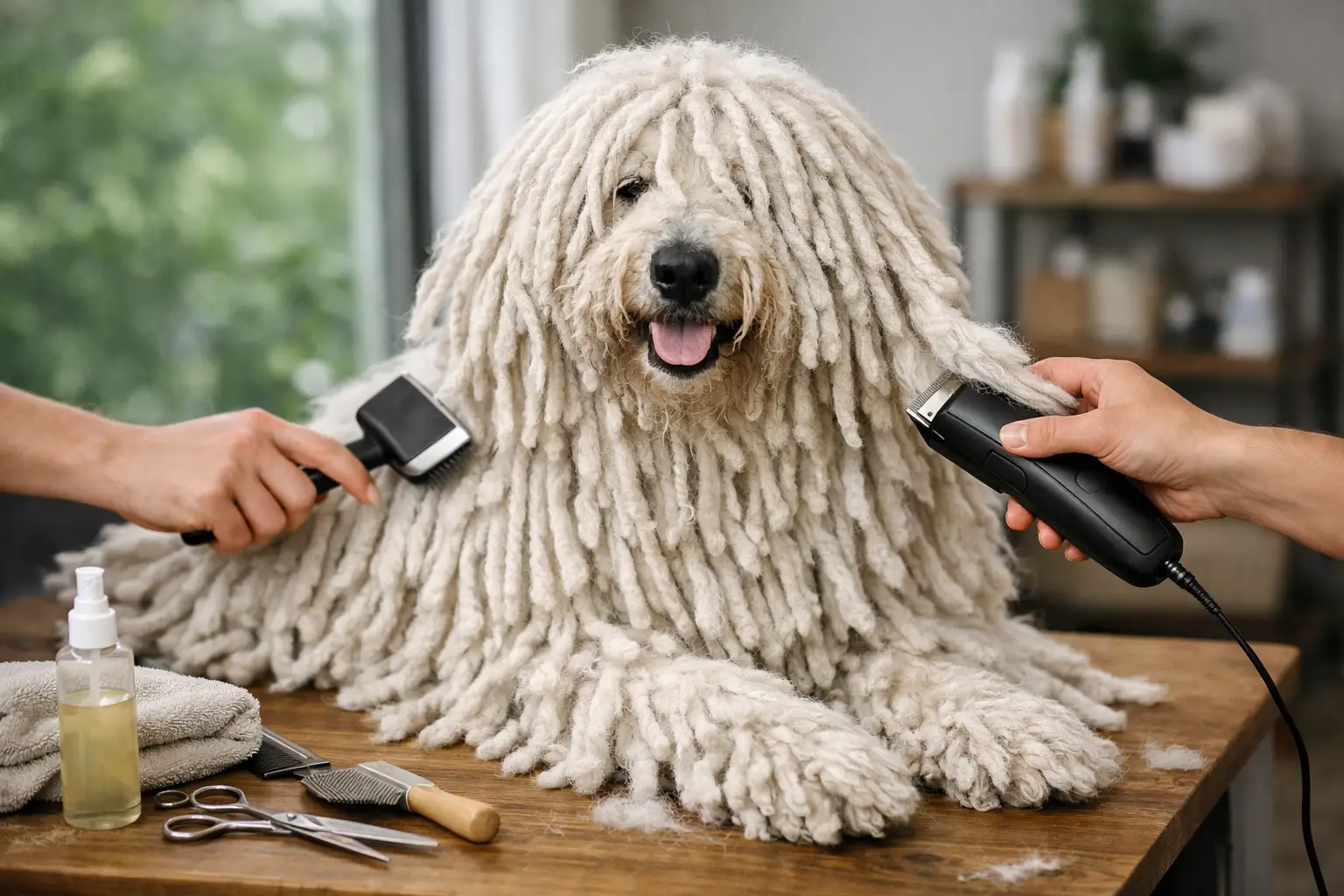
A well-bred Komondor should stop people in their tracks, but the coat is not a costume. It is a functional, traditional part of the breed, and proper komondor grooming coat care starts with understanding that you are managing a working dog’s natural corded coat, not trying to make him look fluffy, sculpted, or artificially tidy.
This is where many first-time owners get surprised. The Komondor coat is iconic, but it is also specific. It develops on its own timeline, it requires hands-on attention, and it punishes shortcuts. If you over-bathe, over-brush, clip without reason, or allow the cords to mat into one heavy sheet, you are not preserving correct coat. You are fighting it.
What proper komondor grooming coat care really means
The goal is not glamour grooming. The goal is healthy skin, clean separation, correct cord development, and a coat that still does the job the breed was created to do. A Komondor’s coat should protect the dog from weather, brush, and the demands of guardian work. That means texture matters. Density matters. Even the way the coat parts and cords matters.
Owners who come to this breed expecting a standard brushing routine quickly learn that the Komondor is different. You do not brush out a mature coat the way you would on a coated companion breed. In fact, regular brushing at the wrong stage can damage the coat pattern you want to preserve. Most coat care is done with the hands, not with tools.
This is one reason serious breeders pay close attention to coat quality in their bloodlines. A correct Komondor coat is not only beautiful. It is part of breed type.
The coat changes from puppyhood to adulthood
A young Komondor puppy is soft, woolly, and far easier to manage than many people expect. Early on, coat care is mostly about keeping the puppy clean, checking the skin, and getting the dog used to calm handling. At this stage, owners often make one of two mistakes. They either do too little because the puppy coat seems easy, or too much because they worry about future cording before the coat is ready.
Cords usually begin forming gradually as the harsher outer coat and softer undercoat start to combine. This transition is not identical in every dog. Some puppies begin to show clearer separation earlier, while others stay fluffier for longer. That is normal. What matters is watching the coat closely and starting manual separation when clumps begin to form near the skin.
Once the coat starts changing, neglect becomes expensive. If you ignore those developing sections, the coat can felt together into large masses that trap dirt and moisture. If you interfere too aggressively, you can break coat, thin sections, or create an uneven appearance that takes a long time to correct.
How to separate the cords correctly
For most Komondors, the essential grooming skill is separating the coat by hand. You gently pull larger masses apart into smaller, workable cords, starting near the skin and working downward. This is not a fast task, and there is no honest way to present it as effortless. The coat demands time.
The best approach is consistency. A few minutes several times a week is better than waiting until the dog has become overgrown with tangled sections. You want airflow to reach the skin, and you want each cord to remain distinct rather than merging into broad mats.
Cord thickness can vary a bit depending on the dog’s coat texture and density. Very thin cords can become weak and stringy. Very thick cords can trap moisture and become difficult to dry properly. There is a middle ground that comes from regular observation and sensible hand separation.
If a section is tightly matted close to the skin, patience matters. Pulling too hard will hurt the dog and create resistance to handling. Work slowly. Use your fingers more than your strength. With this breed, steady care always beats force.
Areas that need extra attention
Behind the ears, under the collar, around the elbows, in the groin, and around the tail base tend to tighten faster than other parts of the coat. Friction creates problems there. Those areas should be checked often, especially during seasonal changes, muddy weather, or adolescence when the coat may change rapidly.
Feet also deserve attention. The hair between the pads can collect dirt, ice, and debris. Keeping this area clean helps the dog move correctly and reduces mess brought into the house or kennel.
Bathing a Komondor without creating bigger problems
Bathing is where inexperienced owners often turn a manageable coat into a heavy, damp burden. A Komondor should not be bathed casually just because the dog looks large and white. He should be bathed when needed, and the owner must have a realistic plan for drying.
A coat that stays damp too long can develop odor, skin irritation, and mildew-like issues deep in the cords. That is why many breeders prefer spot cleaning when possible and full bathing only when necessary. If the dog needs a full bath, the skin and cords must be rinsed thoroughly. Soap residue left in the coat can cause itching and attract more dirt.
Drying is the real work. Towel drying helps, but it is not enough on its own for a fully coated adult. Depending on climate and coat volume, complete drying can take many hours. Some owners use high-velocity dryers carefully, while others combine toweling, airflow, and warm, dry conditions. What matters is that the coat dries all the way to the skin.
This is one of those points where climate, housing, and owner routine truly matter. A Komondor in a humid area needs more vigilance than one kept in a dry environment. There is no single timetable that fits every dog.
Should a Komondor ever be clipped?
Sometimes yes, but not as a convenience habit. A pet owner living in extreme conditions, dealing with medical treatment, or correcting severe neglect may need to shorten part of the coat. That can be the practical choice. But routine clipping changes the traditional appearance and can affect how the coat grows back.
For owners who value a correct adult Komondor coat, clipping should not be the default solution to ordinary maintenance. If the reason is simply that the owner underestimated the commitment, that is a management issue, not a coat issue.
This is why honest breeder guidance matters before a puppy goes home. People are drawn to the Komondor for its power, dignity, and unmistakable appearance. They should also understand that the coat is part of the responsibility.
Skin health matters as much as appearance
Good komondor grooming coat care is never just about what the dog looks like from a distance. Under that coat, the skin must stay healthy. Check regularly for redness, hot spots, parasites, trapped seeds, and damp patches. A dog with a magnificent coat and inflamed skin is not well groomed.
Nutrition also shows in the coat. Poor diet, stress, parasites, and underlying health issues can affect texture, growth, and skin condition. If the coat suddenly changes, becomes brittle, develops odor, or the dog starts scratching more than usual, grooming alone may not solve the problem.
A serious owner learns the normal feel and smell of the dog’s coat and skin. That familiarity helps you catch trouble early.
Tools and habits that help
Most Komondor coat work is done with the hands, but a few simple habits make a real difference. Keep the dog’s living area dry and clean. Check the coat after rain, snow, and muddy yard work. Use absorbent towels generously. Keep feeding and water areas tidy so the beard and front cords do not stay wet unnecessarily.
Scissors may be useful for sanitation trimming in limited areas or for removing impossible debris, but they are not the foundation of coat care. Neither are slicker brushes, comb-outs, or cosmetic shortcuts designed for other breeds. The Komondor needs breed-specific handling.
For families, one practical point is worth saying plainly. If you want a low-maintenance white dog, this is not the breed for you. If you want a true guardian with one of the most distinctive coats in the dog world, and you are willing to learn the care it requires, the effort is worthwhile.
Why breeder support makes the difference
A well-bred Komondor begins with genetics, structure, temperament, and coat potential. That foundation matters. At Somogyi Betyár Kennel, we believe preserving the breed means preparing owners for the real responsibilities that come with it, including coat management from the early months forward.
The best outcomes happen when owners ask questions early, send photos when coat changes begin, and stay consistent instead of waiting for problems to become severe. Komondor owners do not need gimmicks. They need honest advice, patience, and respect for the breed’s original form.
A Komondor coat will teach you to slow down, use your hands, and pay attention. For the right owner, that is not a burden. It is part of living with one of Hungary’s great guardian breeds.






1 Comment