
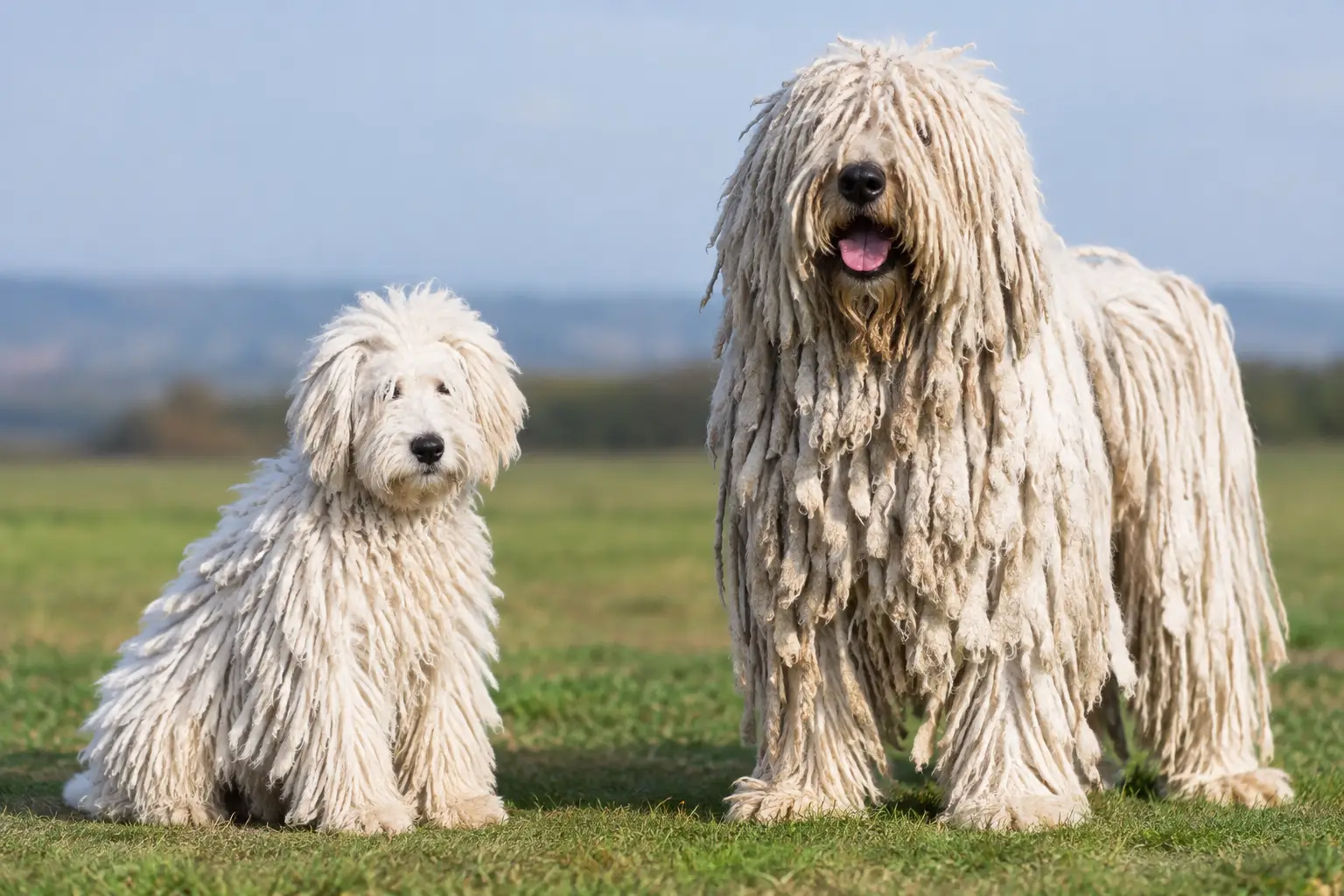
A Komondor is never a casual decision. Whether you begin with a young puppy or a mature dog, you are welcoming a powerful Hungarian guardian with a strong mind, a distinctive corded coat, and a deep instinct to watch over what belongs to its family. The question of a Komondor puppy versus adult dog is not simply about age. It is about the kind of beginning that suits your experience, home, daily life, and long-term expectations.
For the right owner, either path can lead to an extraordinary partnership. The better choice depends on whether you are prepared to shape a guardian from its earliest months or whether you need a dog whose character, structure, and needs are already more clearly established.
Komondor Puppy Versus Adult Dog: The Essential Difference
A Komondor puppy gives an owner the opportunity to build habits, trust, and social skills from the beginning. You will experience every stage of development: the confident little puppy, the testing adolescent, and eventually the composed adult guardian. This is deeply rewarding, but it requires consistency. A young Komondor needs thoughtful exposure to people, animals, sounds, travel, visitors, handling, and the daily rhythms of the household.
An adult Komondor, by contrast, may offer more immediate clarity. Its size, coat development, energy level, working attitude, and social maturity are already visible. In a carefully evaluated placement, an adult may also have a known training foundation and a history that helps the breeder match the dog to an appropriate home.
Neither choice is automatically easier. A puppy demands more time and guidance up front. An adult may arrive with established preferences, routines, and protective instincts that require a confident, experienced owner. What matters is an honest match between dog and household.
Choosing a Komondor Puppy
The greatest advantage of a puppy is the chance to guide its development from the start. This matters greatly in a guardian breed. A correct Komondor should be self-assured and naturally protective, not nervous, indiscriminately suspicious, or needlessly aggressive. Early education does not remove the breed’s guarding character. It helps the dog understand how to live with people, guests, property boundaries, and the situations it will face as an adult.
Puppy owners should expect a serious commitment during the first two years. House training, leash manners, crate training, veterinary visits, grooming acceptance, and calm behavior around visitors all need patient repetition. The adolescent period can be especially demanding. A young Komondor may begin to question rules while gaining physical strength and greater awareness of its territory.
This is why a well-bred puppy and committed breeder guidance matter. Sound temperament begins with responsible selection, stable parents, proper early raising, and attention to health and structure. Yet even an excellent puppy needs an owner who will provide leadership without harshness. The Komondor responds best to calm, clear expectations and fair consistency.
For families, a puppy can be a wonderful choice when adults are ready to lead the process. Children should never be expected to manage or train a growing guardian breed on their own. The household must establish routines that teach the puppy that adults make decisions about visitors, gates, food, play, and daily boundaries.
The Coat Journey Begins Slowly
A Komondor puppy does not immediately resemble the dramatic, fully corded adult seen in the show ring or guarding a Hungarian farm. The coat changes gradually, and owners must learn how to keep developing locks clean, separated, and healthy. This is not a brush-and-forget breed.
Starting coat care young has a major benefit: the puppy learns that handling is normal. Regular inspection of the ears, feet, skin, nails, and forming cords creates an adult that is more comfortable with necessary care. The work increases as the coat matures, but early familiarity makes that work more manageable for both dog and owner.
When an Adult Komondor May Be the Better Choice
An adult placement can be an excellent opportunity for the right home, especially for an owner who values a more defined picture of the dog. With a mature Komondor, the breeder can assess adult conformation, coat quality, confidence, guarding style, and social behavior more accurately than is possible with any young puppy.
This can be particularly valuable for experienced owners, livestock keepers, exhibitors, or those seeking a dog for a specific role. A mature dog may already show whether it is best suited to a quieter rural property, a family setting with structured management, a breeding program, or an experienced guardian-dog home.
Adult dogs may be placed for many responsible reasons. A breeder may retain a promising young dog for evaluation before deciding it is best placed in a permanent home. An adult may become available after a show, breeding, or kennel program changes. In some cases, a dog is returned through no fault of its own because an owner’s circumstances have changed. A careful placement process protects the dog and gives the new owner meaningful information before making a commitment.
Still, prospective owners should not assume an adult is a shortcut. A mature Komondor needs time to understand a new environment and form trust with new people. Guardian breeds do not always greet major changes with instant enthusiasm. Respectful introductions, predictable routines, secure containment, and close communication with the breeder are essential during the transition.
Adult Bonding Is Real and Deep
The idea that only puppies bond closely is simply untrue. A well-matched adult Komondor can become profoundly devoted to a new owner. The bond may grow differently: less through raising the dog from infancy and more through daily trust, consistency, and mutual respect.
Adult dogs often settle beautifully when their new home offers calm leadership and clear routines. They do not need to be treated as fragile or endlessly entertained. They need to know who belongs to their family, what their job is, where their boundaries are, and that their owner will handle unfamiliar situations responsibly.
Guardian Maturity Changes the Experience
One of the most misunderstood aspects of the breed is timing. Komondors mature slowly in mind as well as body. A large, impressive adolescent may look like an adult while still needing significant guidance. True guardian judgment develops over time.
A puppy owner must be prepared for this long development period. Socialization should continue beyond the first few months, always with the goal of building stability rather than making the dog overly familiar with everyone it meets. The Komondor is not meant to behave like a socially eager sporting breed. Its reserve is part of its traditional character.
With an adult, that guardian nature may be more apparent from the first day. This can be an advantage for owners who understand the breed, but it also makes proper matching more important. A dog that is excellent on a large, secure property may not be the right choice for a busy home with frequent unplanned visitors.
Health, Pedigree, and Transparency Matter at Every Age
Whether choosing a puppy or an adult, quality should never be treated as optional. A documented pedigree connects a Komondor to generations of breeding decisions involving type, working character, health, coat, and sound structure. For a rare national treasure such as the Komondor, preserving those qualities is a responsibility, not a marketing phrase.
For puppies, ask about the parents’ health testing, temperament, pedigree, and the breeder’s goals for the litter. For adults, ask about the dog’s veterinary history, current condition, behavior around people and animals, training experience, reason for placement, and the transition support available.
A responsible breeder should welcome thoughtful questions. The goal is not simply to place a dog quickly. It is to place the right Komondor with an owner who understands the privilege and responsibility of living with this remarkable breed. At Somogyi Betyár Kennel, that commitment begins with Hungarian bloodlines and continues through careful owner guidance, pedigree documentation, and responsible international placement.
Make the Choice That Respects the Dog
Choose a puppy if you have the time, patience, and desire to shape every stage of a Komondor’s growth. Choose an adult if you value an established dog and can offer the experienced, stable home that a mature guardian deserves. In both cases, do not choose based on appearance alone, however unforgettable that white corded coat may be.
The right Komondor will ask much of you: thoughtful management, regular coat care, secure boundaries, and the confidence to lead with fairness. In return, it offers something rare – the steady, deeply loyal presence of a dog shaped by centuries of Hungarian guardianship. The best first step is an open conversation about your home, your experience, and the life you can genuinely offer.