A young Komondor does not wake up one morning covered in neat white cords. The change happens gradually, and for new owners, that in-between stage can look messy, uneven, or even a little worrying. If you are asking when does Komondor coat cord, the honest breeder answer is this: usually the process begins between 8 and 12 months, but the coat often does not look truly established until well after the first year.
That timing matters because the Komondor is not simply a large white dog with an unusual coat. The coat is part of the breed’s identity, function, and heritage. A correct coat protects the dog in weather, field conditions, and traditional guarding work. Understanding when cording starts, how it develops, and what influences it helps owners care for the dog properly and avoid common mistakes during a very important stage.
When does Komondor coat cord in most dogs?
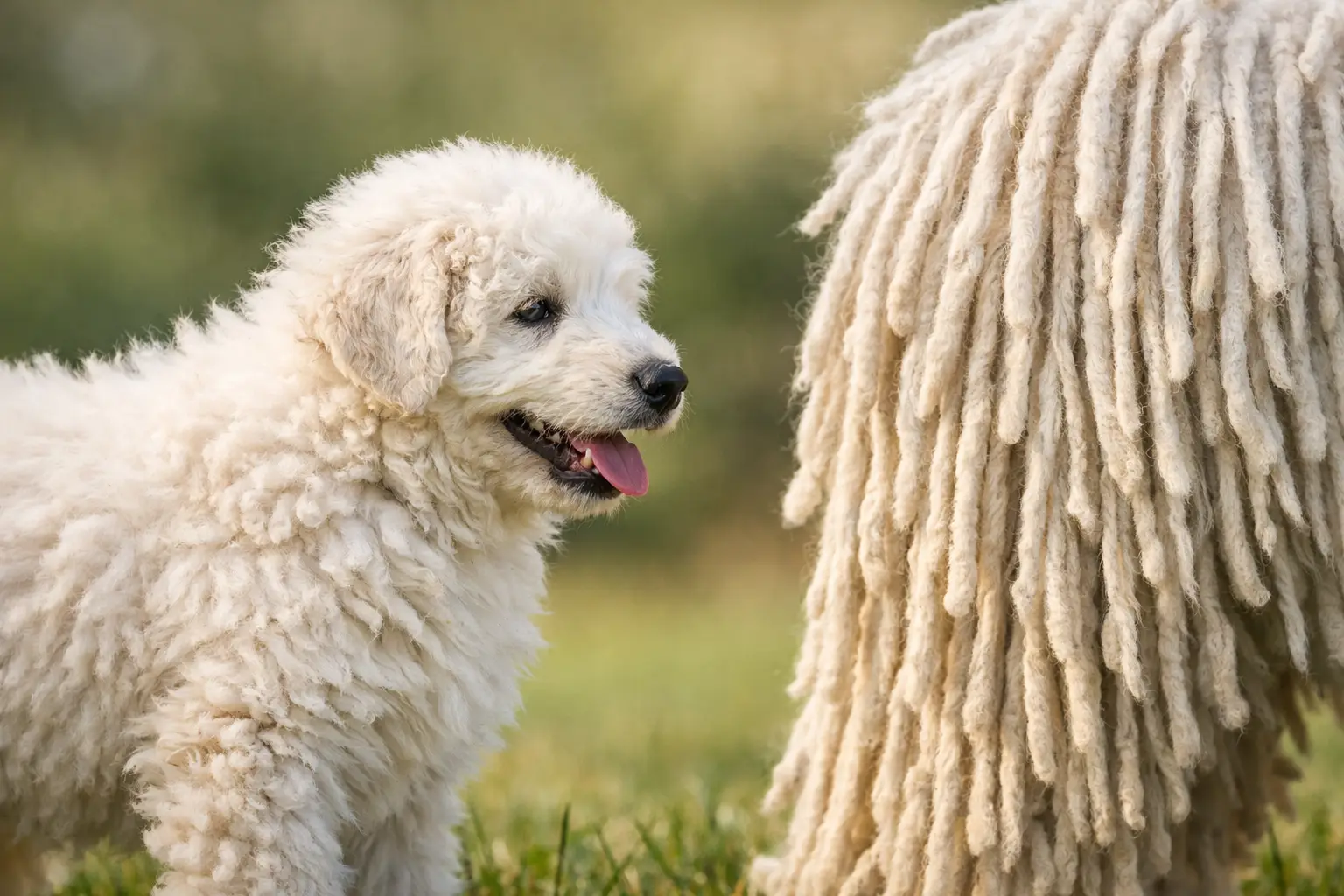
In most Komondors, the puppy coat begins changing noticeably somewhere around 8 to 12 months of age. Some start a little earlier, while others take longer. By 12 to 18 months, many young dogs are clearly entering the cording phase, but the coat is still immature and often far from the dramatic full-length adult picture people expect.
This is one of the biggest misunderstandings about the breed. Buyers often see mature adults in photographs and assume a puppy will develop those long, complete cords quickly. In reality, the coat goes through a transitional period that can look fluffy in one place, clumped in another, and slightly open or woolly elsewhere. That does not always mean anything is wrong.
A well-bred Komondor with the right coat texture still needs time. Full visual maturity usually comes much later than the beginning of cording. Many Komondors do not show their true coat presence until 2 years of age or older, and the coat can continue to deepen and lengthen after that.
Why the coat does not cord all at once
Komondor cording happens because the harsh outer coat and softer undercoat begin to separate and combine in a very specific way. As the puppy coat changes into the adult coat, the texture shifts. Areas of the body may mature at different speeds, which is why owners often notice patchy development first.
The shoulders, hips, chest, and hindquarters may begin forming sections before other parts look organized. Around the neck and rear, the coat can become especially dense. This uneven development is normal. A young Komondor is building the coat structure that later becomes the distinctive corded mantle of the breed.
There is also a practical reason the process takes time. Correct cording is not the same as random matting. It is a natural but managed development. The coat needs the right genetic base, enough maturity, and steady hands from the owner or breeder to separate and maintain forming cords without tearing coat or causing skin issues.
What affects when a Komondor coat cords
Genetics plays the biggest role. Not every white, heavy-coated dog will develop a proper Komondor coat, and not every Komondor will progress at exactly the same pace. Bloodline quality matters. Texture matters. Coat density matters. Breeding for authentic breed type includes breeding for correct coat character, not just size or appearance in puppy photos.
Sex can play a role as well, although not in a simple rule. Some males carry more substantial coat as they mature, while some females transition sooner in certain areas. Hormones, overall growth rate, and maturity can influence the timeline.
Climate and lifestyle also matter. A dog living in a dry indoor environment with frequent bathing and heavy brushing may not develop in the same way as a dog raised with more natural coat management. Nutrition matters too. A healthy coat depends on overall condition, skin health, and balanced growth.
Then there is owner handling. Overgrooming is one of the most common problems in young Komondors. If the coat is repeatedly brushed out like a typical long-coated breed, the natural formation of cords can be delayed or disrupted. On the other hand, if the coat is ignored completely, the result can become a tight mass that traps debris and moisture rather than forming healthy, manageable cords.
What the early cording stage looks like
The first stage is often soft, puffy, and confusing. The puppy coat starts loosening while the adult coat comes in underneath. Owners may notice thicker patches, felting close to the skin, or broad flat sections beginning to divide. This is the point where guidance from an experienced Komondor breeder is extremely valuable.
At first, the coat may look less impressive, not more. That is normal. The glamorous image of the adult Komondor comes later. During adolescence, the dog can look awkward because body growth and coat development are happening at the same time.
As cording progresses, the coat begins separating into defined sections. Those sections may be large at first and later refined by hand. Mature cords should not be forced into unnatural uniformity. A correct Komondor coat has character and variation, but it should still be clean, healthy, and true to the breed.
When to help the coat and when to leave it alone
This is where good intentions can create problems. A Komondor puppy should not be treated like a brushed-out show poodle or a fluffy companion breed. Once the coat begins transitioning, owners usually need to stop regular brushing and start paying attention to natural separation.
The developing coat often needs gentle hand work. That means opening sections down toward the skin where the coat wants to divide, especially in dense areas. The goal is not to manufacture cords that are cosmetically perfect overnight. The goal is to support proper structure and airflow while preventing giant mats from forming.
Bathing can be done when necessary, but the coat must be dried thoroughly. A damp dense coat can create skin trouble very quickly. Drying a Komondor is not casual work. This is one reason many serious owners appreciate breeder support long after the puppy goes home.
If you are purchasing from a preservation-minded breeder, ask specifically what coat type the parents carry, when their coats began to cord, and how the breeder handles the transitional stage. These details matter more than casual internet advice.
What is normal and what is not
Normal includes uneven development, a messy adolescent phase, and cords that are still short or bulky in a young dog. Normal also includes some variation between individuals. A Komondor does not become fully coat-mature on a deadline.
What is not normal is a coat that is dirty, neglected, sour-smelling, or packed so tightly against the skin that air cannot circulate. Excessive skin irritation, persistent dampness, or heavy debris trapped deep in the coat should be addressed. A dog with poor coat texture from weak breeding may also fail to develop the correct corded appearance.
This is one reason serious bloodlines matter. In a breed this rare and historic, preservation breeding is about more than pedigree paperwork. It is about maintaining the structural and coat qualities that define the Komondor as a true Hungarian livestock guardian.
At Somogyi Betyár Kennel, that principle is central. Correct coat is not treated as an afterthought or a novelty. It is part of preserving the breed honestly for the next generation of owners, breeders, and working homes.
The adult coat takes patience
Many first-time Komondor owners want a precise answer, but the better answer is a realistic one. If you are asking when does Komondor coat cord, expect the process to begin around the end of the first year, become more obvious through the second year, and continue maturing beyond that.
Patience is part of owning this breed well. So is perspective. The coat is spectacular, but it is not separate from the dog’s purpose. The Komondor was developed as a guardian with substance, courage, and protective instinct. The coat served that dog. It was never meant to be a shortcut to attention.
For buyers seeking a real Komondor from authentic Hungarian bloodlines, the right question is not only when the coat cords. It is whether the dog has the breeding, structure, temperament, and breeder support to mature correctly in every sense. When those pieces are in place, the coat has time to become what it should be.






1 Comment