
A Komondor should never be chosen merely because its cords are dramatic. The coat is unforgettable, but beneath it must stand a powerful, balanced guardian with the mind and physical soundness to do the work the breed was developed to do. A thoughtful Komondor conformation review looks past the surface and asks whether the dog represents authentic type, capable movement, stable character, and responsible breeding.
For families, livestock owners, exhibitors, and future breeders, conformation is not a cosmetic subject. It is evidence of a breeder’s priorities. Correct structure supports a dog through years of guarding, moving over uneven ground, carrying its substantial coat, and living as a confident, self-possessed companion.
What Correct Komondor Type Should Convey
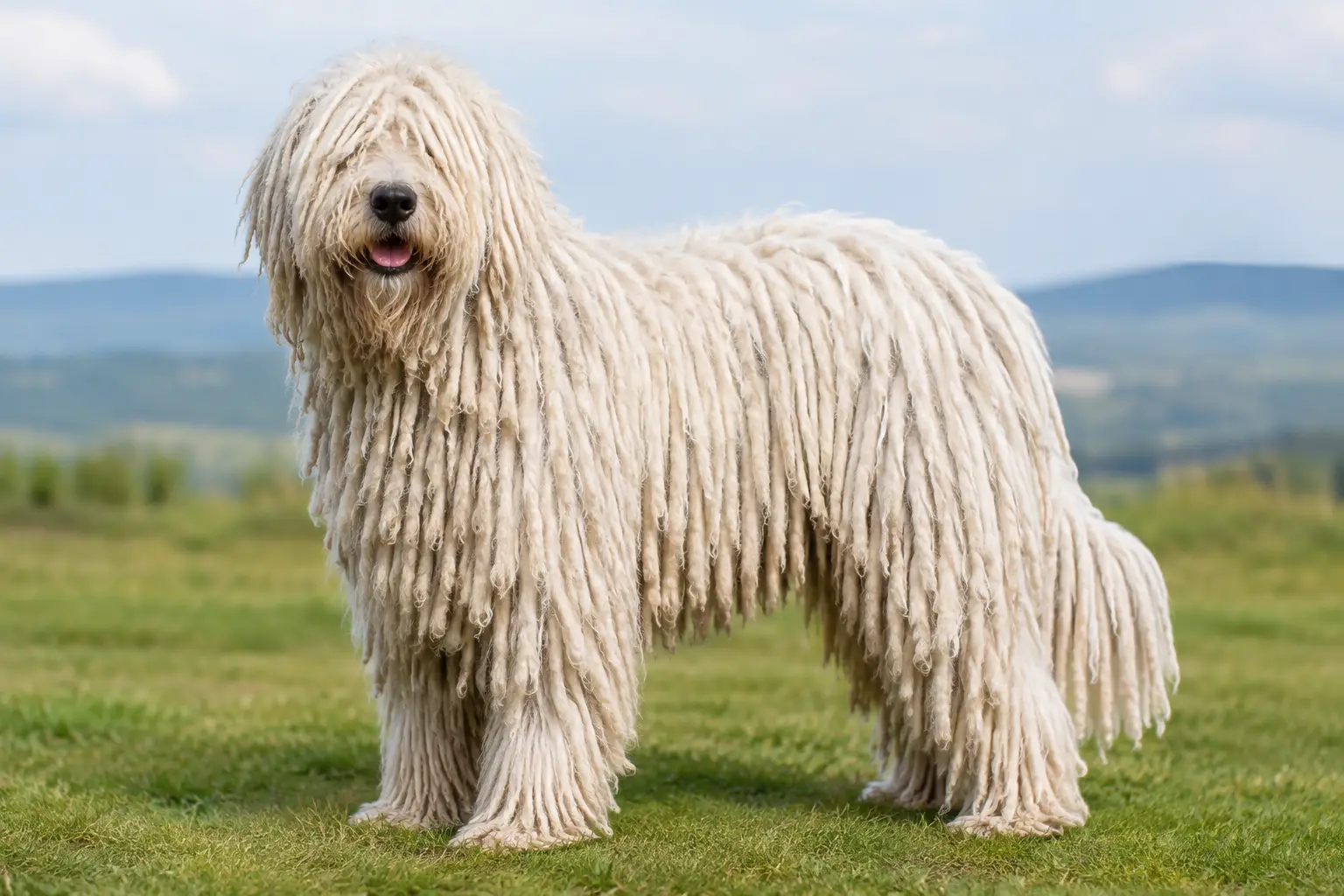
The Komondor is a large Hungarian flock guardian, traditionally expected to think independently and protect with calm authority. Its outline should immediately communicate strength without heaviness, agility without fragility, and dignity without exaggeration. A correct dog is not simply large, white, and corded.
The overall impression is of a well-muscled, substantial dog with a compact, slightly rectangular body. Males are distinctly masculine, while females should remain feminine without losing the breed’s essential power. Size matters, but quality is never created by size alone. An oversized dog with weak movement, poor proportions, or an unstable temperament is not a better Komondor.
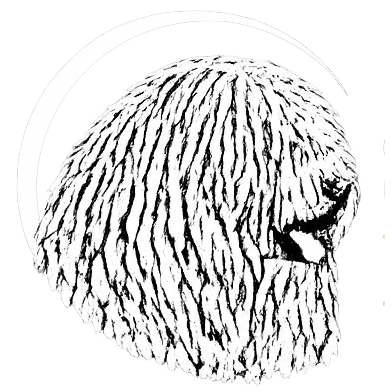
The breed’s hallmark corded coat should enhance the silhouette rather than hide structural faults. The coat develops gradually, particularly in young dogs, and mature cords require patient care. Buyers reviewing photographs should remember that a young Komondor may not yet carry the full adult coat, while a heavily coated adult must be evaluated through more than one carefully posed image.
A Komondor Conformation Review Starts Beneath the Coat
Because the coat can conceal the body, a serious evaluation requires experienced hands and an educated eye. Breeders assess the dog standing naturally, moving freely, and being examined for balance and condition. A good review considers the relationship of all parts rather than praising one dramatic feature.
Head and expression
The Komondor’s head is broad and proportionate to the body, creating an unmistakably serious expression. The muzzle should be strong, with a solid jaw and correct pigmentation. Dark eyes and black pigment around the eyes, nose, and lips contribute to the breed’s characteristic expression.
The expression should not be sharp, anxious, or soft. A true Komondor often observes strangers with reserve. This is different from nervousness or inappropriate aggression. The best dogs show awareness and confidence, accepting their owner’s guidance without becoming unsettled.
Body, topline, and bone
A correct body has depth through the chest, strong ribs, and a firm loin. The topline should appear level and secure, not weak, roached, or excessively long. The Komondor needs enough body length to move efficiently, yet it should not look stretched out or loose.
Substance is essential. Fine bone and a light frame do not fit the breed’s original function. At the same time, too much bulk can reduce endurance and freedom of movement. The goal is a dog that looks capable of standing its ground while remaining athletic enough to travel with a flock or patrol its territory.
Front and rear construction
The front assembly should support a free, efficient stride. Straight forelegs, strong pasterns, and well-formed feet matter greatly, even though they may be difficult to see beneath cords. Shoulders that are too upright can shorten reach and make movement less efficient.
Behind, the Komondor needs a strong, well-muscled rear with appropriate angulation. Weak hindquarters, cow hocks, or excessive angles can affect stability and movement. Front and rear should work together. A dog can have an attractive head and abundant coat, but if the structure does not allow balanced motion, the conformation is incomplete.
Movement Reveals What a Stack Can Hide
A posed photograph is only one moment. Movement is where structure speaks clearly. A well-made Komondor moves with purpose, covering ground without wasted action. The gait should be steady and balanced, not choppy in front, close behind, rolling through the body, or laboring under excess weight.
For a guardian breed, efficient movement is functional. The dog was not created for flashy speed or extreme reach. It should move as though it can work all day, remain sure-footed, and respond when needed. Video of a dog walking and trotting on level ground can be more revealing than a collection of polished show photographs.
Young dogs may go through awkward growth stages, so a puppy should not be judged as a finished adult. Still, a responsible breeder can explain what is developing, what they see in the puppy’s pedigree, and why a particular puppy is suited to a buyer’s goals. Honest assessment is far more valuable than a promise that every puppy is show quality.
Coat Quality Is More Than White Cords
The Komondor coat is one of the great treasures of the breed. It is a double coat that develops into cords, providing protection from weather and helping the dog retain its traditional appearance. Correct coat texture and density are important to preservation, but coat management requires commitment from every owner.
A quality coat should have the correct tendency to cord, with sufficient density and texture. It should not be silky, thin, open, or overly soft. Cords must be separated by hand as they form, kept clean, and thoroughly dried after bathing. Neglected cords can trap moisture and debris, leading to discomfort and skin problems.
Prospective owners should welcome a candid conversation about grooming. The Komondor is not a wash-and-wear dog, and a breeder who minimizes coat care is doing the buyer no favor. For the right owner, however, maintaining the coat becomes part of living with a remarkable heritage breed.
Temperament Belongs in Every Evaluation
Conformation and temperament cannot be separated in a breed whose purpose is guardian work. A Komondor should be devoted to its family, alert to its environment, and naturally discerning. It should not need to be trained to look imposing, nor should it be encouraged to behave recklessly.
Stable temperament is especially important for international families who may encounter visitors, veterinarians, travel, and different living arrangements. Early socialization, thoughtful handling, and clear boundaries help a Komondor mature into a trustworthy guardian. They do not erase the breed’s protective instinct, and owners should not expect the indiscriminate friendliness of a social retriever.
When evaluating a breeder, ask how adult dogs behave at home, around familiar guests, during veterinary handling, and in unfamiliar settings. Ask about the parents’ temperaments, not only their titles. Champion recognition can support a pedigree’s credibility, but sound character, health testing, and day-to-day behavior remain equally meaningful.
How Buyers Can Evaluate Breeding Quality
A buyer does not need to become a judge before bringing home a Komondor. They do need to look beyond color, cords, and a low purchase price. A reputable breeder should be willing to discuss pedigree, health screening, adult structure, working character, and the strengths and limitations of a planned litter.
Request clear, current images and movement video of the parents when possible. Look for dogs that appear balanced in ordinary conditions, not only professionally groomed for an event. Review pedigree documentation and ask how the breeder chooses pairings. The answer should reflect a long-term goal of preserving correct Hungarian type, not simply producing puppies that are marketable abroad.
At Somogyi Betyár Kennel, this responsibility begins with respect for the Komondor as Hungary’s national treasure. Champion bloodlines are valuable when they are paired with careful selection for health, soundness, temperament, and the traditional character that makes the breed so exceptional.
A Komondor will share your home and your decisions for many years. Choose the puppy whose breeding reflects a serious commitment to the dog beneath the cords, and you will have a far better foundation for the guardian, companion, and living piece of Hungarian heritage you hope to welcome.