
A Komondor standing watch is not a decoration in the field. This is a breed built to make decisions, hold ground, and protect what belongs under its care. When people ask what are Komondor dogs used for, the real answer begins with purpose, not appearance. The famous corded coat may draw attention first, but the breed was never developed for novelty. It was developed for serious work.
For centuries, the Komondor has served as a livestock guardian in Hungary, where the breed became part of rural life and national heritage. Its job was to live with the flock, read danger early, and confront predators without waiting for constant human direction. That original function still explains almost everything about the breed today – its independence, protective instinct, calm confidence, and strong territorial awareness.
What Are Komondor Dogs Used for Traditionally?
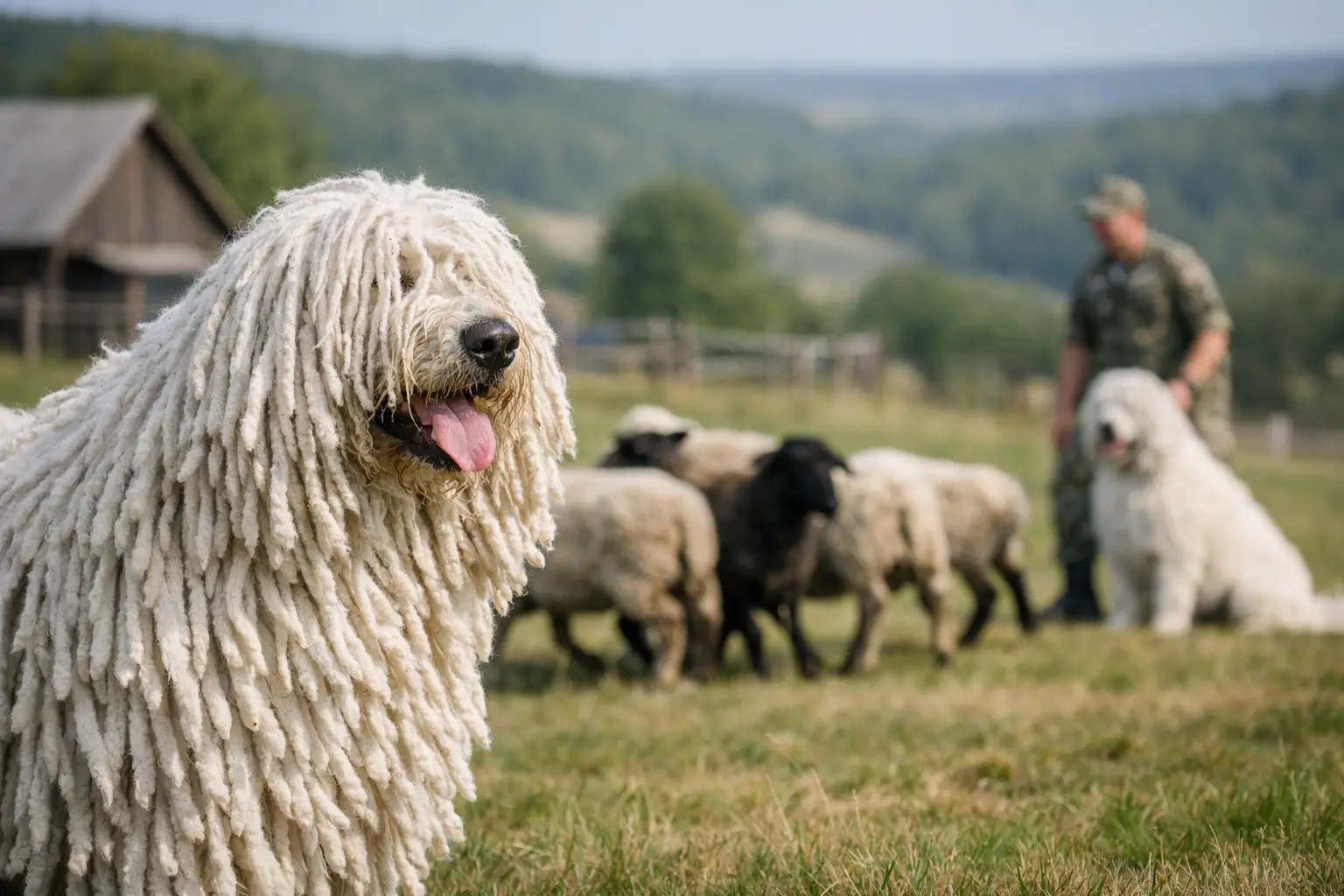
The traditional use of the Komondor is livestock protection. Unlike herding breeds that move sheep or cattle from place to place, the Komondor guards them. That distinction matters. A herding dog responds quickly to handler commands and controls movement. A livestock guardian dog stays with the animals, observes the environment, and steps in when a threat appears.
In practical terms, the Komondor was used to protect sheep, goats, cattle, and farm property from predators and intruders. The breed needed size, courage, endurance, weather resistance, and enough judgment to act independently in open country. That is why a correct Komondor is not frantic or restless. It is steady. It watches first, then responds with force if the situation demands it.
Its white coat also had a historical purpose. Among sheep, the dog could blend visually with the flock, making it less obvious to predators at a distance. The coat also offered protection from harsh weather and from bites during conflict. The cords are not a random trait. They are part of a working design that developed over generations.
Modern Uses for the Komondor
Today, many buyers are no longer running large flocks on Hungarian pasture, but the Komondor still has clear uses in the modern world. The breed remains highly valuable for property guardianship, rural home protection, estate security, and serious family protection in the right setting.
A well-bred Komondor is naturally suspicious of unfamiliar people and deeply loyal to its own family. That makes the breed well suited to homes where owners want a real guardian, not simply a large companion dog with an impressive look. The Komondor does not need to be trained to appear protective. Protective instinct is already there. What responsible breeding and proper raising do is shape that instinct into a stable, manageable adult temperament.
For livestock owners, the breed is still relevant as a true working guardian. On farms, ranches, and country properties, a Komondor can bond strongly with animals and patrol the area with seriousness that many modern pet-bred dogs no longer possess. That said, success depends on bloodlines, early development, and the owner’s experience. Not every individual will suit every type of livestock setup equally well.
For families, the Komondor can serve as a home guardian and devoted household protector, but only when the family understands what they are bringing home. This is not a breed created to greet every stranger with enthusiasm or adapt casually to constant traffic in and out of the house. In a quiet, structured home, the Komondor can be deeply reliable. In a chaotic social environment, the same protective instinct may become difficult to manage if the dog is poorly bred or improperly handled.
What the Breed Is Not Meant For
This is where many misunderstandings begin. The Komondor is not a generic first-time dog, not a dog park breed, and not a breed that thrives on endless social novelty. It is also not ideal for owners who want an obedience-focused dog that lives to follow instructions every second.
The Komondor thinks for itself. That independence is a strength in real guarding work, but it can frustrate people who expect the temperament of a retriever or sporting breed. If someone is searching for an easygoing dog that welcomes everyone, the Komondor is usually the wrong choice. If they want a breed with a deep protective core and the presence to back it up, the Komondor becomes much more compelling.
This is why breeder selection matters so much. A true guardian breed must have stable nerves, correct judgment, and balanced confidence. Sharpness without stability is not quality. Timidity is not quality either. Preservation breeding means protecting the breed’s authentic purpose while keeping temperament sound and dependable.
Why Working Ability Still Matters
Even for buyers who do not need a full-time livestock guardian, working ability should matter. A Komondor that has lost its essential character is no longer a proper Komondor in the most important sense. Structure, coat, and pedigree all matter, but they should support the breed’s original function, not replace it.
A well-bred Komondor should carry itself with substance and dignity. It should be calm under normal conditions, alert without being nervous, and ready to defend when necessary. Those traits come from generations of selective breeding, not from marketing language.
At Somogyi Betyár Kennel, this preservation mindset is central to how serious breeders should approach the breed. Champion bloodlines are valuable not only because they win in the ring, but because they can reflect correct type, sound structure, proper coat, and the stable guarding temperament that gives the Komondor its true identity.
What Are Komondor Dogs Used for in Family Life?
In the right home, the Komondor is used as both a guardian and a loyal family dog. Those two roles are connected. The breed does not separate affection from responsibility. It becomes devoted to its people and naturally protective of them.
With children in its own household, a stable Komondor can be patient and serious, often showing remarkable awareness of family boundaries. But this is not the same as being carefree or universally tolerant. Adults must lead the relationship wisely, supervise interactions, and make sure the dog understands household expectations from an early age.
For families in suburban settings, the question is less about whether the breed can adapt and more about whether the lifestyle supports the breed’s instincts. A quiet property with secure space, experienced ownership, and controlled introductions to visitors can work. A heavily social environment with frequent guests, limited structure, and owners who minimize guarding behavior usually does not.
The Role of Training and Socialization
Training does not create the Komondor’s purpose. It channels it. Socialization does not mean teaching the dog to love everyone. It means helping the dog learn what is normal, what is acceptable, and how to stay composed in varied situations.
That difference is crucial. Owners sometimes hear the word socialization and assume the goal is to make a guardian breed act like a social butterfly. With a Komondor, the goal is confidence and stability, not indiscriminate friendliness. Basic obedience, boundary setting, environmental exposure, and calm leadership matter far more than trying to suppress the breed’s natural instincts.
A good Komondor should be discerning. It should not overreact without cause, and it should not ignore genuine concerns. That kind of balance starts with breeding and continues with responsible ownership.
Is the Komondor Right for the Job You Have in Mind?
That depends on the job. If you need a serious guardian for livestock, acreage, or a private property, the Komondor may be one of the most authentic options available. If you want a rare breed that combines historical function, visual distinction, and natural protective ability, few dogs compare.
If, however, your main goal is an easy pet with minimal coat commitment and broad social flexibility, this is probably not your breed. The cords require care. The mind requires respect. The temperament requires the right environment.
That is exactly why the Komondor deserves careful placement. This breed should not be sold as a novelty and should never be chosen only for its appearance. It belongs with owners who value heritage, understand guardian temperament, and want a dog whose beauty comes from purpose.
The best use of a Komondor has always been the same at its core – to guard with intelligence, courage, and loyalty. When that purpose is respected, the breed is not only impressive. It is extraordinary.