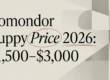


A Komondor puppy may be one of the rarest and most memorable dogs you ever bring home, but the purchase decision should begin with more than a number. When people ask, what does a Komondor cost, they are often comparing puppy prices. The more useful question is what it costs to acquire, raise, train, and responsibly live with a true Hungarian guardian breed for the next 10 to 12 years.
A well-bred Komondor is not a generic companion dog produced for volume. This is a powerful, independent livestock guardian with a distinctive corded coat, ancient purpose, and serious protective instinct. The initial price reflects the breeder’s work long before a puppy is ready to leave, while the lifetime budget reflects whether the home is prepared for the dog behind that remarkable appearance.
What Does a Komondor Cost From a Responsible Breeder?
In the United States, a purebred Komondor puppy from a conscientious breeder commonly costs several thousand dollars. For a puppy from documented Hungarian champion bloodlines, with careful health planning, proper raising, pedigree documentation, and breeder support, prospective owners should expect the price to be toward the higher end of the market rather than the lowest.
There is no honest single price for every Komondor. A puppy’s cost can change with pedigree, litter availability, sex, show or breeding potential, export destination, transport arrangements, and whether the puppy is being placed as a family guardian, working dog, or future show prospect. Adult placements also vary substantially. A mature dog with training, show achievements, breeding value, or proven working ability represents years of investment that cannot be measured as a simple puppy price.
A low advertised price can be tempting, especially for buyers who have waited years to find this rare breed. Yet a bargain Komondor may come with expensive uncertainty: incomplete pedigree records, weak socialization, unproven temperament, inadequate health screening, or no knowledgeable support after the sale. Those are not small details in a large guardian breed expected to make sound decisions around family, visitors, animals, and property.
What the Purchase Price Should Represent
The cost of a responsibly bred puppy begins with the quality and suitability of the parents. A preservation-minded breeder studies bloodlines, structure, coat, temperament, working character, and health before deciding on a pairing. Champion ancestry is meaningful when it supports a consistent breeding program, not when it is used as a label without substance.
The price should also reflect veterinary care, appropriate nutrition, parasite prevention, early handling, age-appropriate social experiences, registration and pedigree records, and the substantial daily work of raising a litter correctly. With a breed as uncommon as the Komondor, maintaining authentic bloodlines and avoiding careless breeding shortcuts requires particular dedication.
At Somogyi Betyár Kennel, the goal is not simply to place puppies overseas. It is to protect the traditional Komondor: a dog with correct appearance, reliable structure, stable character, quality coat, and the natural guardian ability for which the breed has been valued in Hungary for generations.
Why Hungarian Bloodlines Can Affect Komondor Price
Hungary is the Komondor’s homeland. For buyers seeking a dog that closely reflects the breed’s heritage, access to carefully preserved Hungarian lines has real value. It can mean generations of breeders selecting for the original type and purpose, rather than breeding primarily for novelty, color, or quick commercial demand.
That does not mean every Hungarian-bred dog is automatically superior, nor does it mean a Komondor bred elsewhere cannot be excellent. The critical issue is documentation and breeder standards. Ask to understand the pedigree, the parents’ temperament and achievements, the health approach, and the goals behind the litter. A serious breeder should be able to speak plainly about these matters and should care where each puppy goes.
For an international buyer, the price may also include export preparation. Depending on destination rules, this can involve veterinary certificates, vaccinations, microchip requirements, export documentation, crate arrangements, and coordination with trusted transport professionals. These details take experience. Proper international placement is not an afterthought, especially when a puppy is traveling a long distance to begin life with a new family.
The Costs Beyond Bringing Your Puppy Home
The purchase price is the first major investment, but it is not the complete Komondor budget. A prepared owner plans for regular veterinary care, high-quality food, training, secure containment, grooming supplies, and unexpected medical expenses. The annual cost differs by region and household, but large-breed care is never identical to caring for a small, low-maintenance dog.
Food costs depend on the dog’s age, activity level, metabolism, and the diet selected with veterinary guidance. A growing Komondor needs nutrition appropriate for a large, developing body. Choosing food only by the lowest price is rarely wise when sound growth, condition, and long-term health matter.
Training deserves a realistic budget as well. Komondors are intelligent, observant, and devoted to their people, but they are not eager-to-please in the way some sporting breeds are. They were developed to assess situations independently. Early socialization, clear household rules, and professional help from a trainer who understands guardian breeds can prevent misunderstandings from becoming habits.
Secure fencing is another essential expense, not an optional upgrade. A Komondor needs a safely managed territory and an owner who can control introductions to visitors, delivery workers, other dogs, and unfamiliar situations. This is a powerful dog with a serious duty in its nature. Responsible ownership protects the dog, the family, and the public.
Coat Care Is a Commitment, Not a Salon Appointment
The Komondor’s coat is extraordinary, but it requires hands-on attention. As the coat cords, owners must separate and maintain those cords to keep them clean and healthy. Bathing and drying can be time-consuming, particularly with an adult dog. The coat should never be treated as a costume feature that can be ignored until it becomes a problem.
Some owners manage all coat care themselves after learning the correct techniques. Others budget for occasional professional assistance from a groomer willing to learn the breed’s needs. Either path requires patience. The right Komondor owner sees coat care as part of the relationship with the dog, not as an inconvenience that begins after the puppy purchase.
Questions That Reveal Real Value
Before comparing prices, ask what is included and what continues after placement. Does the breeder provide a verifiable pedigree and clear paperwork? Are the parents selected with health, structure, temperament, and breed type in mind? Has the breeder raised the puppies with purposeful early care? Will the breeder remain available when questions arise about development, coat care, guardian behavior, travel, or settling into a new home?
Also ask practical questions about transport. Is the quoted figure for the puppy alone, or does it include export documentation, veterinary preparation, crate costs, and delivery? International travel charges can vary by season, airline, route, crate size, and destination. A clear written understanding prevents unpleasant surprises and allows the buyer to compare options fairly.
The right breeder may ask you just as many questions. They should want to know about your property, fencing, experience with large dogs, children, other animals, daily routine, and expectations for protection. This is a sign of care, not a barrier to purchase. A Komondor deserves a home that respects its instincts and gives it thoughtful leadership.
A Higher Price Can Be the Less Expensive Choice
A responsibly bred puppy may cost more at the beginning, but the value becomes clearer over time. Sound temperament, deliberate socialization, documented lineage, breeder guidance, and a careful start cannot guarantee every outcome, because dogs are living individuals and owners play a central role. They can, however, reduce the avoidable risks that too often follow poorly planned breeding and careless placement.
The best budget is not the one that finds the cheapest Komondor. It is the one that leaves room for quality food, training, veterinary care, secure management, and the time this exceptional breed needs from its people. Choose the dog whose background you can trust, then give that dog the steady, knowledgeable home its heritage deserves.