A Komondor standing quietly at the edge of a field does not need to make a sound to command attention. Its white cords, powerful frame, and watchful expression reflect a job shaped over centuries: guarding livestock independently in the Hungarian countryside. Among rare Hungarian dog breeds, the Komondor is not simply striking to look at. It is a living working breed whose character, structure, and instincts deserve to be understood before they are brought into a home.
For serious owners, rarity should never be the only reason to choose a dog. The real value lies in preserving breeds that were developed with clarity of purpose. Hungary’s traditional dogs were not created for fashion. They were shaped by terrain, livestock, weather, and the practical needs of shepherds and hunters. That history still matters in a well-bred dog today.
Why Rare Hungarian Dog Breeds Need Context
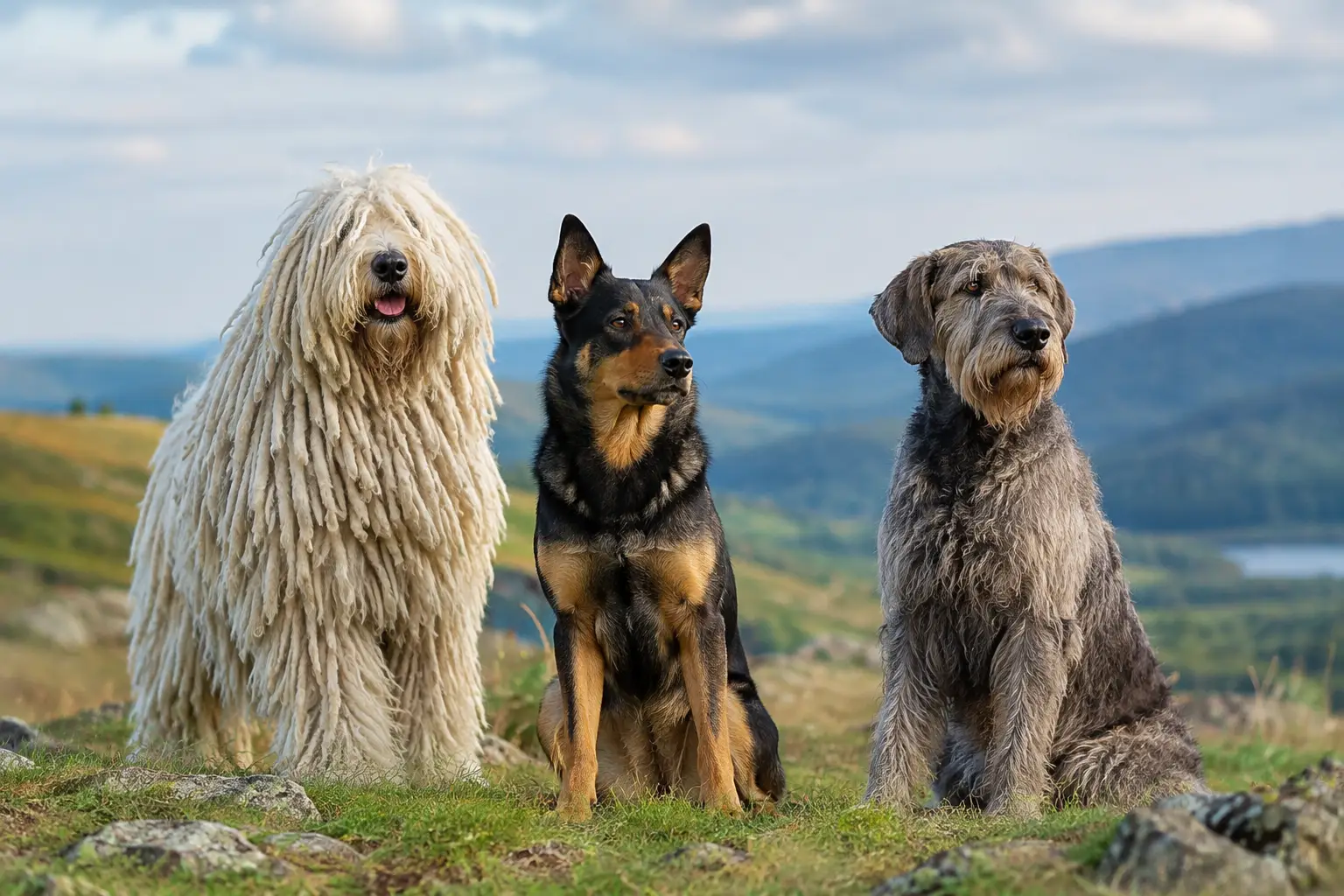
The phrase “rare Hungarian dog breeds” can describe several distinct breeds, but they should not be treated as variations of the same dog. Hungary gave the world flock guardians, herding dogs, hunting dogs, scent hounds, and coursing hounds. Each has a different temperament, energy level, coat, and relationship with people.
The Komondor and Kuvasz are livestock guardian breeds. Their role was to protect animals, often at night and at a distance from human instruction. The Puli, Pumi, and Mudi are agile herding breeds, typically quicker, more responsive, and more vocal in their work. The Vizsla and Wirehaired Vizsla were developed as versatile hunting companions, while the Transylvanian Hound and Hungarian Greyhound reflect older traditions of tracking and coursing game.
What connects these breeds is not a shared personality. It is a shared national heritage and an unusually strong connection to functional work. This is why buyers should look beyond a beautiful photograph or an uncommon name. A responsible choice begins with asking what the breed was intended to do, and whether that purpose fits the life you can offer.
The Komondor: Hungary’s Distinctive Flock Guardian
The Komondor is one of Hungary’s most recognizable national treasures. Its mature corded coat is remarkable, but it was never merely decorative. The coat helped the dog work outdoors in harsh conditions and gave it a distinctive presence among sheep. Beneath it is a large, athletic, strongly built guardian with the endurance to patrol and the confidence to make decisions.
A correct Komondor is devoted to its own people, serious about its territory, and naturally reserved with strangers. It should not be needlessly nervous, unstable, or aggressive. Stable temperament is essential because a guardian dog must assess a situation rather than react recklessly to every unfamiliar sound or visitor.
That independence is one of the breed’s greatest strengths and one of its biggest responsibilities for an owner. A Komondor is not designed to perform endless repetitions simply to please a handler. Training must be calm, consistent, fair, and started early. Clear boundaries and thoughtful socialization help the young dog learn the difference between normal daily life and a genuine concern.
This does not make the Komondor unsuitable for family life. With the right home, it can be deeply affectionate, steady, and protective with its family. It does mean that the breed is best matched with owners who appreciate a dog with judgment and character, rather than expecting the easy sociability of a generic companion breed.
What Makes a Komondor Different From Other Hungarian Breeds
The Komondor is sometimes grouped with all large white dogs, but its heritage and temperament set it apart. The Kuvasz is also a Hungarian guardian and shares the ability to think independently, yet the two breeds differ in type, coat, movement, and traditional presentation. A prospective owner should meet and study both rather than choose based on appearance alone.
Compared with Hungary’s smaller herding breeds, the Komondor has a lower need for fast-paced, handler-directed activity but a far stronger instinct to monitor property and family. A Pumi or Mudi may thrive with sports, advanced obedience, and active engagement throughout the day. A Komondor needs secure space, meaningful structure, and an owner who understands that watchfulness is part of its nature.
The coat also requires an honest commitment. Komondor cords do not need brushing in the ordinary sense, but they do require regular hands-on separation, drying, and careful management. Young coats need particular attention as cords form. A wet, neglected coat can become uncomfortable and unhealthy, while a well-maintained coat is one of the breed’s defining features.
Choosing a Rare Hungarian Breed With Care
For any rare breed, a limited population makes breeder choice more consequential. Good breeding is not about producing the greatest number of puppies or offering the quickest delivery. It is about making thoughtful decisions that protect health, correct breed type, sound movement, stable temperament, and genetic diversity for the future.
For a Komondor, pedigree documentation is more than paperwork. It provides a record of lineage and helps a serious buyer understand where a puppy comes from. Champion Hungarian bloodlines can offer valuable continuity with the breed’s traditional characteristics, but titles alone are not enough. The individual dogs behind a pedigree should demonstrate sound health, proper structure, correct coat quality, and reliable temperaments.
A responsible breeder should be willing to discuss health testing, the strengths of a planned litter, coat care, socialization, and the realities of guardian ownership. They should also ask questions of the buyer. A breeder who cares about preservation does not place a Komondor as though it were an interchangeable product.
For international buyers, clear export procedures matter as well. Pedigree documents, veterinary records, transportation planning, and honest communication should be handled with care. Bringing a puppy from Hungary to the United States or another country requires preparation, but it also gives committed owners access to the breed at its source and to established Hungarian lines.
The Right Home Is Part of Preservation
Preserving a breed does not mean placing it in every available home. It means placing the right puppy with an owner prepared to respect its needs for its entire life. A Komondor can live successfully with a family, on rural property, or with livestock, but each setting requires management suited to the dog.
Secure fencing is essential. Early, controlled exposure to guests, vehicles, veterinary care, and everyday household activity is valuable. Visitors should be introduced under the owner’s direction, not left to test the dog’s guardian instincts. Children must also be taught to respect the dog’s resting space, food, and boundaries.
Owners should expect a long-term relationship, not a novelty. The magnificent coat draws attention, but the quiet loyalty behind it is what makes the Komondor exceptional. Families who understand this often find that their dog becomes an irreplaceable presence: observant, dignified, and profoundly attached to the people and place it considers its own.
A Heritage Worth Protecting
Rare breeds survive when breeders and owners value function as much as appearance. That is especially true for the Komondor. Its cords, guardian instinct, and imposing silhouette are inseparable from the Hungarian pastoral tradition that formed the breed.
At Somogyi Betyár Kennel, this responsibility begins with selective breeding from documented Hungarian lines and continues through careful guidance for future owners. The goal is not simply to place puppies abroad, but to safeguard the qualities that make a true Komondor worthy of its heritage.
If the Komondor’s purpose, independence, and devotion speak to you, take time to choose with patience. The right dog is not just a rare sight. It is a commitment to a remarkable Hungarian legacy, carried forward one responsible home at a time.