
If you are weighing komondor vs kuvasz, you are already looking beyond surface-level dog buying. These are not casual breeds, and they should never be chosen by appearance alone. Both are historic Hungarian guardians with real working roots, strong instincts, and a serious sense of duty. But they are not interchangeable, and the differences matter a great deal once the dog is living on your property, meeting your family, and responding to the world around it.
For buyers who want an authentic guardian breed, this comparison should begin with purpose. The Komondor and the Kuvasz were both developed to protect, but they express that role differently. One is famous for its corded coat and imposing, almost legendary presence. The other is more athletic in outline, more visibly accessible to the average dog buyer, and often easier for people to recognize as a large white livestock guardian. That does not make the decision simple. It makes it more important to understand what each breed was meant to be.
Komondor vs kuvasz: the core difference
The most useful way to compare these breeds is not by asking which is better. It is better to ask what kind of guardian you need and what kind of owner you are prepared to be.
The Komondor is a powerful, self-assured flock guardian with a unique style of protection. A correct Komondor is calm, confident, and deeply instinctive. This is a breed that does not need to advertise itself constantly. It observes, assesses, and acts with conviction when the situation calls for it. There is dignity in a well-bred Komondor, but also seriousness. This is not a dog bred to please everyone.
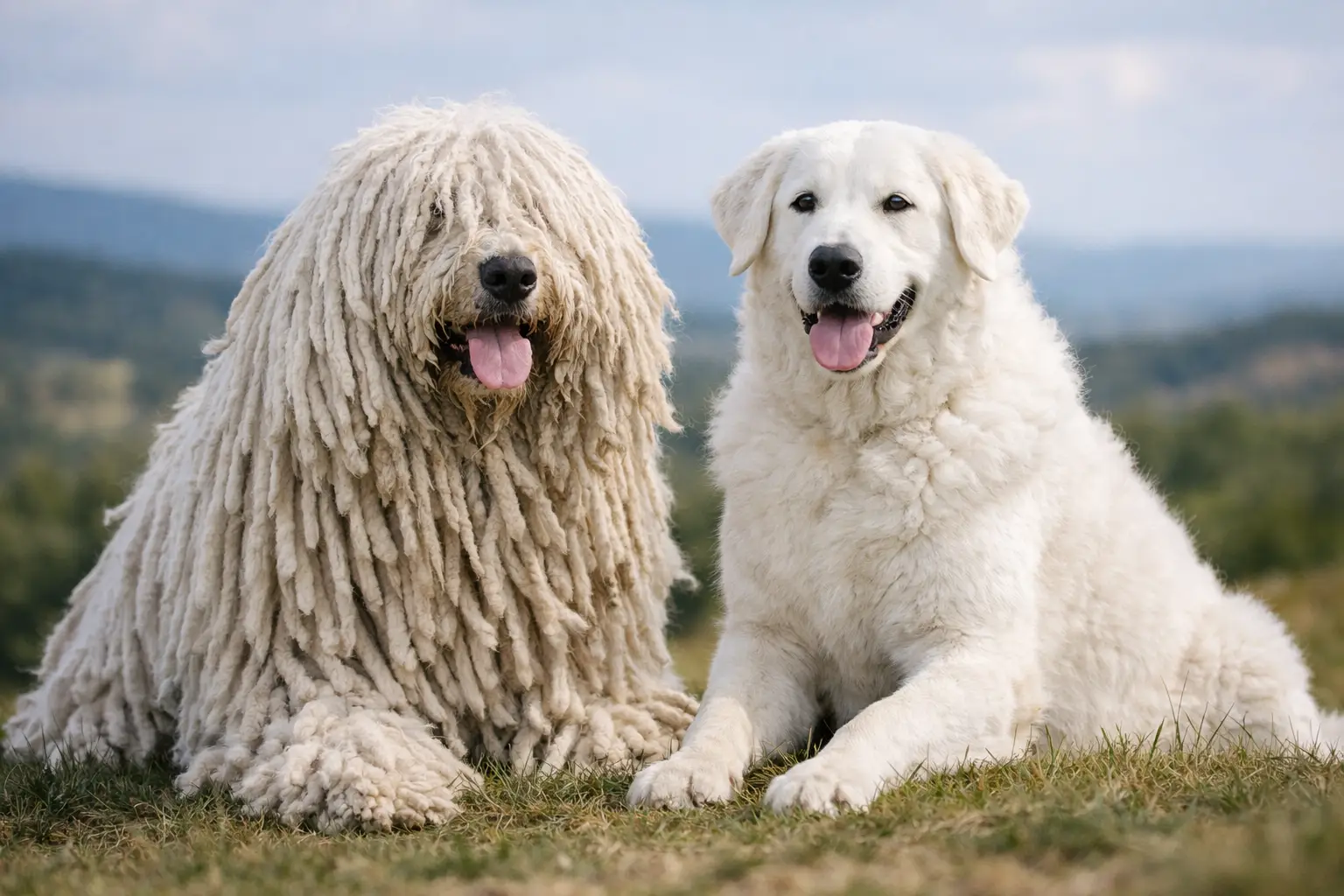
The Kuvasz is also a guardian and a proud Hungarian breed, but it tends to present differently. In general, the Kuvasz is more agile in appearance, with a flowing white coat rather than cords, and often shows a somewhat more outwardly responsive style with people. That does not mean soft. It means the breed can feel more immediately readable to some owners, especially those who have experience with other large working dogs.
For many buyers, the true dividing line is this: the Komondor is often chosen by people who want the full historical guardian presence, including the coat, the independence, and the traditional breed character that comes with it. The Kuvasz may appeal more to those who want a white Hungarian guardian with a somewhat more conventional coat and silhouette.
Temperament and guarding style
This is where the choice becomes serious.
A true Komondor is not merely protective. It is discerning. The breed was developed to make decisions without constant human direction, often in demanding conditions. That independence is one of its great strengths, but it also means the dog must come from stable, proven bloodlines and be raised properly from the beginning. A poorly bred or poorly socialized Komondor is not the same animal as a well-bred one. In the right hands, the breed is steady, loyal, deeply devoted to its people, and naturally suspicious of threats without being needlessly chaotic.
The Kuvasz also carries strong protective instinct, but many owners describe the breed as somewhat more openly interactive or expressive in day-to-day life. That can be a benefit in some households, especially if the owner wants a guardian that feels a bit more visibly engaged with family routine. Still, no one should mistake the Kuvasz for an easygoing generic family dog. It also requires structure, boundaries, and experienced ownership.
When families ask which breed is better with children, the honest answer is that it depends on breeding, socialization, supervision, and household stability. Neither breed should be selected under the assumption that instinct alone will produce the perfect family companion. Guardian breeds do best when they understand their role, trust their people, and live in an environment with calm, consistent leadership.
Coat, grooming, and daily reality
The most obvious difference in any komondor vs kuvasz discussion is the coat.
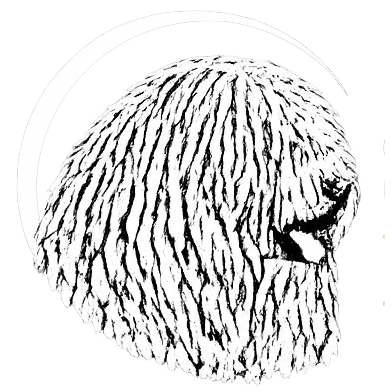
The Komondor’s corded coat is iconic, but it should never be treated as a novelty. The cords are part of the breed’s identity and historical function. A correct coat offers insulation and protection, but maintaining it requires knowledge and commitment. It is not the same as brushing a long-haired dog. The cords must be separated by hand, kept clean, and managed properly as the dog matures. For the right owner, this is part of the beauty and honor of keeping the breed as it was meant to be. For the wrong owner, it becomes a burden very quickly.
The Kuvasz has a white double coat that is demanding in a more familiar way. It sheds, requires regular grooming, and needs consistent coat care, but it does not develop cords. Some buyers prefer this because it feels simpler and more predictable. That is fair. Still, simpler does not mean maintenance-free. Large white dogs show dirt, drop coat, and need proper care if they are to remain in healthy condition.
If a buyer is drawn to the Komondor only because the coat looks dramatic, that is not enough. If a buyer avoids the Komondor only because the coat seems different, that may also be too quick a judgment. The coat is not a decorative extra. It is part of the breed’s function and heritage.
Trainability and owner experience
Both breeds are intelligent, and both can challenge inexperienced owners.
The Komondor is highly capable, but it is not a breed that thrives under repetitive obedience drilled for sport or constant correction from uncertain hands. Respect matters. Clarity matters. Early guidance matters. A well-bred Komondor learns quickly, but it wants leadership with substance. It responds best when the owner is calm, consistent, and worthy of trust.
The Kuvasz can also be independent and sensitive. In some cases, people find it slightly more straightforward to train for household life, but broad generalizations can be misleading. Individual lines matter. Breeder priorities matter. A dog bred with sound temperament and proper structure starts with an advantage that training alone cannot create later.
This is one reason serious buyers should look beyond online breed summaries. The quality of the breeder has a direct effect on what kind of dog comes into your life. With heritage guardian breeds, that is not a marketing detail. It is the foundation.
Appearance, structure, and breed identity
There is a reason the Komondor leaves such a lasting impression. A correct Komondor has exceptional presence. It stands as a substantial, powerful dog with bone, mass, confidence, and unmistakable breed character. The cords make it memorable, but true quality goes far deeper than that. Structure, balance, movement, head type, guarding instinct, and stable temperament all matter.
The Kuvasz is elegant in a different way. It is generally more flowing in outline, athletic, and refined while still being substantial enough to do hard work. The visual impression is less dramatic than the Komondor’s, but that does not make it lesser. It is simply different in expression.
For those committed to traditional Hungarian guardian breeds, authenticity should matter more than fashion. The right question is not which dog photographs better. It is which breed’s original character you truly value and are prepared to preserve.
Which breed is right for your property and lifestyle?
If you live in a tightly packed suburban setting, receive constant casual visitors, and want a highly social dog that welcomes unpredictability, neither breed may be the right fit. That is worth saying clearly. Guardian breeds are best matched with owners who respect management, boundaries, and the dog’s natural instincts.
The Komondor is especially well suited to people who appreciate a serious guardian temperament, have space, understand large-breed responsibility, and want a dog with deep historical identity. It is often the right choice for those who value traditional livestock guardian character, imposing presence, and breeder support rooted in actual preservation rather than trend-driven production.
The Kuvasz may better suit buyers who want a Hungarian guardian with a more conventional coat and a somewhat different day-to-day style, while still accepting the responsibility that comes with an intelligent, protective working breed.
For some people, the answer becomes clear once they are honest about maintenance, management, and purpose. If your heart is set on the Komondor, choose one from a breeder who protects the breed’s true essence – sound health, proven pedigree, correct type, stable nerves, and genuine working character. That standard matters at every stage, from puppy evaluation to adult maturity. At Somogyi Betyár Kennel, that responsibility is taken seriously because the future of the Komondor deserves nothing less.
The best breed choice is the one you can honor for the dog’s entire life, not just the one that captures your attention for a moment.