
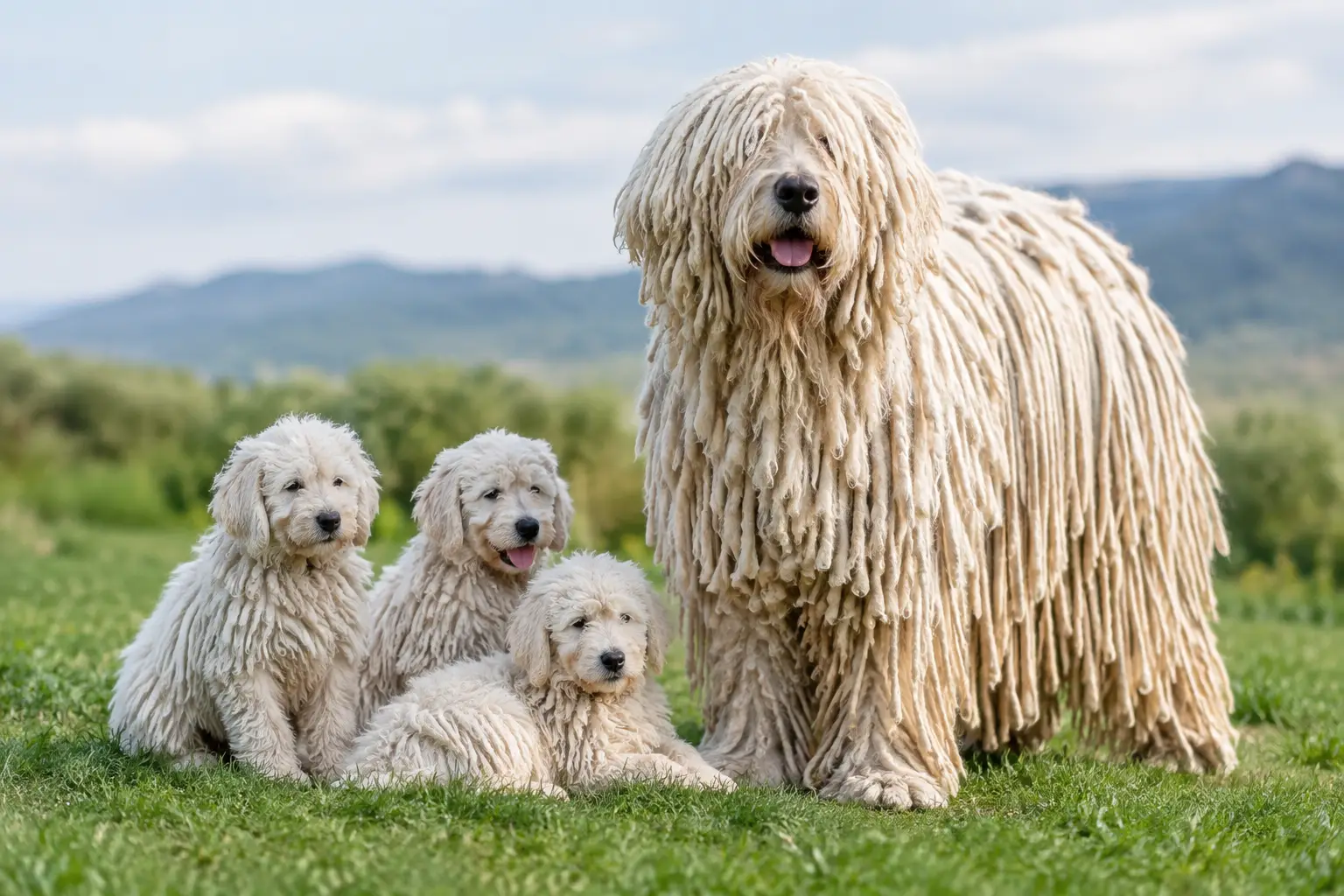
A Komondor should move with quiet power: balanced, purposeful, and able to cover ground without strain. That picture begins long before a puppy enters a new home. Komondor hip health is shaped by inherited structure, responsible breeding decisions, nutrition during growth, body condition, and the kind of daily life the dog is asked to lead.
For families seeking a true Hungarian guardian, hips are not a minor detail on a health checklist. They support the breed’s working ability, endurance, and comfort through adulthood. A serious breeder protects these qualities through careful selection, while a committed owner protects them through thoughtful raising and lifelong care.
What Komondor Hip Health Means
The hip is a ball-and-socket joint. In a sound hip, the top of the femur fits securely and moves smoothly within the pelvic socket. Hip dysplasia describes abnormal joint development, which may create looseness, uneven wear, inflammation, and eventually arthritis. The condition can range from mild changes found only on screening to painful disease that affects daily movement.
Hip dysplasia has a genetic component, but genes do not tell the whole story. A puppy’s rate of growth, diet, weight, activity, injury history, and muscle development can influence how the joints mature and how comfortably the dog moves. This is why no ethical breeder should promise that any individual puppy will never develop a joint problem. What responsible breeding can do is reduce avoidable risk by selecting dogs with sound hips, correct structure, stable movement, and strong family history.
The Komondor is a large, substantial breed, but substantial must never mean heavy or cumbersome. Correct type combines bone and power with functional balance. A dog that is carried in hard, excessive condition puts needless force through every joint. A dog bred without attention to construction may look impressive standing still but lack the efficient movement a traditional guardian requires.
Breeding for Sound Komondor Hips
A breeder’s first responsibility is to evaluate the dogs used for breeding, not simply admire their pedigree or coat. Champion ancestry is valuable when it represents generations of correct type, proven temperament, sound movement, and accountable selection. It is not a substitute for health screening or for honest knowledge of a line.
Hip evaluation is commonly performed through radiographs interpreted by an established registry or veterinary orthopedic system. For American buyers, OFA-style evaluations are familiar; European and Hungarian programs may use FCI-recognized grading systems. The format can differ, but the principle is the same: breeding decisions should be based on documented assessment rather than guesswork.
A meaningful program also looks beyond one result. Relatives matter. A breeder should consider parents, siblings, earlier offspring, longevity, mobility in mature dogs, and any pattern that may emerge within a family. This is especially relevant in a rare heritage breed. Preservation does not mean breeding indiscriminately from every dog with a famous name. It means protecting genetic diversity while holding firmly to the structural and health standards that allow the Komondor to remain a capable working dog.
At Somogyi Betyár Kennel, the goal is never to produce a generic large companion dog. It is to preserve the authentic Komondor: a confident Hungarian guardian with proper type, reliable character, and the physical soundness to live the life the breed was created for.
Questions a Serious Buyer Should Ask
Prospective owners should feel comfortable asking how a breeder evaluates hip health and how those evaluations influence breeding choices. Ask whether the parents have documented hip assessments, what system was used, and whether the breeder follows the progress of previous puppies as they mature.
It is also reasonable to ask about the parents’ movement and daily condition. A video of a dog moving freely can offer useful context, although it does not replace formal screening. A knowledgeable breeder will welcome thoughtful questions and explain both the strengths and the limits of any health information. Be wary of vague assurances such as “our dogs have never had problems” when there is no documentation or long-term follow-up behind the statement.
Health records should sit alongside pedigree documentation, temperament information, and clear guidance for raising the puppy. The best breeder-owner relationship continues after placement, because feedback from homes around the world helps guide the future of the line.
Raising a Puppy Without Overloading the Joints
The period from puppyhood through skeletal maturity deserves patience. Komondor puppies grow into powerful adult dogs, but they should not be rushed into adult exercise or pushed to carry extra weight. Fast growth is not an achievement. A puppy that looks round and oversized for its age may be placing unnecessary stress on developing joints.
Feed a complete, age-appropriate food formulated for large-breed puppies when recommended by your veterinarian. The goal is steady, controlled growth, not maximum size as quickly as possible. Avoid casually adding calcium or other supplements to a balanced commercial diet. More is not automatically better, and incorrect mineral balance can be harmful during development.
Keep your young Komondor lean enough that you can feel the ribs beneath a light covering of tissue and see a waist from above. Their developing coat can make body condition difficult to judge, so owners should use their hands as well as their eyes. Regular weigh-ins and veterinary checks are helpful, particularly during the rapid growth months.
Exercise should build coordination and confidence without repetitive impact. A puppy benefits from free movement on safe footing, short exploratory walks, gentle play, and time to rest. Constant stair climbing, forced jogging, repeated jumping from vehicles, and long runs beside a bicycle are poor choices for a growing giant breed. Slippery floors deserve attention too. Rugs or runners in the puppy’s main living area can provide better traction while the body is learning to balance.
This does not mean raising a fragile puppy who never moves. The Komondor needs sensible activity, exposure, and the chance to develop strong muscles. It means matching exercise to age and maturity rather than asking the dog to perform like an adult too soon.
Signs That Deserve a Veterinary Visit
The Komondor’s serious, stoic nature can make subtle discomfort easy to miss. Heavy corded coat can also conceal changes in muscle tone or body shape. Owners should observe movement regularly, especially after rest, after vigorous play, and as the dog ages.
Arrange a veterinary examination if you notice persistent stiffness, reluctance to rise or climb, limping after activity, a shortened stride, bunny-hopping when running, or a change in willingness to jump into the car. A dog may also become unusually reluctant to play, stand with weight shifted forward, or react when the hindquarters are handled. These signs can have several causes, including soft-tissue injury, knee disease, spinal issues, or paw problems. They should not be self-diagnosed as hip dysplasia.
Early assessment matters because a veterinarian can identify the source of discomfort and discuss appropriate options. Depending on the dog’s age and findings, management may include weight control, activity adjustment, rehabilitation, pain relief, joint support, or referral to an orthopedic specialist. In some cases, surgery may be considered. The right plan depends on the individual dog, not on an internet checklist.
Adult Care for Stronger, More Comfortable Movement
Once mature, the Komondor remains best supported by a practical routine. Keep the dog lean, provide regular moderate exercise, and avoid the boom-and-bust pattern of inactivity followed by exhausting weekend activity. Walking, controlled free movement in secure areas, and conditioning appropriate to the dog’s age and work are generally more useful than occasional extreme exertion.
Good footing matters throughout life. Wet tile, polished floors, icy paths, and steep jumps in and out of a vehicle can be especially difficult for a large dog with sore joints. A ramp, non-slip surfaces, and a supportive resting place are simple adjustments that can preserve comfort. Grooming is another opportunity to notice changes. As you work through the cords and feel the body, pay attention to uneven muscle development, sensitivity, or changes in condition.
Older Komondors may slow down, but slowing down should never be dismissed as “just age.” Many senior dogs remain more active and content when pain is recognized early and their routine is adapted with care.
A sound Komondor is the result of stewardship shared across generations. Choose a breeder who respects health documentation and correct construction, then raise your dog with patience rather than pressure. Your puppy’s powerful adult frame is built day by day, and protecting it is one of the finest ways to honor this remarkable Hungarian breed.