

A Komondor guardian breed review must begin with the truth that attracts many people to this remarkable dog: the Komondor was not developed to greet every visitor, follow every command for praise, or blend quietly into every household. This is a traditional Hungarian livestock guardian, bred to think independently, assess a situation, and stand between what belongs to it and what may threaten it. For the right owner, that character is not a challenge to work around. It is the very reason to choose the breed.
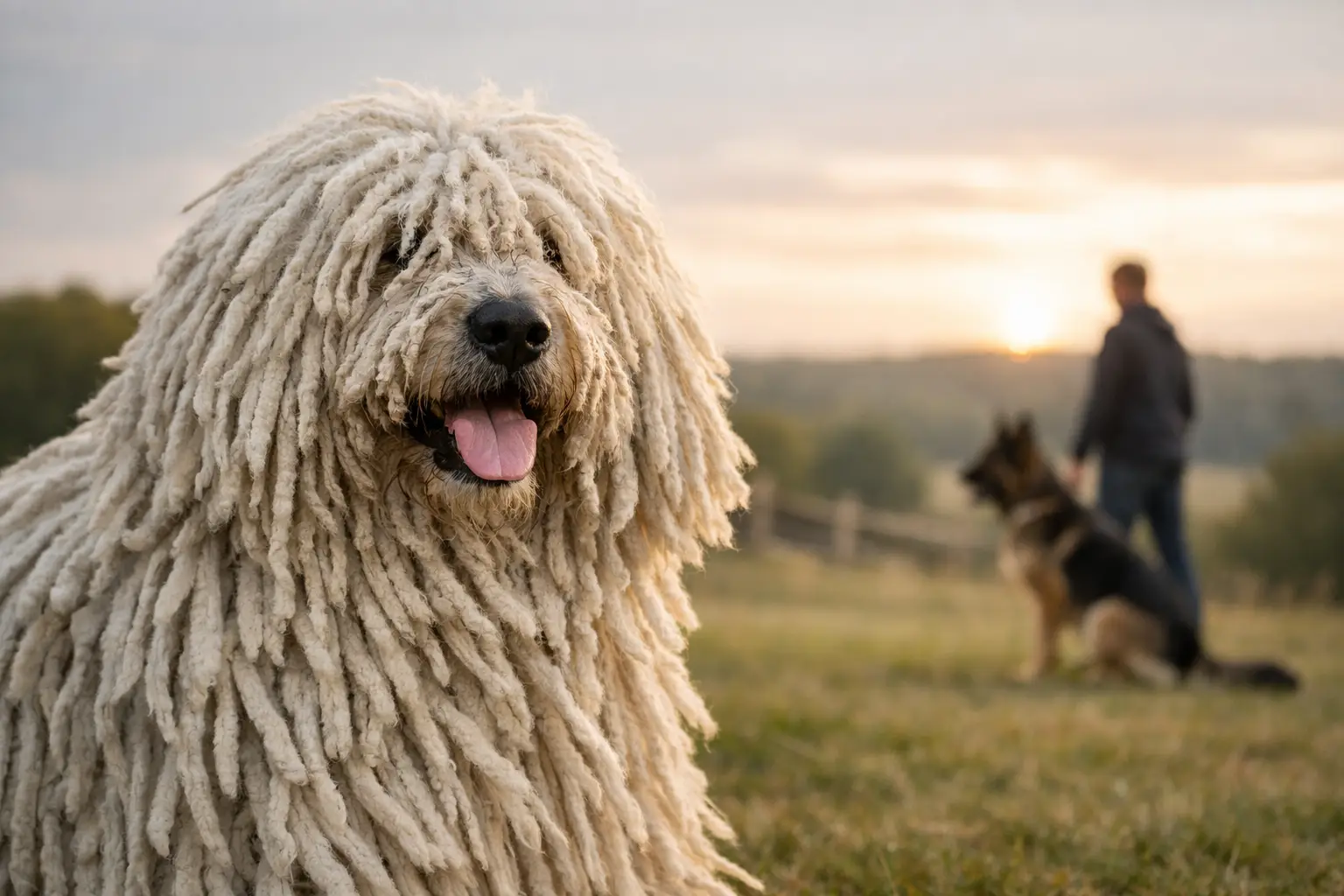
The Komondor is one of Hungary’s national treasures, recognized instantly by its dense white corded coat and remembered for its unmistakable presence. Yet appearance alone should never decide this purchase. A properly bred Komondor is a serious, intelligent guardian whose heritage, early raising, structure, and stable temperament deserve as much attention as its extraordinary coat.
What a Komondor Is Bred to Do
The Komondor’s original work was to protect livestock, often making decisions at night and at a distance from people. That history explains the breed’s calm watchfulness, territorial awareness, courage, and reserve with unfamiliar people. A good Komondor is not needlessly frantic or aggressive. It should be confident, composed, and discerning.
In a home, those traits can make the breed deeply devoted to its own family. Komondors often form powerful bonds with their people and can be gentle and patient with children they know. They notice changes around the property, unusual sounds, arriving vehicles, and unfamiliar movement. Owners do not need to teach a genuine guardian to be alert. They need to teach it how to live safely and appropriately within modern boundaries.
That distinction matters. The goal is never to create suspicion or sharpen protective behavior. The goal is a dog that is secure in its role, responsive to its owner, and able to distinguish ordinary life from a true concern.
Komondor Guardian Breed Review: Temperament in Real Life
A Komondor is best suited to owners who appreciate a dog with judgment. This is not a breed that performs like a highly social sporting dog or a handler-focused obedience specialist. It learns well, but it may pause, consider, and decide whether a request makes sense. Harsh, repetitive training can damage trust and create resistance. Calm consistency, clear household rules, and fair leadership produce far better results.
Early socialization is essential, but it should be thoughtful rather than indiscriminate. A Komondor puppy does not need to meet every person in every crowded setting. It does need positive, controlled exposure to normal life: trusted visitors, veterinary handling, grooming, vehicles, various surfaces, calm dogs, and the routines it will encounter as an adult. The puppy should learn that its owner handles introductions and that it does not need to make every decision alone.
Visitors require management. Even a well-raised adult Komondor may not welcome strangers with the casual enthusiasm of a retriever. Secure fencing, a reliable routine for arrivals, and direct supervision are responsible ownership, not signs that the dog has failed. Families who enjoy frequent open-door entertaining may find a more naturally social breed easier. Families who value privacy, space, and a close bond with a watchful dog may find the Komondor exceptionally rewarding.
Space, Family Life, and Other Animals
The ideal Komondor home is not defined only by acreage. A well-fenced property, meaningful daily activity, and an owner who is present and engaged matter more than a large but neglected field. Still, this is generally not a casual apartment breed. Its size, territorial nature, bark, and guardian instincts need room and responsible structure.
With livestock, the Komondor’s traditional abilities can be especially meaningful, although success depends on correct introductions, supervision, individual temperament, and the dog’s developmental stage. A puppy is not born as a finished working guardian. It must mature, learn the animals and property, and be managed sensibly. The same principle applies to cats, poultry, and resident dogs.
For families with children, the key question is not whether a Komondor can be loving. It certainly can be. The question is whether adults will actively supervise interactions, teach children respectful behavior, and prevent the dog from being placed in confusing situations. No large guardian breed should be expected to tolerate rough play, chaos at gates, or unsupervised encounters with visiting children.
The Coat Is Beautiful, but It Is a Commitment
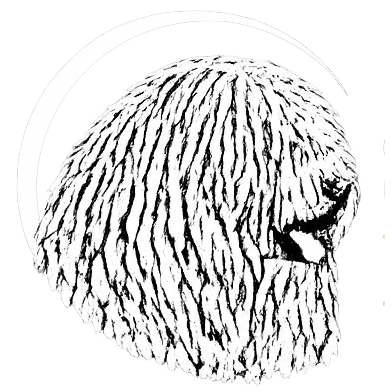
The Komondor’s corded coat is a functional inheritance, historically offering protection from weather and predators. It is also one of the breed’s greatest maintenance responsibilities. The coat is not brushed like that of many other breeds. As it develops, mats must be separated by hand into individual cords so the coat remains healthy and can dry properly.
Puppies begin with a soft, fluffy coat. Cord formation develops over time, and this transition requires attentive care. Owners should expect regular hands-on coat work, especially during the months when the puppy coat changes to the adult coat. Neglect can lead to dense mats, trapped moisture, odor, skin problems, and a painful grooming recovery.
Bathing is possible, but drying is the demanding part. A full Komondor coat holds a great deal of water and must be dried thoroughly. This is not a dog for an owner who wants a low-maintenance coat or relies on quick salon appointments. Before bringing home a puppy, make a realistic plan for bathing space, drying time, regular cord separation, and access to a groomer who truly understands corded coats if assistance is needed.
Health, Structure, and the Value of Documented Lines
A striking coat should never distract from what is beneath it. Sound structure, free movement, correct body type, healthy skin, stable nerves, and responsible health testing are central to preserving the Komondor. Serious breeders make breeding decisions with the long future of the line in mind, not simply the next litter.
Prospective owners should ask direct questions about pedigree, health records, the parents’ temperament, the puppies’ upbringing, and the breeder’s lifelong involvement with the breed. Documentation matters. A pedigree is more than a piece of paper when it represents traceable heritage, thoughtful selection, and accountability for what has been produced.
Hungarian bloodlines carry special significance for buyers seeking the original type and working character of the breed. However, country of origin alone is not a guarantee of quality. The meaningful question is whether the breeder understands the bloodlines, evaluates breeding dogs honestly, maintains correct breed characteristics, and supports owners after placement. At Somogyi Betyár Kennel, the purpose is not to produce a generic white companion dog. It is to preserve the authentic Komondor in health, temperament, appearance, and guardian ability.
Is the Komondor the Right Guardian for You?
The Komondor is a strong choice for an experienced or highly committed owner who wants a devoted guardian, accepts independent thinking, can provide secure management, and respects the breed’s heritage. It can be an extraordinary farm dog, estate guardian, and family companion in a stable, well-led home.
It is a poor fit for someone seeking instant friendliness with strangers, off-leash freedom in uncontrolled public spaces, effortless grooming, or a dog that will happily accept every new person as a friend. Buying a Komondor because of photographs alone is unfair to both dog and owner. Its beauty has meaning because it belongs to a breed built for real work and real responsibility.
A careful breeder will not promise that every Komondor fits every family. They will ask about your property, children, visitors, other animals, dog experience, daily routines, and expectations. They should be willing to discuss both the pride of living with this rare Hungarian guardian and the obligations that come with it.
The best next step is to picture an ordinary day five years from now: visitors at the gate, muddy weather, coat care on a busy weekend, a mature dog watching the boundary, and a family that trusts its calm presence. If that picture feels like a privilege rather than an inconvenience, the Komondor may be far more than an impressive dog to own. It may be the guardian your home has been waiting for.