A purebred Komondor is not simply a large white dog with cords and a registered name. It is the result of generations of purposeful breeding for an unmistakable Hungarian guardian: watchful, powerful, independent-minded, and deeply loyal to the people and territory entrusted to its care. For a prospective owner, recognizing true quality means looking beyond a puppy photo and asking whether the dog carries the breed’s correct heritage, health, structure, temperament, and protective character.
The Komondor is Hungary’s national treasure, shaped over centuries to guard livestock without constant human direction. That history still matters. A dog may be handsome, but if it lacks stable nerves, correct physical construction, or the breed’s discerning guardian instinct, it does not represent the complete Komondor.
What Makes a Purebred Komondor Authentic?
Pedigree is the starting point, not the finish line. A documented pedigree connects a puppy to known ancestors and gives a responsible breeder the ability to study bloodlines, preserve desirable traits, and make thoughtful decisions for future generations. It also provides buyers with a clear record of the dog’s identity and heritage.
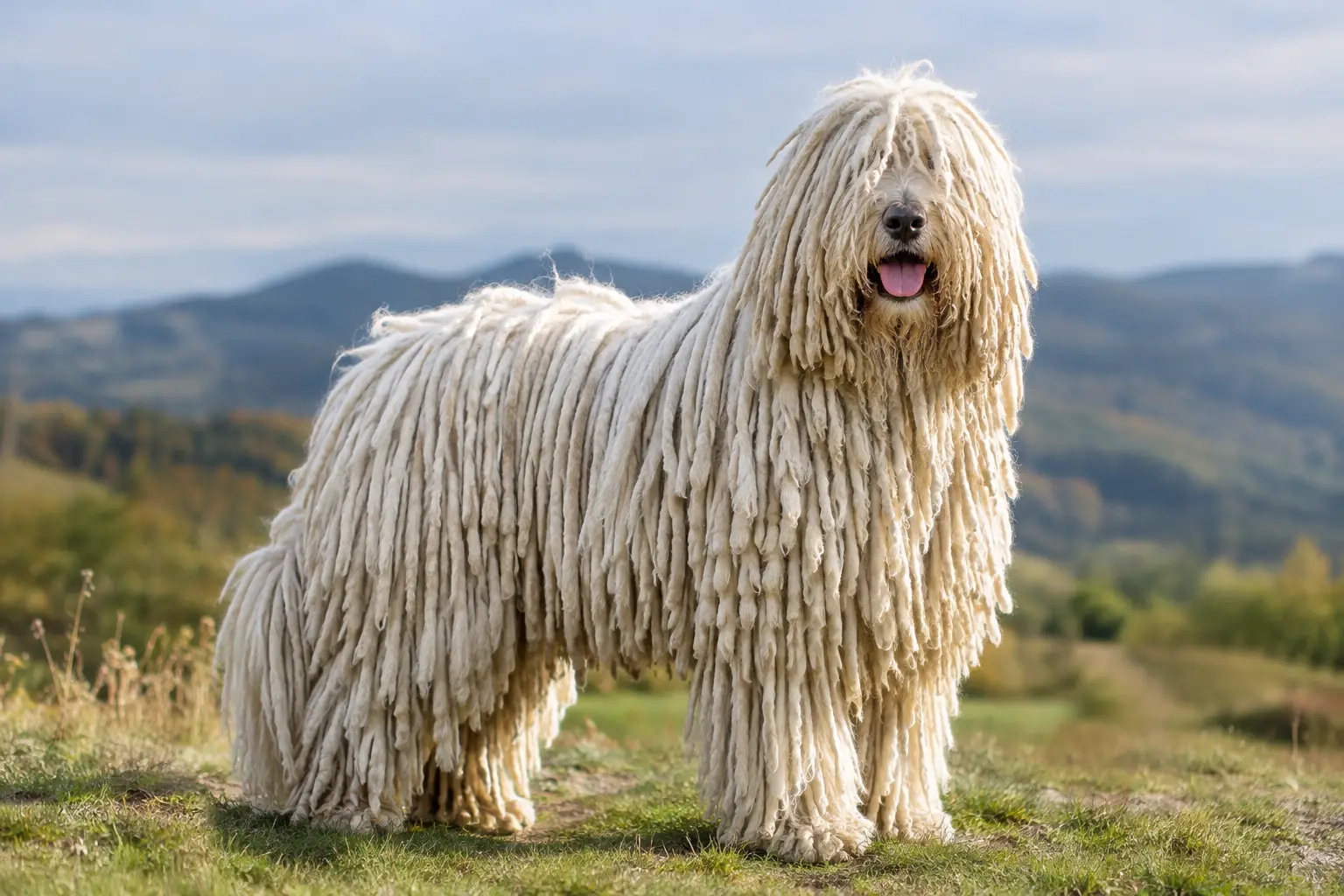
Authenticity, however, shows in the dog itself. A correct Komondor has a substantial yet athletic body, strong bone, a broad and dignified head, dark eyes, and a natural presence that communicates calm authority. The coat develops into the famous corded protection that helped the breed work outdoors in difficult conditions. It should never be treated as a novelty or a substitute for sound construction underneath.
A true Komondor is reserved with strangers but should not be needlessly fearful, unstable, or reactive. The breed was developed to assess situations independently. That can look very different from the eager sociability of a retriever or the constant responsiveness of a herding breed. The right dog is composed, observant, and confident, with a strong bond to its family.
Why Hungarian Bloodlines Matter
The Komondor’s homeland is not merely a point on a map. Hungary is where the breed’s original type, working heritage, and breeding culture were protected through generations of dedicated fanciers. Hungarian champion bloodlines can offer an important connection to dogs bred with deep knowledge of what a Komondor should look like and how it should behave.
That does not mean every dog from Hungary is automatically superior, nor does a famous name alone guarantee quality. The meaningful question is whether the breeder understands the lines behind each mating and can explain why those dogs were selected. Responsible breeding requires more than collecting pedigrees. It requires evaluating health, coat, movement, temperament, working character, and consistency across generations.
At Somogyi Betyár Kennel, this responsibility is central to every breeding decision. Preserving traditional Komondor qualities is not about producing a dog that merely resembles the breed. It is about respecting the complete standard handed down by generations of Hungarian breeders and placing each puppy with owners prepared to honor that legacy.
Health Testing Protects the Future of the Breed
A reputable breeder should be open about health testing and realistic about what it can and cannot promise. Health screening helps breeders make more informed pairings and reduce avoidable risks, but no breeder can honestly guarantee that a living animal will never face a health concern. Genetics, growth, nutrition, injury, environment, and age all play a role.
For a giant guardian breed, buyers should ask about the health evaluations performed on the parents and the breeder’s approach to long-term soundness. Hips, eyes, heart health, and overall physical condition deserve attention. Equally important is the breeder’s willingness to discuss the longevity and health history within the family line instead of offering vague assurances.
A well-raised puppy also needs a strong beginning. Nutrition appropriate for large-breed growth, careful socialization, clean surroundings, age-appropriate exercise, and regular veterinary care influence how a young Komondor develops. Rapid growth should not be encouraged. These dogs need time to mature into their frames, minds, and guardian role.
Temperament Is Not an Extra
Some buyers are captivated by the Komondor’s dramatic appearance before fully considering its instincts. This is understandable, but it can lead to a poor match. The Komondor is not a casual, universally social companion dog. It is a serious guardian with the intelligence to make decisions and the confidence to stand its ground.
The best home provides clear leadership without harshness. Early socialization is essential, but socialization does not mean trying to turn a Komondor into a dog that welcomes every visitor with enthusiasm. It means teaching the puppy to navigate the world calmly, to recognize guidance from its owner, and to remain controlled in unfamiliar situations.
A well-bred Komondor can be affectionate and gentle with its own family, including respectful children, while staying naturally discerning with strangers. Owners must manage introductions, boundaries, and property access responsibly. For livestock owners and experienced guardian-breed households, this character can be exactly what they value. For someone seeking an easygoing dog for frequent dog parks, busy gatherings, or constant public interaction, it may not be the right fit.
Structure and Coat Have a Purpose
The Komondor’s coat is one of the most recognizable in the dog world, but it requires informed care. The coat begins as soft puppy fluff, then changes texture as the dog matures. With proper handling, it forms cords that must be separated by hand and kept clean and dry. Neglect can cause mats close to the skin, trapped moisture, odor, and discomfort.
Prospective owners should be prepared for a different grooming routine than brushing a typical coated dog. Corded coats demand regular attention, particularly during coat transition. Bathing and drying take time, and a thick adult coat may require thoughtful planning around weather and household space. The reward is a coat that is both magnificent and historically functional, but it is a commitment.
Structure is equally practical. A Komondor should move with strength and balance, not heaviness or weakness. Correct angulation, a solid topline, sound feet, and an athletic body support a dog’s ability to work, patrol, and age comfortably. A breeder who values the complete dog will never focus on coat alone.
Questions Worth Asking a Komondor Breeder
A serious breeder welcomes serious questions. Ask to see the pedigree and understand the parents’ health testing. Ask how puppies are raised, what early socialization they receive, and how the breeder evaluates their individual temperaments. Ask what support is available after your puppy comes home, especially if this is your first livestock guardian breed.
It is also wise to ask about export procedures when purchasing internationally. Proper pedigree documentation, identification records, veterinary requirements, crate preparation, and safe travel arrangements are not minor details. They are part of responsible placement. An experienced breeder should be able to explain the process clearly and help buyers prepare for a puppy’s arrival rather than leaving them to solve complex logistics alone.
Be cautious of anyone who promises that every puppy is ideal for every home. Placement should be thoughtful. Some puppies may be best suited for experienced guardian homes, rural property, breeding or exhibition prospects, or families who understand the breed’s management needs. The right match benefits the puppy, the owner, and the breed itself.
Choosing for a Lifetime, Not a Moment
A Komondor can live many years, becoming more devoted and impressive as it matures. The puppy with the soft white coat will grow into a large, powerful adult whose decisions carry weight. Choosing a breeder should therefore be based on trust, transparency, and shared respect for the breed, not convenience or the lowest price.
Before reserving a puppy, consider your property, your daily routine, your visitors, your grooming commitment, and your willingness to train and manage a natural guardian with patience. The right purebred Komondor is not purchased as decoration. It is welcomed as a capable companion, a protector, and a living piece of Hungarian heritage that deserves a knowledgeable home.