


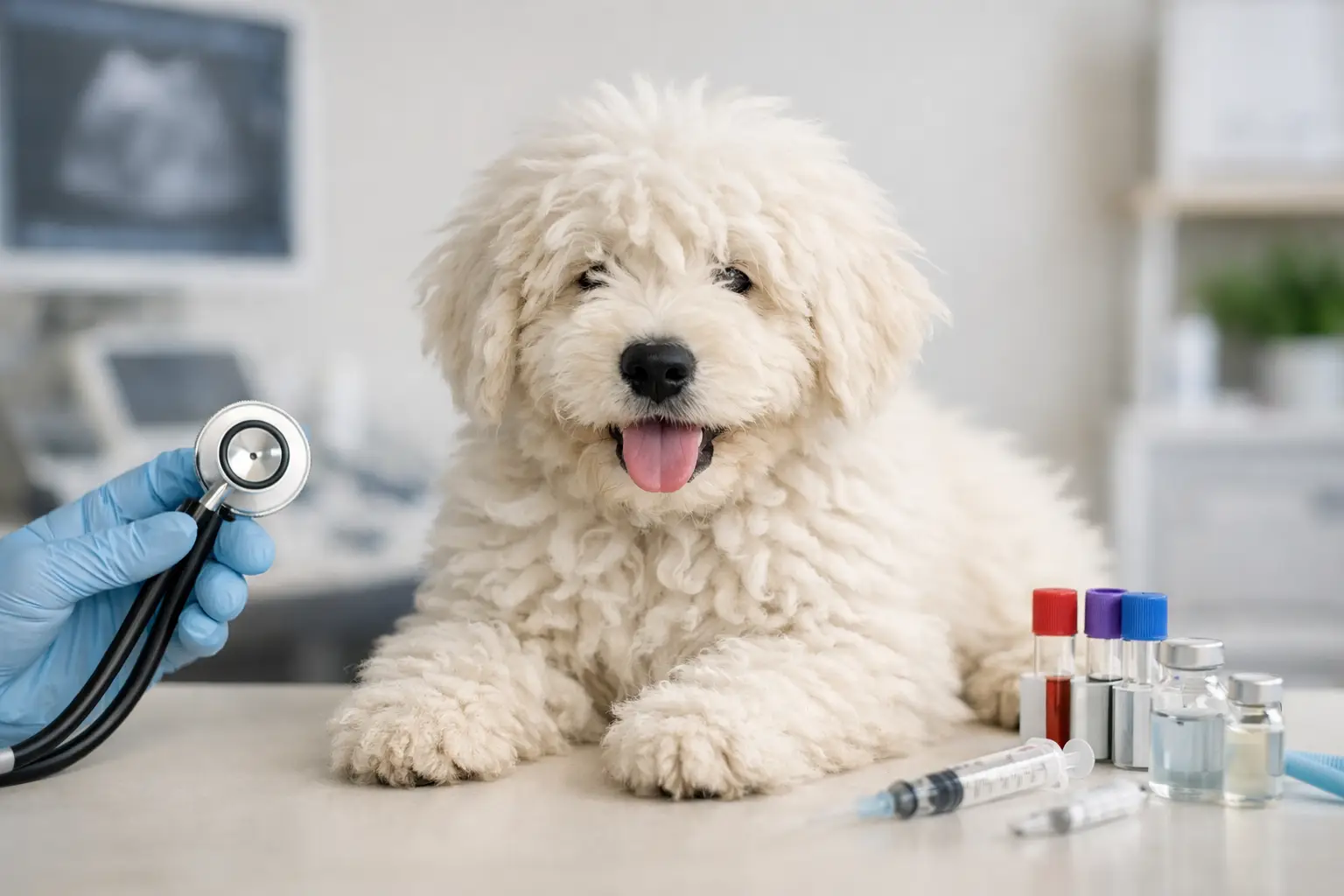
A Komondor puppy can look unforgettable from the first moment you see that heavy white coat and strong outline, but appearance should never be the reason to choose a breeder. Komondor puppy health testing is one of the clearest ways to separate careful preservation breeding from casual production. In a rare guardian breed, that difference matters for the dog’s future and for the future of the breed itself.
People often ask whether health testing guarantees a perfect dog. It does not. No honest breeder should promise that. What proper testing does is reduce avoidable risk, guide better breeding decisions, and show that the breeder is taking real responsibility for structure, function, and long-term soundness. With a breed as powerful, independent, and historically significant as the Komondor, that standard should be non-negotiable.
Why komondor puppy health testing matters so much
The Komondor is not a generic large white dog. It is a traditional Hungarian livestock guardian with a distinct purpose, distinct construction, and a temperament that must remain stable and reliable. Health testing is not separate from breed preservation. It is part of it.
A structurally unsound Komondor may struggle to move correctly, mature properly, or live comfortably as an adult. A poorly bred Komondor with weak nerves or unstable character is an even greater concern, especially in a breed known for protective instinct and serious presence. Buyers who are new to the breed sometimes focus first on coat, size, or price. Experienced owners usually ask different questions. They want to know what has been tested, what the pedigree shows, how the parents move, and how the breeder evaluates developing puppies.
That is the right approach. A Komondor should be bred with a long view. The breeder is not just producing puppies for immediate placement. The breeder is making decisions that affect the quality of future generations.
What responsible Komondor puppy health testing usually includes
When people hear the phrase health testing, they sometimes imagine a single veterinary check before the puppy goes home. That routine exam is necessary, but it is only one small part of the picture. Responsible breeding starts with testing and evaluating the parents before a litter is planned.
Orthopedic screening
For a giant, substantial breed, joint health matters. Hip evaluation is one of the most important areas to ask about. Elbows may also be relevant depending on the breeder’s program and the lines involved. These screenings help identify dogs that should or should not be included in breeding plans.
Even here, nuance matters. A good result on paper is valuable, but it should be considered alongside the dog’s overall structure, movement, strength, and pedigree consistency. Health testing is most useful when it supports a breeder’s eye, not when it replaces it.
Eye and general health evaluation
A thorough breeding program pays attention to eye health and overall physical soundness, especially in a rare breed where preserving quality bloodlines requires careful selection. Depending on the country, formal eye examinations may be part of a breeder’s protocol. In every case, buyers should expect that breeding dogs are monitored seriously rather than bred simply because they are registered and available.
Genetic and pedigree-based risk awareness
Not every important health concern is reduced to one simple DNA test. In some breeds, buyers can become overly confident if they hear the phrase genetic testing without understanding what it covers and what it does not. A knowledgeable Komondor breeder studies families, not just individuals. That means looking at longevity, orthopedic patterns, reproductive soundness, temperament consistency, and how closely related dogs mature over time.
This is especially important in a heritage breed with a smaller global population. Responsible breeders do not chase fashion. They manage bloodlines carefully and avoid decisions that may preserve convenience while weakening the breed.
Puppy examinations and early developmental assessment
Once puppies are born, health testing continues in a broader sense. Each puppy should receive veterinary care, age-appropriate examinations, and close observation during development. But for a breeder devoted to quality, evaluation goes further than basic wellness.
A breeder should be assessing body proportions, head type, bone, topline, movement, confidence, responsiveness, and overall stability as the litter matures. In a guardian breed, temperament assessment is not a decorative extra. It is central to responsible placement.
Health testing is only part of the truth
This is where many buyers get misled. They ask whether the parents were tested, hear yes, and assume the rest is handled. That is not enough.
A breeder can perform minimal testing and still make poor breeding choices. A breeder can also advertise heavily while producing dogs that drift away from correct Komondor type, working ability, and sound character. Testing should be read together with pedigree quality, honest breeder communication, visible knowledge of the breed, and a clear breeding goal.
For the Komondor, that goal should include strong structure, correct coat potential, stable guardian temperament, and authentic breed character. If a breeder speaks only about rarity, fluffiness, or easy family life, buyers should slow down and ask harder questions. This breed deserves more seriousness than that.
Questions buyers should ask about komondor puppy health testing
Serious buyers do not need to interrogate a breeder aggressively, but they should ask direct, informed questions. Ask what health screenings were completed on the sire and dam. Ask whether hips were evaluated and what the results were. Ask whether there is a history of orthopedic problems in close relatives. Ask how the breeder assesses temperament in the litter and how puppies are matched to homes.
It is also wise to ask what the breeder has seen in their own lines over time. Experienced breeders know their dogs beyond paperwork. They know which combinations produced strong movement, which families matured slowly, which dogs excelled as guardians, and which traits need careful management.
The answers should sound specific and grounded. Vague reassurance is not the same as expertise.
Why imported or international buyers need even more clarity
For buyers in the United States and other overseas markets, trust becomes even more important because you may not be able to visit every breeder in person. That makes documentation, communication, and breeder transparency essential.
An international buyer should expect clear pedigree records, full explanation of health testing, honest discussion about the strengths and limits of a planned litter, and practical support regarding transport and paperwork. A breeder who is proud of the dogs and serious about the breed will not treat these questions as an inconvenience.
At Somogyi Betyar Kennel, this standard is part of responsible placement. When puppies are sent abroad, the breeder’s duty does not shrink because the distance is greater. It grows.
The role of temperament in a healthy Komondor
Buyers sometimes separate health from temperament, but in real life the two are connected. A Komondor should be confident, steady, observant, and capable of judgment. It should not be weak, frantic, or unstable.
Temperament is shaped by genetics, early handling, environment, and placement. That is why responsible breeders do not promise that every puppy fits every household. Some homes want a serious guardian with room and purpose. Others admire the breed but may not be suited to it. Good breeders protect puppies by being selective about where they go.
This can frustrate buyers who are ready to send a deposit quickly. Still, it is one of the strongest signs that the breeder cares more about the dog than the sale.
Red flags buyers should not ignore
If a breeder cannot explain what testing has been done, that is a problem. If every puppy is described as perfect, that is also a problem. If the conversation centers on fast availability, low price, or shipping with little discussion of temperament, structure, pedigree, or breed suitability, buyers should step back.
Another warning sign is when a breeder treats health testing as marketing language instead of a working standard. Real breeders can discuss why a pairing was chosen, what they hoped to preserve, and what they continue to watch as the puppies develop. They understand that every litter teaches something.
Choosing with patience
A well-bred Komondor is worth waiting for. That may mean waiting for the right litter, the right sex, or the right individual puppy. It may also mean accepting that the best breeder will ask you thoughtful questions in return.
That is how it should be. Komondor puppy health testing is not a box to check before purchase. It is part of a larger promise that the puppy was bred with knowledge, discipline, and respect for one of Hungary’s great national breeds. If you begin your search with that standard, you are far more likely to bring home a dog that is not only impressive as a puppy, but sound, stable, and worthy of the name Komondor for years to come.
The right puppy starts long before pickup day – in the breeding choices, the testing, and the breeder’s willingness to stand behind every decision.






1 Comment