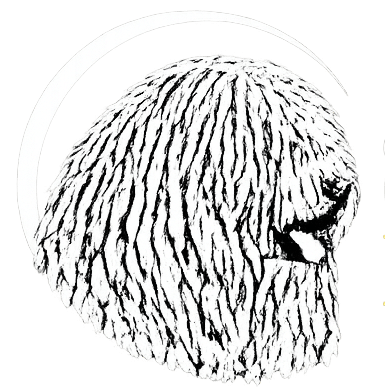
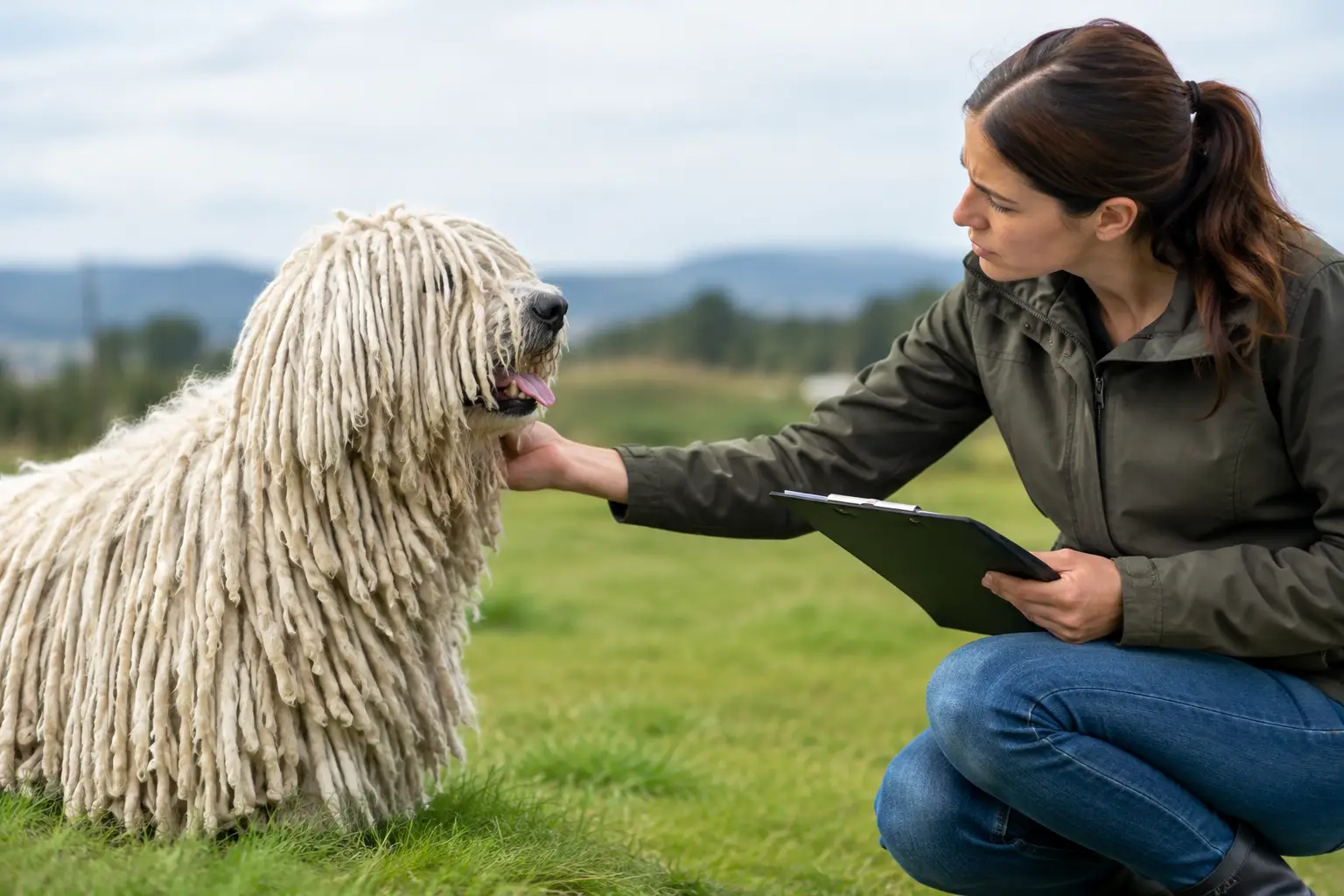
A Komondor puppy may look unforgettable, but the decision behind that puppy should be grounded in far more than a photograph of a white, corded coat. Knowing the Komondor breeder red flags can protect you from years of preventable heartache, unexpected expense, and a dog that does not reflect the sound character and heritage of this remarkable Hungarian guardian breed.
A responsibly bred Komondor is not a generic large dog with an unusual coat. It is a powerful, independent livestock guardian with deep instincts, a distinctive structure, and a lineage worth preserving. The right breeder welcomes thoughtful questions because every carefully placed puppy represents the future of the breed.
Komondor Breeder Red Flags That Deserve Attention
1. The breeder cannot explain their breeding goals
Every serious breeder should be able to speak clearly about why a particular sire and dam were selected. “They are both beautiful” is not a breeding program. Correct appearance matters, but so do health, stable guardian temperament, structure, movement, coat quality, and pedigree compatibility.
Ask what the breeder hopes to strengthen or preserve in the litter. A knowledgeable answer may include the parents’ working character, correct type, family health history, or the way specific Hungarian bloodlines complement one another. Breeding without a purpose often produces inconsistent results, even when the puppies appear appealing at eight weeks old.
2. Health testing is vague, missing, or treated as an inconvenience
Large, powerful breeds deserve thoughtful health planning. A breeder should be prepared to discuss the health testing performed on the parents and any relevant health history in their lines. They should not dismiss questions by saying their dogs are “healthy because they have never been sick.”
Health testing does not guarantee that a puppy will never face a medical issue. It does show that the breeder is making responsible decisions with the information available. Be cautious when paperwork is unavailable, results cannot be verified, or the conversation turns defensive the moment you ask for details.
A responsible breeder also understands that health is more than a certificate. Sound condition, movement, longevity in the family, responsible growth, and honest disclosure all matter. If a breeder promises perfection, that is a warning in itself.
3. Pedigrees are absent, incomplete, or impossible to understand
The Komondor is Hungary’s national treasure, and pedigree is not merely a decorative document. It is the record that connects a puppy to generations of dogs, breeders, and selection decisions. A pedigree allows buyers to understand ancestry and gives future breeders the information needed to protect the breed.
Be wary of phrases such as “purebred but no papers,” “papers cost extra,” or “the pedigree will come later” without a clear, credible explanation. The breeder should explain the registration system used, the puppy’s documentation, and when you will receive it.
For buyers outside Hungary, documentation is especially important. International placement requires careful coordination of pedigree records, veterinary paperwork, identification, and transport arrangements. A breeder experienced in export will explain that process directly rather than leaving you to solve it alone after payment.
4. The puppies are always available
A kennel with puppies available at a particular moment is not automatically irresponsible. Timing, litter size, and buyer preferences vary. The concern is a constant supply of puppies, multiple unrelated breeds, or pressure to choose immediately because another litter is arriving next week.
Selective Komondor breeding takes time. Responsible breeders plan litters around the quality and readiness of the individual dogs, not around a production schedule. They may also maintain a reservation list and ask prospective homes to wait for the right match.
Patience is a positive sign. A Komondor will live with you for many years. Waiting for a well-planned puppy is usually far wiser than making a rushed choice from the first available advertisement.
5. There is no meaningful discussion of temperament
The Komondor’s protective nature is one of its defining qualities, but it requires respect. This breed was developed to think independently, assess its environment, and guard what it considers its own. A stable Komondor should not be needlessly fearful, chaotic, or indiscriminately aggressive.
A breeder who says every Komondor is naturally easy with all strangers, all dogs, and every household situation is not preparing you honestly. Likewise, a breeder who celebrates aggression without discussing control, early socialization, boundaries, and responsible ownership is not serving the breed.
Ask how the parents behave at home, with trusted visitors, around unfamiliar people, and in new environments. Ask how puppies are raised and introduced to everyday sounds, handling, travel crates, grooming, and people. Temperament has both inherited and environmental components, so thoughtful early raising matters greatly.
6. The breeder sells a fantasy instead of assessing your home
A trustworthy breeder wants to know where their puppy will live. They may ask about your dog experience, children, other animals, fencing, daily routine, training plans, and expectations for a guardian breed. This is not intrusive. It is evidence that they care where each puppy goes.
A Komondor can be deeply devoted, calm, and magnificent in the right home. It is not necessarily the best choice for someone seeking an endlessly social, highly biddable dog for crowded public settings. Its coat also requires committed care, especially as cords begin to form. Anyone who tells you this breed is effortless is selling convenience, not truth.
The best match depends on the dog and the household. A family property, a rural setting, an experienced guardian-breed owner, and a serious exhibitor may all be excellent homes, but their needs are not identical. A good breeder recognizes those differences.
7. You cannot see how the dogs are raised
Not every buyer can visit in person, particularly when purchasing from Hungary or another country. Distance alone is not a red flag. What matters is whether the breeder offers a credible view into daily kennel life.
Expect clear, current photographs and videos of the puppies, their mother, and ideally the sire when possible. You should be able to ask practical questions about housing, exercise, cleanliness, social contact, feeding, and coat care. A breeder should not rely only on heavily edited puppy portraits or old show photos that reveal nothing about present conditions.
For international buyers, transparent communication is even more valuable. Regular updates, straightforward answers, and documented transport planning help establish confidence long before a puppy begins its journey.
8. Price is the only selling point
A low price can be tempting, particularly once you account for travel or international transport. Yet a Komondor’s purchase price is only one part of a long commitment that includes quality food, veterinary care, training, secure containment, grooming supplies, and time.
When a breeder competes mainly by being the cheapest, ask what has been omitted. Responsible breeding involves health evaluations, proper care of adults and puppies, registration, recordkeeping, socialization, and support for new owners. Those responsibilities carry real costs.
The highest price does not automatically prove quality either. Look for substance behind the number: documented lineage, transparent standards, healthy and well-kept dogs, experience, and a breeder who remains accountable after the sale.
9. There is pressure to pay before your questions are answered
Deposits can be normal and appropriate when a litter reservation is clearly explained. The warning sign is urgency paired with poor communication: “Send money today,” “No questions,” or “Someone else is ready to take this puppy” before you have received basic information.
A professional breeder provides clear terms around reservations, payment, pickup or delivery, documentation, and what happens if plans change. If a puppy is being exported, the agreement should also make the transport process understandable. Do not let excitement replace due diligence.
10. Support ends the moment the puppy leaves
The first weeks in a new home are only the beginning. Komondor owners may need guidance on early training, socialization, guardian behavior, nutrition, coat development, cord separation, and the transition into adulthood. A breeder who disappears after payment leaves new owners without one of the most valuable resources available: someone who knows the family behind their dog.
Look for a breeder who welcomes updates, offers practical advice, and takes pride in following the dogs they have bred. At Somogyi Betyár Kennel, this long-term responsibility is part of what breeding a heritage guardian means. A puppy is not simply placed. Its future matters.
What a Responsible Komondor Breeder Looks Like
The strongest signal is not one impressive claim. It is consistency. The breeder’s dogs, pedigrees, health practices, communication, contracts, living conditions, and answers should all tell the same story: careful stewardship of the Komondor.
Take your time, ask direct questions, and listen for honest nuance. The breeder worth trusting will not promise that every Komondor fits every home. They will help you decide whether this extraordinary, loyal, clear-minded guardian is truly the right dog for yours – and they will be proud to stand behind the puppy long after the first photograph is taken.