

A Komondor does not belong in the hands of someone looking for the fastest or cheapest path to ownership. If you are importing a dog from Hungary, you are usually doing it for a reason – bloodline quality, authenticity, preservation, and the chance to bring home a dog that reflects the breed as it should be.
For serious buyers in the United States, the process is very manageable when it is handled correctly. It is also one area where breeder experience matters more than people realize. A beautiful pedigree on paper means little if transport is poorly organized, documents are incomplete, or the dog arrives stressed, delayed, or improperly prepared for entry.
Why importing a dog from Hungary appeals to serious buyers
Hungary is not just another source country for the Komondor. It is the breed’s homeland. That matters. In a rare heritage guardian breed, the breeding culture behind the dog shapes far more than appearance. It affects type, temperament, working instinct, coat quality, structural soundness, and the preservation of original bloodlines.
For buyers who want a true Komondor, importing from Hungary often offers access to deeper pedigrees, established champion lines, and breeders who understand the breed as a living national treasure rather than a novelty. That does not automatically make every Hungarian-bred dog superior. Quality still depends on the breeder’s standards, health practices, and ethics. But for many committed owners, exhibitors, breeders, and livestock guardians, Hungary remains the most meaningful place to begin.
What importing a dog from Hungary actually involves
At first glance, people tend to focus on the flight. In practice, the flight is only one part of the process. Importing starts much earlier, with breeder selection, reservation timing, export eligibility, veterinary preparation, and country-specific entry requirements.
A reputable breeder should guide the buyer through the dog’s age, vaccination status, microchip identification, pedigree documentation, health records, and transport planning. Some puppies may travel as accompanied cargo or through specialized pet transport arrangements. In some cases, an older puppy or adult dog is the better choice, especially if timing, vaccination windows, or buyer goals make early export less practical.
This is where unrealistic expectations can create problems. A buyer may want a very young puppy immediately, but the legal and health requirements for export do not always align with that preference. Good breeders do not rush a dog out the door simply to satisfy a timeline.
The paperwork matters as much as the dog
If you are importing a dog from Hungary to the US, documentation is not a side issue. It is central to a smooth and lawful transfer.
The exact requirements can change, and buyers should always confirm current rules before travel is arranged. In general, you should expect to deal with identification records, veterinary certificates, vaccination documentation, export papers, and pedigree-related records. If the dog is intended for showing, breeding, or long-term pedigree value, registration and lineage paperwork should be complete, accurate, and traceable.
This is one of the clearest differences between a serious breeder and a casual seller. Serious breeders treat paperwork as part of their responsibility to the dog and the new owner. They understand that a buyer overseas is placing trust not only in the animal itself, but in the integrity of every document attached to it.
Health preparation is not just a legal hurdle
Too many people think about vet requirements only in terms of border entry. That is too narrow. Health preparation is about protecting the puppy during a physically demanding transition.
Air travel, schedule changes, crate time, climate differences, and arrival into a new home are all stressors. A puppy should be well started before export – physically stable, appropriately socialized, accustomed to handling, and monitored carefully before departure. Adult dogs need the same thoughtful preparation, with even more attention to temperament and travel readiness.
There is always a balance to strike. Waiting longer may mean a more mature, more resilient dog and a more predictable export timeline. On the other hand, some buyers are eager for the earliest possible bonding period. Neither instinct is wrong, but the best decision depends on the dog, the destination, and the buyer’s experience.
Air transport and arrival in the US
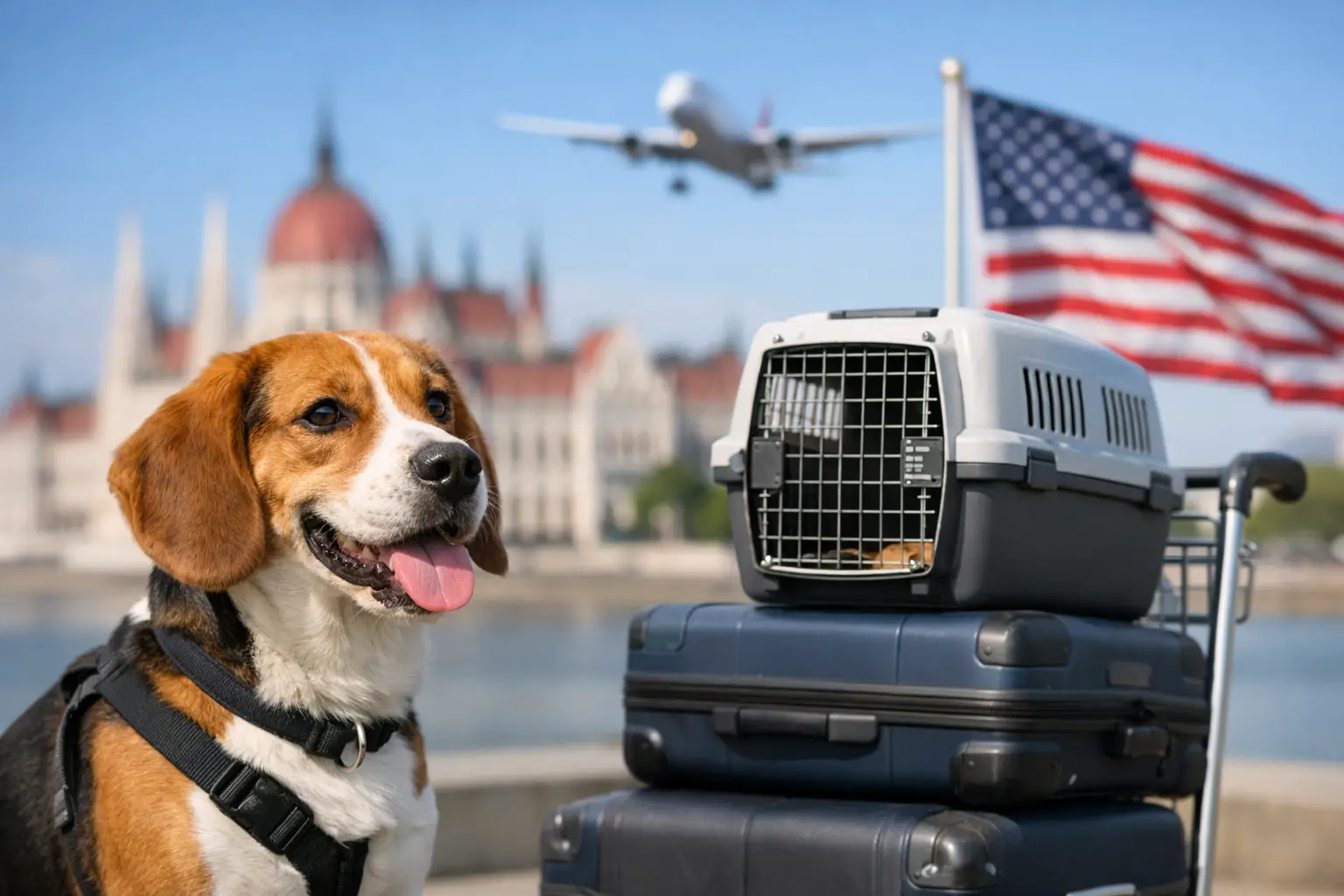
The safest transport plan is not always the cheapest one. Direct routes are often preferable when available, because they reduce handling and transit complexity. Proper crate sizing, airline-approved arrangements, weather considerations, and timing around airport procedures all deserve attention.
Experienced breeders know that shipping a dog internationally is not simply booking space on a plane. It means choosing the right route, avoiding unnecessary risk, and preparing the dog for the journey in a calm, organized way. Buyers should also be prepared for a degree of unpredictability. Airline changes, seasonal restrictions, and administrative delays can happen even when the planning is sound.
Arrival in the US should be treated as part of the handoff, not the finish line. The new owner needs to be ready with transportation, a quiet first settling-in period, access to veterinary follow-up if needed, and realistic expectations. A Komondor puppy or adult entering a new country, new language environment, and new home deserves a steady, thoughtful transition.
Choosing the right breeder before importing a dog from Hungary
For this breed, breeder choice matters more than marketing. Beautiful photos and exported puppies do not prove preservation breeding. Ask what the breeder is trying to protect in the line. Ask about temperament, working ability, coat, orthopedic soundness, and family history. Ask how they evaluate placement suitability, especially if you want a guardian dog rather than a casual pet.
A proper Komondor breeder should welcome serious questions. They should be able to explain why a specific puppy or adult is right for a particular home. They should also be willing to tell a buyer no if the fit is poor. That kind of selectiveness is not a sales obstacle. It is a sign of responsibility.
This is especially relevant for international buyers, who may never meet the breeder in person before making a commitment. Trust must be built through consistency, transparency, pedigree depth, and breeder conduct over time. Somogyi Betyár Kennel has built its reputation on exactly that kind of responsibility – preserving true Komondor quality while helping committed owners abroad receive their dogs safely and properly.
Cost, timing, and the reality behind the process
People often ask for a single number or a simple timeline. Realistically, both depend on several moving parts. The dog’s age, current regulations, veterinary scheduling, airline availability, crate requirements, and destination logistics all affect cost and timing.
A lower upfront price can become expensive if the dog comes with weak documentation, poor preparation, or avoidable transport risk. By contrast, a carefully bred and correctly exported dog may cost more initially but provide far greater value in health, breed quality, and long-term confidence.
The same goes for timing. Buyers who start the conversation early usually have the best experience. That allows time to discuss breeding plans, litter availability, export windows, and whether a puppy or adult dog is the better choice. Rushed decisions tend to produce preventable stress.
Is importing the right choice for every buyer?
No, and saying that honestly is part of ethical breeding. Importing a dog from Hungary makes the most sense for buyers who care deeply about bloodline authenticity, breeder accountability, and the long-term value of obtaining the right dog rather than the nearest one.
If a buyer is uncomfortable with paperwork, waiting periods, international coordination, or the realities of transporting a young dog overseas, a domestic option may be a better fit. But for those who understand what the Komondor represents, importing is often the most direct path to the breed in its proper form.
That is particularly true when the goal is not just owning a large white dog, but living with a structurally correct, mentally sound, traditionally bred Komondor whose background is known and whose breeder stands behind the placement.
A dog brought from Hungary should arrive as more than a purchase. It should arrive as the beginning of a serious relationship – between breeder and owner, between heritage and future, and between the right Komondor and the home prepared to deserve it.






3 Comments