
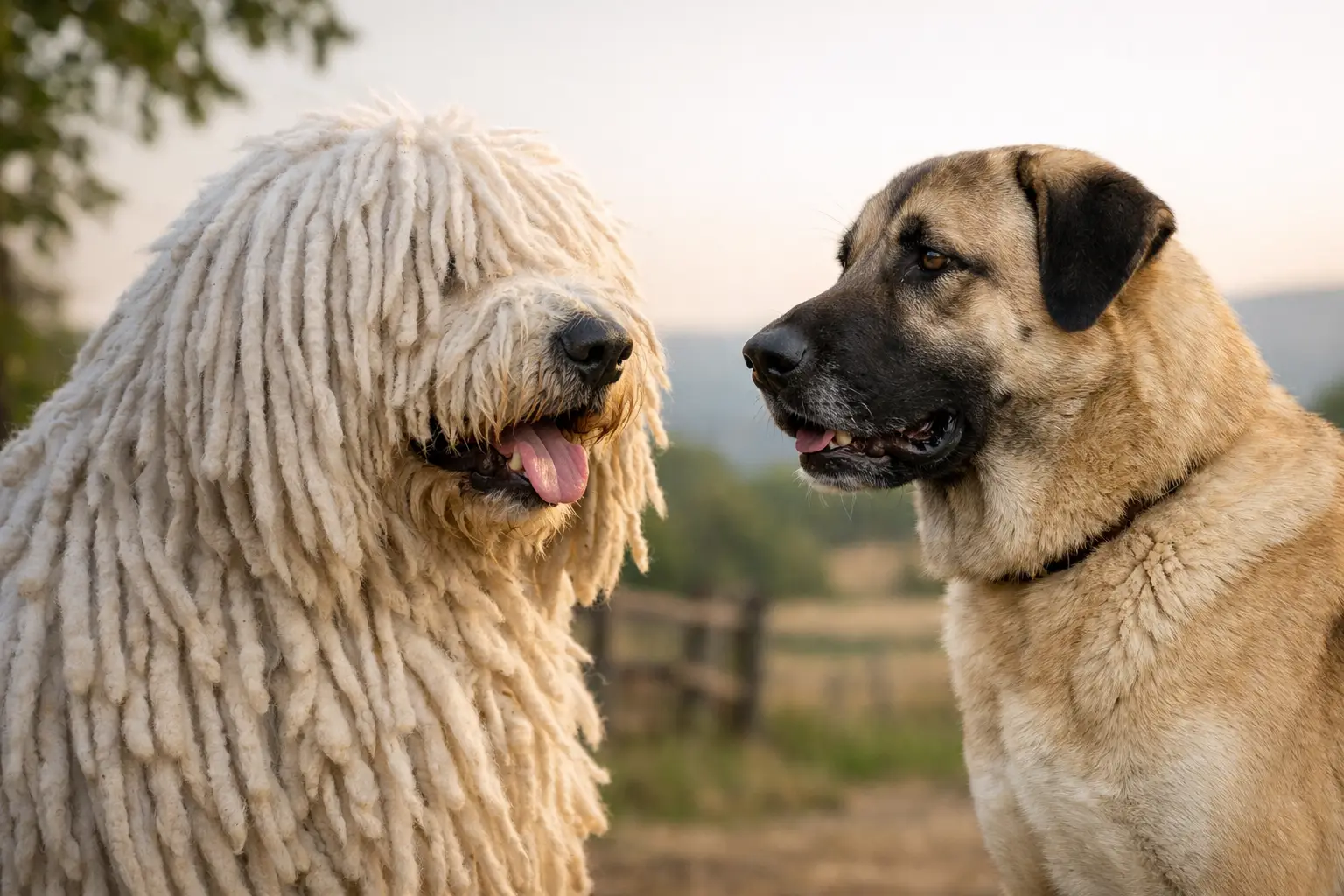
A livestock guardian is not a large pet dog with a deeper bark. It is a breed shaped over generations to make independent decisions, read unfamiliar situations, and protect what it considers its own. In a Komondor vs Anatolian comparison, that shared guardian heritage is the starting point, not the final answer. These are both impressive dogs, but they express their protective instincts, physical presence, and daily care needs in distinctly different ways.
For the right owner, either breed can be deeply loyal and serious about its responsibilities. For the wrong home, either can become difficult, under-stimulated, and misunderstood. The better question is not which dog is stronger or more impressive. It is which breed best matches your property, experience, lifestyle, and willingness to live with a true guardian.
Komondor vs Anatolian: The Heritage Behind the Dogs
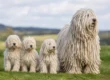
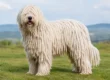
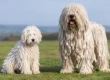
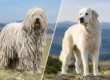
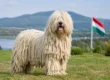
The Komondor is Hungary’s ancient flock guardian, recognized immediately by its natural white corded coat. Developed to live among sheep, its color helped it blend with the flock while distinguishing it from predators. A correct Komondor is powerful, balanced, agile for its size, and calm when there is no reason for concern. Its appearance may draw attention, but its traditional purpose has always been protection.
The Anatolian Shepherd Dog was developed in Turkey as a livestock guardian capable of working across demanding terrain and wide areas. In the United States, the name Anatolian commonly refers to the Anatolian Shepherd Dog, although discussions of Turkish guardian breeds can involve regional types and naming distinctions. Anatolians are generally short-coated or rough-coated, athletic, and built for endurance.
Both breeds were created to think for themselves. They were not bred to wait for a handler’s next command before responding to a possible threat. That independence is a virtue around livestock and on rural property. It also means neither breed is a natural fit for someone seeking an eager-to-please, highly social dog for busy public settings.
Presence, Structure, and Movement
A mature Komondor is a large, substantial dog, commonly standing about 25.5 to 27.5 inches or more at the shoulder, with males carrying considerable bone and strength. Under the cords is a surprisingly athletic guardian. Correct movement should be efficient and free, not heavy or cumbersome. The coat adds dramatic visual mass, yet good structure remains essential for a dog expected to move confidently across its territory.
Anatolians are also large, often taller and longer-legged in appearance, with a more openly athletic silhouette. Their coat may be fawn, brindle, white, or another accepted color pattern, frequently with a dark mask. They often give the impression of a dog designed to travel great distances, scanning the environment as they go.
Neither breed should be chosen simply because it looks formidable. Structural quality matters because these are working dogs. Sound joints, correct movement, stable nerves, and physical resilience have far more value than exaggerated size. A serious breeder should be able to discuss pedigree, health testing, temperament, and the breeding goals behind every litter.
Temperament: Similar Purpose, Different Expression
The Komondor is typically devoted to its family and property, composed with familiar people, and naturally reserved with strangers. A well-bred, well-raised Komondor should not be needlessly aggressive or unstable. It should have the confidence to assess a situation, the instinct to alert when needed, and the ability to settle when its owner determines that everything is safe.
Many Komondor owners value the breed’s watchful, close-to-home style. The dog often takes its role as household guardian personally. It may be affectionate and even playful with its own family, while remaining observant and selective around visitors. This is a dog that needs early, thoughtful exposure to people, environments, handling, and routine household activity. Socialization does not erase guardian instinct. It teaches the dog how to live appropriately with it.
Anatolians are also protective, discerning, and frequently reserved. Some are more inclined to patrol a larger boundary or remain active in monitoring distant movement. Their independence can be especially pronounced. They need owners who understand that compliance is not the same as sound temperament. A guardian dog may understand a command perfectly and still pause to judge whether it makes sense in the moment.
For either breed, harsh handling is a poor strategy. Clear rules, calm consistency, secure boundaries, and an owner who can lead without constant confrontation are far more productive. These dogs mature slowly in judgment, and their adult guardian behavior can become more evident as they gain confidence.
The Coat Question Is More Than Appearance
The Komondor’s coat is magnificent, traditional, and demanding. Puppies begin with a soft coat that develops texture as they mature. As the adult coat forms, the hair must be separated by hand into proper cords. This is not a coat to brush out like that of a retriever or shepherd. Regular inspection, careful separation, drying time after bathing, and attention to cleanliness are part of responsible Komondor ownership.
A properly maintained coat protects the dog from weather and contributes to the unmistakable identity of the breed. However, it is not suitable for an owner who wants minimal grooming. Neglected cords can trap dirt and moisture, creating discomfort and skin problems. The coat must be managed with patience and respect for its natural purpose.
The Anatolian’s coat is much easier for most households. Seasonal shedding can be substantial, particularly in a dense double coat, but routine brushing is generally far less time-intensive than cord care. If coat maintenance is the deciding factor, the Anatolian will usually be the more practical choice. If the Komondor’s historic coat speaks to you, accept the work as part of preserving and living with the breed correctly.
Property, Fencing, and Daily Life
Both breeds need secure, substantial fencing. An invisible fence is not an adequate answer for a determined livestock guardian that believes it must investigate a threat. A guardian’s bark carries, especially at night, and neighbors in a close suburban setting may not appreciate a dog responding to every unfamiliar sound beyond the yard.
A large farm is not the only place a Komondor can live successfully, but space alone does not create a good guardian. The dog needs purposeful routine, supervision, training, and a clear understanding of boundaries. A securely fenced rural or semi-rural property is often ideal. Families with children can do well with a properly bred and carefully raised Komondor, provided adults take responsibility for management and teach children to respect the dog while it is resting, eating, or guarding.
Anatolians also benefit from room and meaningful work, particularly where livestock or extensive acreage is involved. Their tendency to patrol may make reliable physical containment especially important. Apartment life, frequent dog-park outings, and a household with a steady stream of unfamiliar visitors are challenging environments for both breeds.
Health, Lineage, and Responsible Selection
A puppy’s breed label alone cannot tell you enough. Within every serious guardian breed, quality varies. Ask about documented pedigree, health testing appropriate to the breed, the temperaments of parents and close relatives, and how puppies are raised during their earliest weeks. Large breeds also require sensible nutrition, controlled growth, and lifelong attention to healthy body condition.
Prospective owners should be prepared to discuss hip health, eye health where relevant, and the breeder’s approach to avoiding inherited problems. They should also ask how the breeder evaluates confidence and stability, not merely appearance. An impressive photograph does not prove a dog has the nerve, structure, or character expected of a guardian.
For those drawn specifically to the Komondor, Hungarian bloodlines and careful breed preservation matter. At Somogyi Betyár Kennel, our commitment is to the traditional Komondor: correct coat, sound structure, authentic guardian character, documented lineage, and the personal guidance owners need when welcoming this rare national treasure into their lives.
Which Breed Should You Choose?
Choose a Komondor if you are captivated by the breed’s Hungarian heritage, distinctive corded coat, close devotion to home and family, and dignified guardian presence. Be ready to learn coat care, provide secure boundaries, and earn the trust of an intelligent dog that was bred to make decisions.
Choose an Anatolian if you prefer a more easily maintained coat and are looking for a large, independent guardian with an athletic, wide-ranging style. Be equally prepared for serious protective instincts, substantial fencing needs, and training that respects the dog’s independent nature.
The best guardian dog is never the one chosen for appearance alone. It is the one whose heritage, temperament, care requirements, and purpose match the life you can offer for many years. When that match is made thoughtfully, a Komondor does more than guard a property. It becomes a steady, unmistakable presence at the heart of the home it has chosen to protect.