


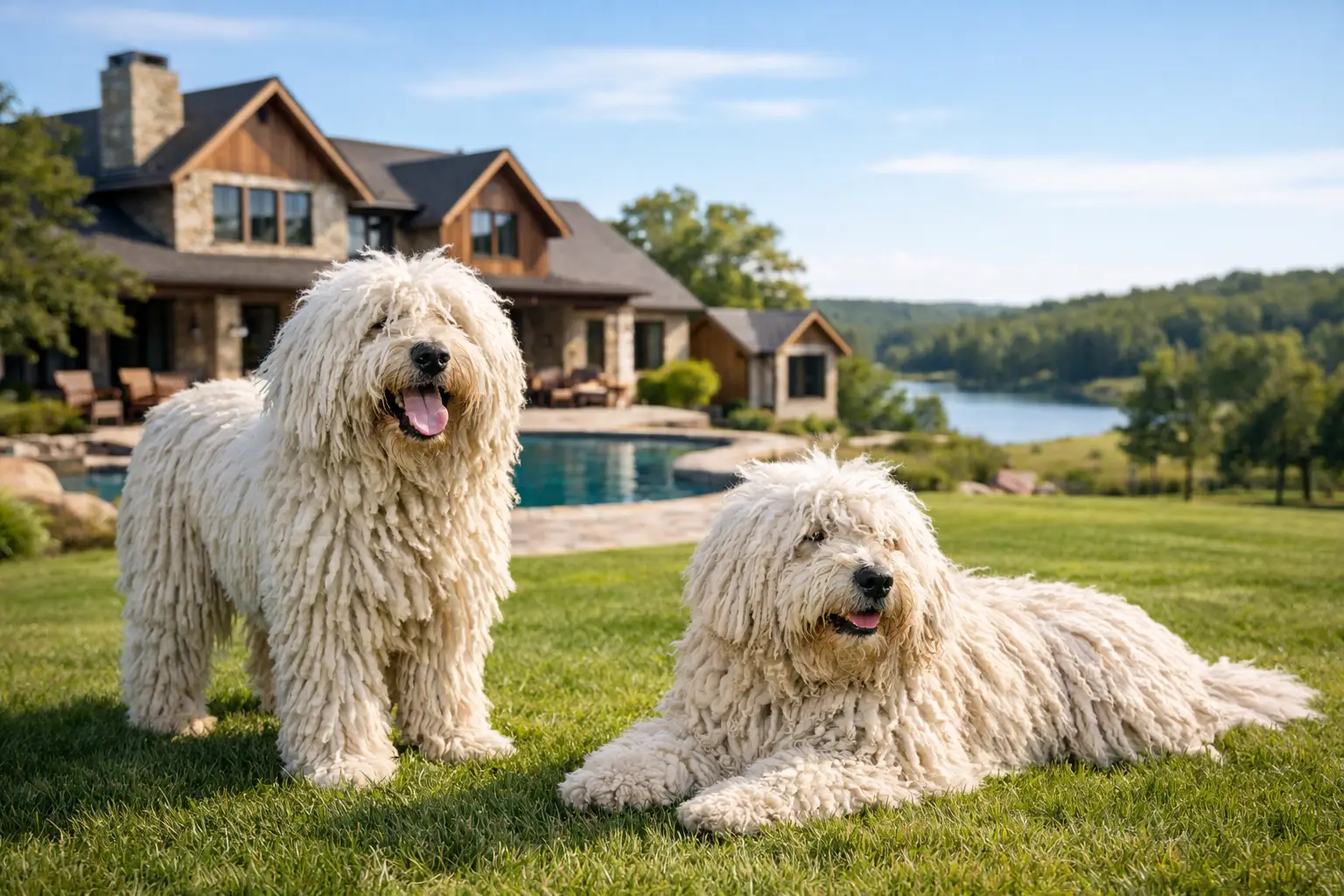
A Komondor does not need a mansion, but it does need a home that understands what it is. This is a powerful Hungarian livestock guardian, bred to make independent decisions and to take the safety of its family, land, and animals seriously. The best homes for Komondors are not defined by square footage alone. They are defined by secure boundaries, steady leadership, meaningful purpose, and owners who respect the breed’s deeply rooted guardian character.
For the right person, living with a Komondor is extraordinarily rewarding. A correct, well-bred Komondor is dignified, devoted, observant, and calm with its own people. For an owner expecting an easygoing dog that welcomes every visitor, follows every command instantly, or is content with an occasional walk around the block, the breed can be a poor match. Choosing the right home is one of the most important ways to protect both the dog and the people who live with it.
The Best Homes for Komondors Have Clear Boundaries
A Komondor needs a securely fenced property. This is not simply a matter of preventing a large dog from wandering. A guardian breed should not be left to patrol an unfenced neighborhood, approach unfamiliar people, or decide where its territory begins and ends.
A substantial fence gives the dog clarity. It tells the Komondor which area belongs to its family and allows the owner to manage visitors, delivery drivers, neighboring dogs, and daily life safely. Fence height, strength, gates, and maintenance all matter. An adult Komondor is a large, athletic, determined dog, and a casual barrier is not enough.
A rural farm or acreage is often a natural setting, particularly when the dog has livestock or property to watch. Yet acreage without boundaries is not automatically suitable. A smaller, well-managed property with a secure fence and committed owner can be much better than open land where the dog can roam, encounter strangers, or create conflict beyond the property line.
Rural Homes Are Ideal, but Not the Only Option
The Komondor was developed in Hungary to guard flocks with remarkable independence. It is no surprise that many thrive on farms, ranches, and country properties. Livestock owners may find that a properly introduced and mature Komondor brings a serious, watchful presence to sheep, goats, poultry, or other animals. This work should be approached thoughtfully, with gradual introductions and realistic expectations. A young puppy is still a puppy, not a finished livestock guardian.
A rural home also gives owners more control over noise, visitors, and space. Komondors are naturally alert, especially after dark, and may bark when they believe a threat deserves notice. On a property with close neighbors, that behavior can become a source of stress for everyone.
That said, a Komondor can live in a suburban home if the household is exceptionally prepared. The yard must be secure, the neighborhood must allow for a guardian dog’s vocal nature, and the owners must actively manage greetings and unfamiliar visitors. A suburban Komondor needs more than a backyard. It needs training, routine, calm social exposure, and an owner who does not allow the dog to practice territorial behavior at the front window or fence all day.
Apartment living is usually not the best choice. Even a large apartment cannot replace private outdoor space, controlled access, and the ability to separate the dog from frequent hallway traffic, neighbors, and unexpected guests. There are rare exceptions with highly experienced owners, but prospective homes should be judged by the dog’s long-term welfare, not by what might be technically possible.
A Komondor Needs Purpose, Not Constant Entertainment
Many modern dog owners assume every breed needs hours of high-intensity activity. The Komondor’s needs are different. This is not a breed built for endless fetch, crowded dog parks, or constant excitement. It needs regular exercise, sound physical conditioning, and mental engagement, but its deepest need is to feel connected to its home and responsible for something within it.
A daily walk, supervised time in a secure yard, structured obedience work, and a consistent household routine can suit many Komondors well. On a farm, appropriate livestock exposure and property guardianship may provide a natural outlet. In either setting, the goal is not to make the dog exhausted. It is to create a stable life with clear expectations.
A bored Komondor can become overly reactive, vocal, or destructive. A dog left alone outdoors without companionship or direction may begin to create its own job, often by guarding every passing car, bird, neighbor, or sound. The best owners do not mistake isolation for independence. A Komondor is capable of working alone, but it remains deeply loyal to its people and needs genuine inclusion in family life.
Families Must Be Ready to Manage Visitors
Komondors are profoundly devoted to their families, and many are patient and affectionate with children they know. Still, their size, protective instinct, and natural reserve require adult supervision and thoughtful household rules. Children should never be expected to control the dog, interrupt it while it is resting or eating, or manage greetings at the door.
The larger consideration is the home’s social rhythm. Does the family host frequent parties? Do children regularly bring unfamiliar friends inside without warning? Is there a steady flow of contractors, clients, or neighbors through the property? None of these situations make ownership impossible, but they demand active management.
A Komondor should be taught that its owner handles guests. Visitors should not be allowed to rush toward the dog, lean over it, or insist on physical affection. The dog needs a reliable place to settle when people arrive, such as a separate room, a crate, or a secure outdoor run. This is responsible guardianship, not a failure of socialization. A well-raised Komondor does not need to adore strangers to be stable and safe.
Early Guidance Matters More Than Harsh Control
The right home for a Komondor has owners who are calm, consistent, and willing to learn. This breed is intelligent and independent. Heavy-handed methods can damage trust, while inconsistent rules invite confusion. The best approach is firm, fair guidance established from puppyhood.
Early socialization should expose the puppy to normal sights, sounds, surfaces, travel, grooming, and carefully chosen people without trying to turn it into a dog that greets everyone enthusiastically. The goal is confidence and discernment. A Komondor should learn to remain composed in unfamiliar situations and to look to its owner for direction.
Basic obedience is essential, especially recall, leash manners, place training, and calm behavior around gates and doors. Training should continue through adolescence, when a young Komondor may begin to test boundaries and show a stronger awareness of territory. Owners who appreciate this developmental stage and remain steady often see the breed mature into the balanced guardian it was meant to be.
Coat Care and Climate Belong in the Home Decision
The Komondor’s corded coat is one of the world’s most recognizable canine features, but it is not decorative maintenance-free fur. It requires informed care. Cords must be separated by hand as they form, kept clean, and dried completely after bathing. A wet, dense coat can take a long time to dry, and careless maintenance can lead to odor, skin problems, or damaged cords.
A suitable home has space and time for proper grooming. Owners should be prepared for muddy weather, occasional debris brought in from the yard, and the practical challenge of bathing a large corded dog. The coat also affects climate management. Komondors can adapt to a range of conditions, but they must have shade, fresh water, ventilation, and protection from prolonged heat. Their coat should never be viewed as a reason to leave them exposed to extreme weather.
The dog should have access to the family and a clean, protected resting space. A Komondor may enjoy spending time outdoors watching its property, but it should not live as an ignored backyard dog. Its loyalty is personal. It guards best when it knows who and what belongs to it.
Choosing a Home That Honors the Breed
The strongest Komondor placements begin with honest conversations. A responsible breeder should ask about fencing, household routines, other animals, children, visitors, climate, training plans, and the buyer’s experience with independent guardian breeds. These questions are not obstacles. They protect a rare breed with a serious heritage from being placed in a home that expects something it is not.
At Somogyi Betyár Kennel, our commitment to traditional Hungarian bloodlines includes helping future owners understand the lifelong responsibility that comes with this remarkable dog. Sound temperament, correct structure, health, and authentic breed character deserve an environment where they can flourish.
The right home does not need to be perfect. It needs owners willing to be present, prepared, and accountable. Give a Komondor clear territory, respectful leadership, and a family worth guarding, and you will share your life with a loyal protector whose quiet devotion reaches far beyond its impressive white cords.