
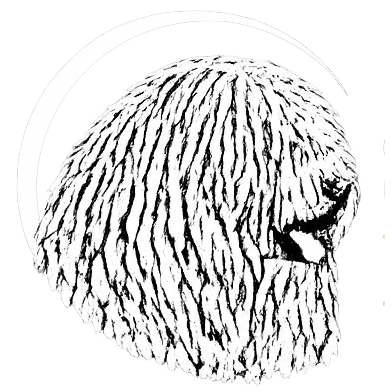


A Komondor puppy does not need to greet every stranger with reckless enthusiasm to be a good prospect. In fact, when learning how to inspect puppy temperament, that expectation can hide the qualities that make this historic Hungarian guardian so valuable: calm confidence, sound judgment, awareness of its surroundings, and the ability to recover quickly from something unfamiliar.
Temperament is not a single trait that can be measured in five minutes. It is the way a puppy responds to people, noise, handling, novelty, littermates, boundaries, and mild pressure. For a serious breed such as the Komondor, the goal is not to select the boldest puppy in the room or the quietest one in the corner. The goal is to understand the individual puppy, the litter, and the breeding behind them well enough to make a responsible match.
How to Inspect Puppy Temperament With a Breeder’s Eye
A good assessment begins before you ever focus on one puppy. Observe the litter in a familiar setting, preferably when the puppies are awake but not overstimulated. Watch them move freely together. A sound puppy may investigate, play, rest, compete briefly for attention, then settle again. One moment tells little. Repeated patterns tell much more.
Ask the breeder how each puppy behaves at different times of day and in different situations. The person raising the litter sees details that a visitor cannot: who adapts readily to new surfaces, who recovers after a sudden sound, who becomes pushy around food, who seeks human contact, and who is naturally more reserved. Responsible breeders record these impressions over weeks, rather than making promises based on a single charming photograph or video.
For Komondors, reserve should be interpreted carefully. This is not a breed developed to behave like a universally social retriever. A well-bred puppy can be observant with unfamiliar people while remaining composed and approachable under proper handling. The concern is not thoughtful distance. The concern is persistent fear, panic, uncontrolled reactivity, or an inability to return to a normal state after a mild surprise.
Look for recovery, not theatrical boldness
A dropped object, a new texture underfoot, or a brief unfamiliar sound can reveal a puppy’s recovery ability. The ideal response varies with age and experience. A puppy may pause, startle, or step back. That is normal. What matters is what happens next.
Does the puppy look, assess, and return to play or investigate? Does it accept reassurance and regain composure? A puppy that recovers well often has the emotional resilience needed for travel, training, a new household, and the ordinary surprises of adult life.
Do not confuse a puppy that charges toward every stimulus with one that is genuinely stable. Excessive impulsiveness can be difficult to manage in a large, powerful guardian dog. Likewise, a puppy that freezes, screams, flees, or remains distressed long after a minor event deserves a careful conversation with the breeder. One reaction is never a complete diagnosis, but repeated behavior should not be dismissed.
Notice how the puppy accepts people and handling
Gentle handling is a meaningful part of temperament inspection. A puppy should be accustomed to being touched by the breeder from an early age: feet examined, ears checked, mouth briefly opened, body lifted and supported appropriately, and coat handled. This matters greatly for Komondors, whose distinctive corded coat will require lifelong patient care.
A well-socialized puppy may wiggle, object briefly, or try to resume playing. Puppies are not statues. What you want to see is a puppy that can settle with calm, experienced handling and does not respond with disproportionate fear or defensive aggression.
Observe the puppy around familiar adults first, then ask how it responds to carefully managed visitors. For families with children, honesty matters more than a sales message. A Komondor puppy may grow into a devoted family guardian, but this breed requires supervision, structure, and respect for its independent nature. No breeder should promise that every puppy is suitable for every home simply because it is friendly at eight weeks old.
Temperament Must Be Read Alongside Genetics and Rearing
Puppy temperament has three powerful influences: inherited character, early rearing, and the environment the puppy enters after placement. A thoughtful assessment considers all three.
Start with the parents. Ask about their behavior at home, with guests, during veterinary care, at shows, and in unfamiliar settings. A serious breeder should be able to describe both strengths and limitations plainly. In a traditional guardian breed, stable protective instinct is desirable. Nervousness, indiscriminate aggression, and instability are not evidence of strong guarding ability.
Pedigree matters because generations of purposeful breeding shape more than appearance. Champion Hungarian bloodlines, when selected with attention to health, correct structure, working character, and sound temperament, help preserve the authentic Komondor. Still, a pedigree is not a substitute for seeing how the dogs are raised and how the breeder evaluates their offspring.
Early experiences also leave their mark. Puppies should grow up with clean surroundings, normal household or kennel activity, positive human contact, age-appropriate challenges, and opportunities to explore safely. Overexposure can be as unhelpful as isolation. The aim is not to flood young puppies with constant stimulation. It is to introduce the world in measured, positive steps so they learn that novelty is manageable.
At Somogyi Betyár Kennel, preserving the original character of the Komondor means treating temperament as a breeding responsibility, not a marketing phrase. The right puppy is selected with the future home in mind, whether that home is seeking a serious property guardian, an experienced family companion, a show prospect, or a dog with livestock responsibilities.
Questions That Reveal More Than a Puppy Test
A brief temperament test can be useful, but it should never be treated as a final verdict. Puppies have off days. They may be tired, hungry, teething, or distracted by a new location. Instead of asking whether a puppy “passed,” ask questions that reveal patterns over time.
Ask which puppy is most people-oriented, which is most independent, and which tends to recover fastest from change. Ask whether any puppy has shown persistent sensitivity to sound, resource guarding, or difficulty settling. Ask how the breeder matches puppies to homes and whether the breeder would discourage you from choosing a particular puppy.
That final question matters. A breeder committed to the breed’s future will sometimes say no, recommend another puppy, or advise that a Komondor is not the right fit. This is not a failure of customer service. It is evidence that the breeder is protecting both the puppy and the prospective owner.
If you are buying internationally, request clear, current video rather than relying only on posed photos. Ask to see the puppy walking, playing with littermates, engaging with the breeder, and settling after activity. Video cannot replace a knowledgeable breeder’s daily observations, but it can help you see natural behavior and ask better follow-up questions before transport arrangements are made.
Match the Temperament to Your Real Life
The best puppy for a quiet rural property may not be the best puppy for a busy home with frequent visitors. A more independent puppy can be an excellent fit for an experienced owner who understands guardian breeds and values a dog that thinks for itself. A more socially forward puppy may be easier for a family that plans careful exposure to guests, travel, and structured activities.
Be equally honest about your own experience. The Komondor is deeply loyal, intelligent, and capable of sound judgment, but it is not a breed that thrives under inconsistent rules or casual ownership. Early training should build cooperation without trying to erase the dog’s natural guardian character. Socialization should teach neutrality and confidence, not demand that the dog welcome every person into its space.
Avoid choosing solely by color markings, size, or the puppy that first climbs into your lap. Those details may be appealing, but a Komondor will share your life for many years as a large, watchful adult dog. A temperament match is the more lasting decision.
A careful breeder will welcome thoughtful questions and remain a resource after the puppy goes home. Give yourself permission to wait for the puppy whose character, pedigree, health background, and future role truly fit. That patience is one of the first meaningful acts of stewardship you can offer your future Komondor.